

Safari in Kenya
Between endless savannas, snow-covered peaks and the white beaches of the Indian Ocean.
Safari in Kenya – Africa as you imagine it
There are countries you travel to. And then there are countries that conjure images in your mind long before you even arrive. Kenya undoubtedly belongs to the latter category.
When the first rays of sunshine bathe the savannah in golden light, a herd of elephants leisurely passes by against the backdrop of Kilimanjaro, and the deep roar of a lion echoes through the morning air from afar, it quickly becomes clear why Kenya has been considered one of Africa's most important safari destinations for decades.
But Kenya is far more than the famous Masai Mara. The country unites extraordinarily diverse landscapes in a relatively small area. Vast grasslands give way to arid semi-deserts, dense mountain forests alternate with lakes teeming with flamingos, while the white sandy beaches of the Indian Ocean are just a few hours' flight away.
This diversity makes Kenya a travel destination that goes far beyond the classic safari.
Whether it's your first trip to Africa, a luxury fly-in safari, a family holiday or a photographic expedition – Kenya offers countless opportunities to experience nature in an intense and authentic way.
On this page we show you which regions are particularly worthwhile, when the best time to travel is, which animals you can expect to see and how you can customize your safari.

Why Kenya?
Many people immediately think of Kenya when they think of a safari. And for good reason. Some of the world's most famous nature documentaries were filmed here, one of the greatest natural spectacles on our planet takes place here every year, and safari tourism developed here at a time when many other regions of Africa were still largely unexplored.
But today, Kenya impresses not only with its famous national parks, but above all with its diversity.
A single trip can combine a wide variety of landscapes, wildlife, and experiences. In the morning, you might observe elephants against the backdrop of Kilimanjaro; a few days later, you could encounter cheetahs in the Masai Mara or discover rare Grevy's zebras on the arid plains of Samburu. The trip might conclude with a stay on the palm-fringed beaches of the Indian Ocean.
Few other countries combine safari and relaxation so seamlessly. At the same time, Kenya offers the perfect option for almost every type of trip. First-time visitors to Africa will find it an ideal starting point. Experienced safari-goers can discover exclusive wildlife viewing opportunities off the beaten track at private conservancies. Families benefit from short distances and excellent tourist infrastructure, while photographers appreciate the exceptional light and diverse landscapes.
In addition, there is a wide selection of accommodations. From charming boutique camps to classic safari lodges and some of the most exclusive luxury camps in Africa, there is suitable accommodation for almost every travel style.
Kenya is not a country that impresses with just a few highlights. It is the combination of spectacular wildlife, breathtaking landscapes, warm hospitality, and extraordinary diversity that makes a trip there so special.

Kenya at a glance
Capital city
Largest city
Size
Resident
Language
currency
Time zone
entry
Safari possible
Best time to travel
Highlights
Nairobi
Nairobi
approx. 580,000 km²
approximately 57 million
English and Swahili
Kenyan shilling (KES)
UTC +3
Electronic travel authorization required
Year-round
January to March and June to October
Masai Mara, Amboseli, Samburu, Tsavo, Mount Kenya, Diani Beach

Where is Kenya?
Kenya is located in East Africa and borders Tanzania, Uganda, South Sudan, Ethiopia, and Somalia. To the east, it has a coastline several hundred kilometers long along the Indian Ocean.
Due to its location on the equator, many travelers expect tropical heat. In reality, however, the climate zones differ significantly. While a warm, tropical climate prevails on the coast, many safari areas are situated at altitudes between 1,000 and 2,000 meters. As a result, temperatures there are often pleasantly mild, especially in the early morning and evening.
Kenya is also one of the most diverse countries in Africa in terms of landscape. The Great Rift Valley runs through the country from north to south, shaping numerous lakes and volcanoes. Mount Kenya, the second highest mountain in Africa, rises in the center, while vast savannas stretch across the south. In the north, dry semi-deserts and rugged landscapes dominate, providing habitat for many specialized animal species.
This diversity makes Kenya a travel destination where completely different nature experiences can be combined within just a few hours.
Kenya – The Cradle of the Safari
The term "safari" comes from Swahili and originally simply means "journey". Today, people all over the world associate it with game drives through the African wilderness, encounters with elephants, lions or giraffes, and nights spent in the midst of untouched nature.
Few countries have shaped this image as much as Kenya. Some of Africa's most famous national parks were established here early on. At the same time, Kenya developed into a pioneer of sustainable safari tourism. Alongside state-run national parks, private conservancies are now playing an increasingly important role. They protect vital habitats, limit the number of vehicles, and often offer significantly more exclusive wildlife viewing opportunities.
For travelers, this means one thing above all: more peace and quiet, more intense nature experiences and often significantly more personal safaris.

What sets Kenya apart from other safari destinations
Every safari destination has its own unique character. Botswana captivates with its exclusive wilderness areas and the waterscapes of the Okavango Delta. Namibia fascinates with its spectacular deserts and endless expanses. South Africa impresses with its excellent infrastructure and an enormous variety of travel experiences.
Kenya occupies a special place among these countries. Here, some of Africa's most wildlife-rich savannas meet snow-capped mountains, dense mountain forests, and tropical coastal landscapes. At the same time, Kenya boasts a long safari tradition, excellent guides, and an exceptional range of accommodations – from authentic tented camps to some of the continent's most prestigious luxury lodges.
Another difference lies in the private conservancies, which play a central role, particularly in regions like the Masai Mara or Laikipia. Limited visitor numbers, exclusive activities such as night drives or guided bush walks, and consistent wildlife management create safari experiences that are often significantly more intense than in heavily frequented national parks.
For many travelers, this combination of iconic landscapes, excellent wildlife viewing and exclusive nature experiences is precisely the reason they choose Kenya.
Why a safari in Kenya is worthwhile
Home of the Serengeti and the Ngorongoro Crater
Scene of the Great Migration
Vast national parks with impressive wilderness
Excellent chances of making the Big Five
Great diversity of landscapes and ecosystems
Safari and Zanzibar can be perfectly combined
Exclusive safari camps and luxury fly-in safaris
Year-round safari opportunities with different seasonal highlights
Excellent opportunities to observe the Big Five
Home of the famous Masai Mara and the Great Migration
A combination of safari and dream beaches on the Indian Ocean
Exceptionally diverse landscapes
large selection of high-quality lodges and safari camps
Private conservancies with exclusive nature experiences
An ideal travel destination for first-time visitors as well as experienced Africa travelers.
Year-round safari opportunities with different seasonal highlights
The most beautiful safari regions in Kenya
Kenya is not a destination that can be reduced to a single national park. Each region has its own character, its own landscapes and wildlife. While some areas are known for spectacular predator sightings, others focus on elephants, rare animal species, or impressive mountain scenery.
It is precisely this diversity that makes Kenya so special. Instead of spending several days in the same place, we usually recommend combining different regions. This way, you can experience diverse landscapes, wildlife, and safari experiences within a single trip.
Masai Mara National Reserve
Kenya's most famous safari area

When people think of a safari in Kenya, they usually picture the Masai Mara. Hardly any other protected area embodies Africa as much as these endless savannas with their solitary umbrella acacias, large prides of lions, and enormous herds of wildebeest.
The Masai Mara forms the northern part of the Serengeti ecosystem and is one of the most wildlife-rich regions on the continent. The famous Great Migration takes place here, particularly between July and October, when hundreds of thousands of wildebeest and zebras migrate north from the Serengeti, crossing the Mara River in the process.
But even outside these months, the Masai Mara is one of the best safari areas in Africa. Lions, leopards, cheetahs, elephants, buffalo and hippos can be observed all year round.
Adjacent to the actual national reserve are numerous private conservancies such as Mara North, Naboisho, and Olare Motorogi. There are significantly fewer vehicles on these conservancies, and activities are possible that are not permitted in the national park, including night drives and guided bush walks.
Highlights
Great Migration
Big Five
High predator density
Balloon safaris
Private Conservancies
Luxury safari camps
Ideal for
First-time visitor
photographers
Families
Luxury travel
Honeymoon
Amboseli National Park
Elephants in front of Kilimanjaro

Few images are as emblematic of East Africa as elephants in front of Kilimanjaro. Although Africa's highest mountain is located not in Kenya but in Tanzania, Amboseli offers arguably the most impressive perspective of its summit.
The national park is relatively small, but has an exceptionally high elephant density. Many of the animals are among the largest tuskers in Africa and have been the subject of scientific research for decades.
Open plains, seasonal swamps, and dry bushland create ideal conditions for wildlife viewing. Besides elephants, lions, cheetahs, giraffes, hyenas, and numerous antelope species inhabit the area. Photographers especially appreciate Amboseli for its clear light and spectacular scenery.
Highlights
Large herds of elephants
Kilimanjaro
Excellent photo opportunities
Open landscapes
Many bird species
Ideal for
photographers
Families
First-time visitor
Combination tours including the Masai Mara
Samburu National Reserve
Wild northern Kenya off the beaten track of classic safari routes

Samburu feels completely different from the lush savannah of the Masai Mara. The landscape is drier, more pristine, and significantly less crowded. The Ewaso Nyiro River forms the lifeblood of the region, attracting a wealth of wildlife. Samburu is particularly famous for the so-called Samburu Special Five:
Grevy's zebra
Reticulated Giraffe
Somali ostrich
Gerenuk
Beisa oryx
These species are rarely, if ever, found in the classic safari areas of southern Kenya. Leopards can also be spotted here regularly with a bit of luck. For those already familiar with Kenya or who are specifically seeking quieter regions, Samburu offers a fascinating alternative.
Highlights
Samburu Special Five
Fewer visitors
Wild landscapes
Leopards
Authentic Safari
Ideal for
Repeat travelers
photographers
Those seeking peace and quiet
Laikipia
Exklusive Conservancies und innovativer Naturschutz


Laikipia is one of Africa's most exciting nature reserves. Instead of large national parks, private conservancies shape the landscape. Many lodges have vast concession areas where only a few guests venture.
This enables exceptionally exclusive safari experiences.
Walking safaris, horseback safaris, night drives or game drives off public roads are standard in many places.
Laikipia also plays a crucial role in the conservation of black and white rhinoceroses. Some conservancies host significant conservation programs for endangered species.
The landscape itself is varied, ranging from open plains to wooded hills with views of Mount Kenya.
Highlights
Private Conservancies
Rhinoceroses
Walking Safaris
Horseback safaris
Few vehicles
Ideal for
Luxury travel
Safari-experienced
photographers
Tsavo East National Park
Vast landscapes and red elephants
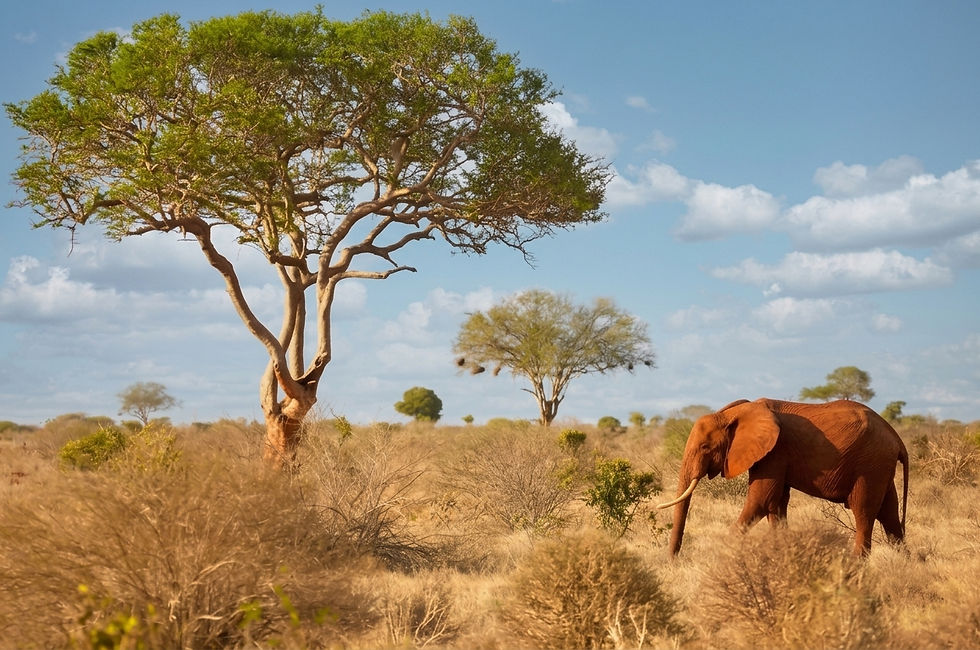
Tsavo East is one of the largest national parks in Africa.
The landscape appears vast, open, and pristine. The region's red dust gives many elephants their characteristic red color after their sand baths – one of Kenya's most iconic images.
Besides large herds of elephants, lions, cheetahs, giraffes and numerous antelope species live here.
The feeling of wilderness is particularly impressive. Even on good safari days, you often encounter significantly fewer vehicles than in the Masai Mara.
Highlights
Red Elephants
Great Wilderness
Galana River
Lugard Falls
Ideal for
nature lovers
Combination with the coast
self-drivers
Tsavo West National Park
Volcanic landscapes and green oases

Tsavo West differs significantly from the eastern part of the park. Lava hills, volcanic landscapes, and springs characterize the scenery. The Mzima Springs are particularly famous, their crystal-clear water fed by the slopes of Mount Kilimanjaro.
Underwater viewing windows offer unusual insights into the lives of hippos and crocodiles.
The landscape is more densely vegetated than in Tsavo East, which can make wildlife viewing somewhat more challenging. However, the region is particularly diverse in its scenery.
Highlights
Mzima Springs
Volcanic landscapes
Black lava fields
Hippos
Meru National Park
Kenya's underrated safari gem

Meru is one of Kenya's most beautiful, yet least visited, national parks. Lush river landscapes, palm groves, and open savannas alternate constantly. The park became famous through the story of Elsa the lioness from the book and film Born Free .
Today, visitors often experience remarkable tranquility here. It's not uncommon to spend hours on a game drive without encountering another vehicle.
Highlights
Little tourism
Varied landscape
Big Five
Ideal for
Individual travelers
Repeat visitors
Those seeking peace and quiet
Lake Nakuru National Park
Rhinos and flamingos

Lake Nakuru is one of the best places in Kenya to see rhinos. White rhinos, in particular, are frequently spotted here. Depending on the water level, thousands of flamingos also gather on the lakeshore, transforming the landscape into a breathtaking display of color. Rothschild's giraffes, lions, and leopards also inhabit the park.
Highlights
Rhinoceroses
Flamingos
Rothschild giraffes
Good accessibility
Lake Naivasha
Water landscapes in the Great Rift Valley

Lake Naivasha is fundamentally different from classic safari areas. Here, boat trips take center stage. Hippos, fish eagles, and numerous water birds are a common sight. On Crescent Island, visitors can even walk among giraffes, zebras, and antelopes. The lake is ideal as a relaxing stopover during a safari tour.
Highlights
Boat safaris
Hippos
Birdwatching
Crescent Island
Hell's Gate National Park
Safari on foot or by bicycle

Hell's Gate is one of the few national parks in Africa that can be partially explored by bicycle or on foot. Steep cliffs, deep gorges, and geothermal activity characterize the landscape. Large predators are rare here, allowing for other activities. Active travelers especially appreciate the park as a diverse complement to traditional game drives.
Highlights
Bicycle safari
Hike
Impressive gorges
Geothermal energy
Aberdare National Park
Cloud forests and waterfalls

Aberdare National Park reveals a completely different side of Kenya. Dense mountain forests, waterfalls, and bamboo thickets characterize the landscape. Many lodges have waterholes right outside the terrace, allowing guests to comfortably observe elephants, buffalo, or even leopards from their living area.
Precisely because of its cool climate and completely different vegetation, Aberdare is an exciting addition to the savannas of Kenya.
Highlights
Mountain forests & bamboo
Waterfalls & Highland Landscape
Elephants at waterholes
Excellent birdwatching
Exciting forest safaris
Ideal for
Nature and landscape enthusiasts
photographers
birdwatchers
Peaceful safari experiences
As a complement to the savannah
Mount Kenya National Park
Afrikas zweithöchster Berg
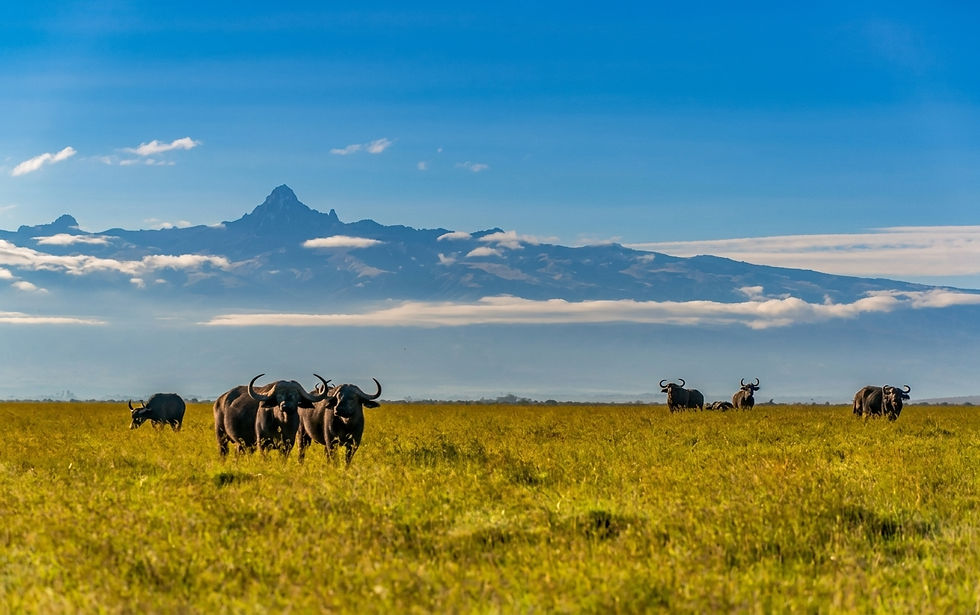
At 5,199 meters, Mount Kenya is the second highest mountain in Africa and a UNESCO World Heritage Site. While only experienced mountaineers climb the highest peaks, the lower regions offer beautiful hikes through Afro-alpine vegetation, moorlands, and mountain forests.
The national park is less a classic safari destination than a natural paradise for hikers, photographers and anyone who wants to experience Kenya's diverse landscapes.
Highlights
Mount Kenya & Summit Landscapes
Afro-alpine vegetation
Mountain forests & moorlands
Hiking & Trekking
Spectacular landscape photography
Ideal for
Hikers & Trekking Fans
photographers
Nature lovers
Active travelers
Landscape lovers
Welche Safari-Region passt zu dir?
region
Masai Mara
Amboseli
Samburu
Laikipia
Tsavo East
Tsavo West
Meru
Lake Nakuru
Lake Naivasha
Hell’s Gate
Aberdare
Mount Kenya
Ideal for
Erste Safari, Great Migration
Elefanten, Kilimandscharo
Seltene Tierarten, Ruhe
Luxus, Conservancies
Weite Landschaften, Elefanten
Vulkanlandschaften, Quellen
Abseits klassischer Routen
Nashörner, Flamingos
Bootsfahrten, Entspannung
Aktivurlaub, Wandern
Bergwälder, Wasserlöcher
Wandern, alpine Landschaften
Special feature
Open savannah
Kilimanjaro view
Samburu Special Five
Private Conservancies
Red laterite soil
Mzima Springs
Untouched wilderness
Rhino sanctuary
Freshwater lake
Bicycle safaris possible
Forest Safari
Africa's second highest mountain
Our recommendation
For most travelers, the combination of the Masai Mara, Amboseli, and Laikipia is an excellent choice for a first safari in Kenya. It combines the open savannah of the Masai Mara with the famous elephant herds of Amboseli and the private conservancies of Laikipia. Added to this are excellent chances of seeing the Big Five, spectacular landscapes, and, depending on the time of year, the Great Migration.
For those already familiar with Kenya or who deliberately want to travel off the beaten track, Samburu, Meru, and Tsavo offer exciting alternatives. Here you'll find diverse landscapes, unique wildlife, and vast wilderness, often with significantly fewer visitors. Combining these destinations with Lake Naivasha, Hell's Gate, or Kenya's coastal region makes for a particularly multifaceted travel experience.
Which safari region suits you best?

The Big Five in Kenya
Kenya is one of the most famous safari destinations in Africa and offers excellent opportunities to experience the Big Five in the wild.
The Masai Mara, Laikipia, Samburu, Amboseli, and Tsavo are particularly renowned for their impressive wildlife viewing. Depending on the region, you can expect to see lions, leopards, elephants, buffalo, and rhinos, as well as numerous other animal species and a wide variety of landscapes.
What animals can you see in Tanzania?
Kenya is one of Africa's most biodiverse safari destinations. From the open savannas of the Masai Mara to the swamps of Amboseli and the arid landscapes of Samburu, hundreds of mammal species and more than 1,100 bird species live here.
It's not just the sheer number of animals that makes Kenya so special. The diversity of habitats is crucial. A single trip allows you to combine different ecosystems, increasing your chances of observing an exceptionally wide range of wildlife.
While large prides of lions and cheetahs dominate the landscape of the Masai Mara, in the north you'll encounter rare animal species such as Grevy's zebras or reticulated giraffes. In Ambose, herds of elephants reign supreme against the backdrop of Kilimanjaro, while thousands of waterbirds inhabit the lakes of the Rift Valley. Each region tells its own story.
The term "Big Five" originally comes from the era of big-game hunting and referred to the five animal species considered particularly challenging to hunt. Today, they symbolically represent Africa's most impressive wildlife and are among the highlights of any safari. All five species can be observed in Kenya.

Löwe
Die Masai Mara zählt zu den besten Orten Afrikas, um Löwen in freier Wildbahn zu beobachten. Große Rudel ruhen tagsüber im Schatten einzelner Akazien oder patrouillieren in den frühen Morgen- und Abendstunden durch ihr Revier.
Besonders während der Great Migration ergeben sich spektakuläre Jagdszenen, wenn Millionen Gnus und Zebras durch das Gebiet ziehen.
Die Chancen auf Löwensichtungen sind das ganze Jahr über hervorragend.

Leopard
Leoparden gelten als Meister der Tarnung.
Tagsüber ruhen sie häufig auf Ästen großer Bäume oder verstecken sich im dichten Uferbewuchs. Besonders entlang des Mara Rivers sowie in Samburu und Laikipia bestehen sehr gute Chancen, diese eleganten Großkatzen zu entdecken.
Eine Leopardenbeobachtung gehört für viele Safari-Gäste zu den eindrucksvollsten Momenten ihrer Reise.

Elefant
Amboseli is known worldwide for its impressive elephants.
Many bulls have exceptionally long tusks and reach a ripe old age. Thanks to decades of research, rangers even know numerous animals individually.
Tsavo and the Masai Mara are also home to large elephant populations.

African Buffalo
African buffaloes are among the most common representatives of the Big Five.
They often roam the savannah in large herds or gather together at watering holes.
Their calm appearance is deceptive. Buffalo are among the most formidable wild animals in Africa and command great respect even from lions.

rhino
Rhinoceroses are significantly rarer than the other members of the Big Five.
The best chances are in Laikipia and Lake Nakuru National Park, where extensive conservation programs help to preserve the endangered animals.
Black rhinoceroses, in particular, are among the rarest large mammals in Africa today.

While the Big Five are found in many parts of Africa, northern Kenya has a very special combination of animals.
The so-called Samburu Special Five consist of:
Grevy's zebra
Reticulated Giraffe
Somali ostrich
Gerenuk
Beisa oryx
Those who visit Samburu will experience a wildlife that differs significantly from the classic safari areas in the south.
Other impressive wildlife
The Big Five are just a small part of what Kenya has to offer. It is precisely the enormous biodiversity that makes every game drive exciting.

Gepard
Few other countries offer such good opportunities to observe cheetahs as Kenya.
The open plains of the Masai Mara are perfect for these swift hunters. They often rest on termite mounds or small rises, from which they scan for prey. With a bit of luck, you might even witness a hunt.

Giraffe
Kenya is home to several giraffe species. Depending on the region, you may encounter, among others:
Reticulated Giraffe
Masai giraffe
Rothschild Giraffe
All three differ significantly in their coat patterns and are found in different habitats.
This diversity is particularly exciting for nature enthusiasts.

Zebra
Kenya's biodiversity is also evident in its zebras. Besides the widespread plains zebra, the much rarer Grevy's zebra, with its narrower stripes and white belly, lives in Samburu.

Hyäne
Spotted hyenas are among the most successful predators in Africa.
Contrary to their bad reputation, they are excellent hunters and capture most of their food themselves.
Especially at night, their characteristic calls can often be heard around the safari camps.

Afrikanischer Wildhund
African wild dogs are among the rarest predators on the continent.
In some Conservancies Laikipias, the stocks have developed favorably in recent years.
A sighting is still something very special.

Hippos
Hippos spend most of the day in the water. Only after sunset do they leave rivers and lakes to graze on land.
Large groups can be observed particularly along the Mara River or at Lake Naivasha.

Nile crocodile
During the Great Migration, numerous Nile crocodiles wait at river crossings for their opportunity.
Many of these animals reach impressive sizes and are among the largest reptiles in Africa.
Antelopes
From tiny dik-diks to mighty eland, Kenya is home to an enormous variety of different antelope species. These include, among others:
impala
Topi
Waterbuck
hartebeest
Eland antelope
Oryx
Gerenuk
Dik-Dik
Thomson's Gazelle
Grant's Gazelle
Each species has its own ecological niche and contributes to the fascinating interplay of the savanna.
The Samburu Special Five

With over 1,100 documented bird species, Kenya is one of the best destinations worldwide for birdwatchers.
Even travelers who have previously had little interest in birds quickly discover their fascination with the impressive diversity. Depending on the season, numerous migratory birds from Europe and Asia also pass through the country.
Particularly well-known are:
Flamingos
Crowned cranes
Osprey
Secretaries
Juggler
African fish eagle
Kingfishers
Hornbills
vulture
Ostriches
Birdwatching in Kenya
The Great Migration in Kenya
Africa's greatest natural spectacle

When people talk about the Great Migration, many think of a single moment: thousands of wildebeest bravely plunging into the Mara River.
In reality, the Great Migration is not a single event, but a continuous cycle that repeats itself year after year between the Serengeti in Tanzania and the Masai Mara in Kenya. More than 1.5 million wildebeest, hundreds of thousands of zebras, and countless gazelles follow the rains in search of fresh grass.
When will the Great Migration take place?
Between July and October, the large herds usually reach the Masai Mara. Many of the famous river crossings on the Mara River take place during this time.
Since the animals follow the rainfall, the exact timing can never be predicted precisely. It is precisely this unpredictability that makes this natural spectacle so fascinating.
Why are the river crossings so spectacular?
Thousands of wildebeest often gather on the steep banks before the first animals finally venture into the water. Strong currents and large Nile crocodiles await them there. Not every herd crosses the river immediately. Sometimes hours pass before the animals decide. Sometimes it all happens within minutes. Patience is therefore one of the most important companions on a safari during the migration.
Is Kenya worth visiting even outside of the Great Migration?
Absolutely: Yes.
Many travelers believe that a safari in Kenya is only worthwhile during the Great Migration.
In fact, the Masai Mara is one of the most wildlife-rich regions in Africa all year round.
Lions, leopards, cheetahs, elephants, giraffes and numerous other wild animals can be observed regardless of migration.
Those who travel outside the peak season often benefit from a quieter atmosphere and significantly fewer vehicles at the sightings.
What types of safaris are available in Kenya?
Kenya offers far more than classic game drives. Depending on the region and accommodation, very different safari experiences can be combined.

Classic game drives
The classic game drive remains the heart of every safari. Players set out in open off-road vehicles early in the morning and late in the afternoon when the animals are particularly active.
Fly-In Safaris
Instead of long drives, small bush planes connect the various safari areas. This allows more time in nature and less time on the road. Fly-in safaris are particularly suitable for travelers who want to comfortably combine several regions.
Walking Safaris
On foot, the perspective changes completely. Together with experienced guides, guests discover tracks, plants, insects, and small details that often remain hidden from a vehicle. Walking safaris are primarily offered by private conservatories.
Hot air balloon safari
A hot air balloon ride over the Masai Mara is one of the most impressive experiences Kenya has to offer. Shortly before sunrise, the balloon lifts off silently, revealing a unique view over the savanna. After landing, a traditional breakfast awaits in the heart of the bush.
Photographer safaris
For ambitious photographers, many camps offer specially equipped vehicles with open sides, camera mounts, or particularly flexible guides.
Those who want to take specific photographs will benefit from longer game drives and a more individualized daily schedule.
Family safaris
Many lodges offer family rooms, private vehicles, and programs for children. Short travel times and diverse landscapes make Kenya an excellent destination for families with children.


Combining safari and beach
Diani Beach - Kenya's most famous dream beach

South of Mombasa lies one of East Africa's most beautiful beaches. Fine, white sand, turquoise waters, and shady palm trees make Diani Beach an ideal place to unwind after a safari. Alongside luxurious resorts, you'll also find small boutique hotels and stylish villas. For those seeking activity, snorkeling, diving, kitesurfing, or a visit to the nearby Kisite-Mpunguti Marine National Park are all possible.
Ideal for
Relaxation after the safari
Honeymoon
Families
Water sports
Watamu - a natural paradise between mangroves and coral reefs

Watamu is significantly quieter than Diani Beach and particularly appeals to nature lovers. The offshore coral reef is one of the most beautiful in East Africa and offers excellent conditions for snorkeling and diving. Dolphins and sea turtles can also be regularly spotted here.
The relaxed atmosphere makes Watamu particularly popular with travelers who want to slow down after their safari.
Lamu - History, Culture and Tranquility

Lamu is not your typical beach destination. Its historic old town, a UNESCO World Heritage Site, offers a completely different perspective on Kenya with its narrow streets, traditional houses, and dhow sailboats. Cars are rare on the island; instead, donkeys and boats dominate the streets. For those seeking culture, history, and tranquility, Lamu provides a truly special end to their trip.
Kilifi - The insider tip on Kenya's coast

Kilifi is located between Mombasa and Watamu and is often overlooked.
That is precisely why the place has retained its relaxed character.
Boutique hotels, small lodges and quiet bays make Kilifi an excellent choice for travelers who prefer authentic coastal experiences.
Our recommendation
For most tours we recommend:
7 to 10 day safari
followed by 3 to 5 nights on the Indian Ocean
This creates a balanced trip with exciting wildlife observations and plenty of time to relax.
The best time to go on a safari in Kenya

A safari in Kenya is generally possible all year round. However, depending on the season, landscapes, animal behavior and weather conditions differ.
While the dry seasons offer ideal conditions for wildlife viewing, the rainy seasons transform many regions into lush green landscapes teeming with impressive birdlife and numerous young animals. Therefore, the best time to travel depends primarily on your personal interests.
An overview of the seasons
Zeitraum
Januar bis März
April bis Mai
Juni bis Oktober
November to December
Charakter
Warm und trocken
Lange Regenzeit
Trockenzeit
Short rainy season
Good for
general safari, photography
weniger Besucher, grüne Landschaften
Big Five, Great Migration
Birdwatching, landscapes
January to March
These months are among the most popular times to travel. The vegetation is still green, wildlife viewing is excellent, and visibility is often exceptionally clear. Photographers also appreciate the soft morning light of this time of year.
April and May
During the long rainy season, Kenya transforms dramatically. Short, intense downpours create lush landscapes and attract many young animals. Although some lodges close seasonally, travelers benefit from significantly fewer visitors and attractive prices.
June to October
This is the classic safari season. The vegetation becomes drier, animals gather more frequently at waterholes, and between July and October the Great Migration typically reaches the Masai Mara. Those wishing to witness this natural spectacle will find the best conditions during these months.
November and December
The short rain showers usually don't last all day. Many landscapes are particularly green at this time of year, and numerous migratory birds arrive in Kenya. These months are also excellent for a safari.
Wie viele Tage sollte man für Kenia einplanen?
The ideal trip duration depends on how intensively you want to get to know the country.
Since the individual safari areas are sometimes far apart, it is worth planning enough time.
7 Tage
Ideal für:
Erste Safari
Kombination aus zwei Regionen
Wenig verfügbare Reisezeit
10 Tage
Unsere Empfehlung für viele Erstbesucher. Hier lassen sich mehrere Nationalparks sinnvoll miteinander verbinden.
Zum Beispiel:
Amboseli
Lake Naivasha
Masai Mara
oder
Samburu
Lake Nakuru
Masai Mara
14 days
Die ideale Reisedauer für alle, die Kenia intensiv erleben möchten.
Mehrere Landschaften, unterschiedliche Tierwelten und ein Strandaufenthalt lassen sich hervorragend kombinieren.
Zum Beispiel:
Samburu
Laikipia
Lake Nakuru
Masai Mara
Diani Beach
21 days
For nature lovers and photographers.
This leaves ample time for several conservancies, remote regions, and relaxing days on the coast.
Accommodation in Kenya
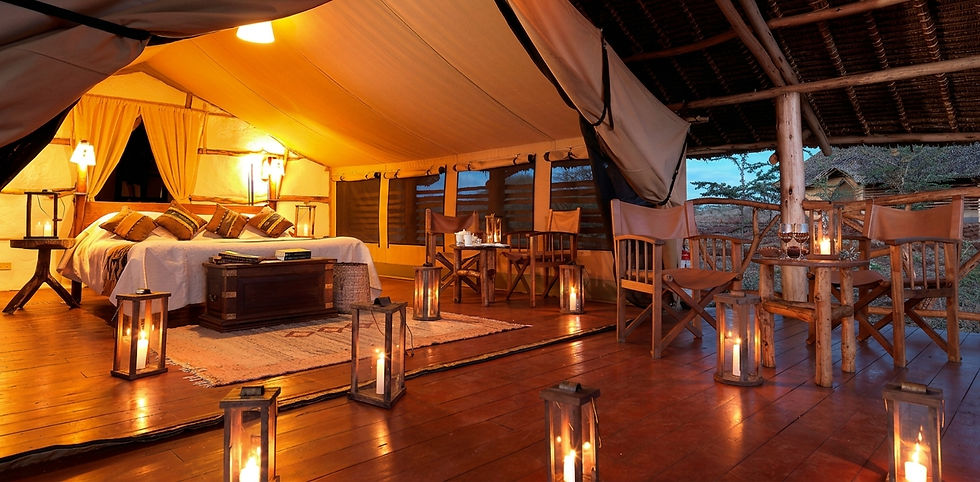
A safari in Kenya no longer means sacrificing comfort. The selection ranges from authentic tented camps to some of Africa's most exclusive safari lodges. The best accommodation depends on your personal preferences and travel style.
Classic safari lodges
Spacious rooms, cool pools and expansive grounds make classic lodges particularly popular.
They are ideal for families or travelers who value comfort.

Boutique Camps
Small camps with only a few tents or suites create a personal atmosphere.
Many are located in private conservancies and offer particularly exclusive safari experiences.
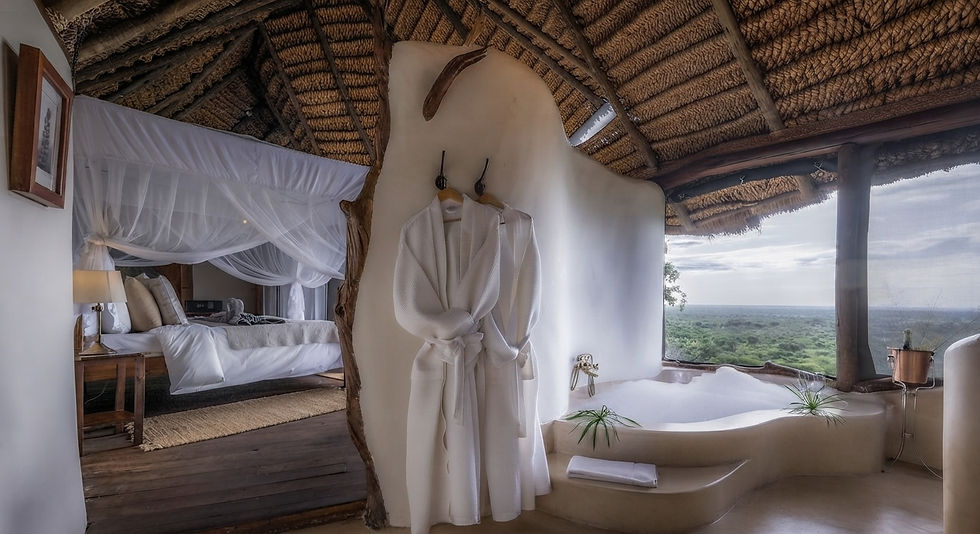
Luxury camps
Kenya is one of Africa's leading luxury destinations. Many camps combine exceptional comfort with a spectacular location amidst nature.
Private guides, gourmet cuisine and individually designed game drives are standard in many places.

Mobile Camps
During the Great Migration, seasonal camps are set up in some regions, deliberately located close to the action.
They convey a particularly authentic safari feeling without sacrificing comfort.

Family-friendly lodges
Many accommodations offer family rooms, private vehicles, or special programs for children.
This makes Kenya ideal for family trips.

Arrival in Kenya
Most international travelers arrive in Kenya via Jomo Kenyatta International Airport in Nairobi. Several options are then available for safaris in the various national parks.
Domestic flights
Especially on longer tours, small bush planes offer a comfortable alternative to long drives. They connect Nairobi with numerous safari areas such as the Masai Mara, Amboseli, and Samburu. Fly-in safaris save time and allow for a particularly relaxed itinerary.
Land transfers
Many national parks are easily accessible by private vehicle. Round trips, in particular, connect several regions and offer diverse landscapes along the way.

Our recommendation
Kenya's full diversity is only revealed through the combination of different regions. Instead of visiting just one national park, we usually recommend a custom-planned tour that combines different landscapes, wildlife, and safari experiences.
This creates a journey that goes far beyond individual highlights and allows you to experience Kenya in all its diversity.
Is Kenya a safe travel destination?
Kenya has been one of Africa's most popular safari destinations for decades. Every year, hundreds of thousands of visitors from all over the world travel to the country to experience its national parks, wildlife, and coastline. As with any travel destination, however, it's worthwhile to be familiar with the local conditions.
The good news first: Most safari areas are considered very safe. National parks, private conservancies, and high-quality lodges have experienced guides, trained staff, and established safety protocols. During a guided safari, you will travel exclusively in protected areas and will be accompanied at all times by local rangers or guides.
Many travelers are surprised by how relaxed they feel during their safari. The daily schedule is well-organized and the accommodations are geared towards international guests.

Security in Nairobi
Nairobi is the starting point for most visitors' journey. Like many major international cities, it also has neighborhoods that are less suitable for tourists. At the same time, Nairobi boasts modern hotels, excellent restaurants, and many safe areas.
We recommend:
Organize transfers in advance
Do not openly display valuables
Avoid taking long walks after dark.
Order official taxis via app or use pre-arranged transfers.
Most guests only spend one or two nights in Nairobi before their safari begins.
Coastal safety
Coastal regions such as Diani Beach or Watamu are also generally considered popular travel destinations.
As is true everywhere in the world:
Do not leave valuables unattended.
Avoid secluded beach areas at night.
Please note the accommodation's instructions.
With common sense, the coast can be enjoyed in a relaxed manner.
Safety during a safari
Many first-time visitors wonder whether dangerous animals pose a risk. In fact, experienced guides ensure that wildlife viewing takes place with the utmost respect and at a safe distance.
A few simple rules of conduct are sufficient:
Always follow the guide's instructions.
Never feed or provoke animals.
Only leave the vehicle at designated areas.
In camps, take advantage of the staff's assistance at night, if offered.
These rules serve both your safety and the protection of the animals.
Health
For a trip to Kenya, we recommend that you inform yourself about current vaccination recommendations and any necessary health precautions well in advance of departure.
In many safari areas there is only a low health risk, while for some regions – especially on the coast or in low-lying areas – additional precautionary measures may be advisable.
We are happy to advise our guests individually and inform them about the current entry and health regulations.
How much does a safari in Kenya cost?
One of the most frequently asked questions is: How expensive is a safari in Kenya?
The answer depends heavily on the time of year, accommodations, duration, and desired experiences. While classic tours are already relatively affordable, exclusive fly-in safaris in private conservatories are among the most luxurious travel experiences in Africa.

Travel style
standard
middle class
luxury
Ultra-Luxury
Price per person per night*
approximately €350 to €600
approximately €600 to €1,000
approximately €1,000 to €2,000
from approximately €2,000
*Richtwerte inklusive Unterkunft, Vollverpflegung und Safari-Aktivitäten. Internationale Flüge sind in der Regel nicht enthalten.
Hinweis:
Die tatsächlichen Kosten hängen von Saison, Unterkunft, Inlandsflügen und Reiseverlauf ab. Eine individuell geplante Reise ermöglicht es, Budget und Reiseerlebnis optimal aufeinander abzustimmen.
What factors influence the price?
The biggest influencing factors are:
Travel time
Accommodation category
Number of national parks
Domestic flights
Private vehicles or shared safaris
Duration of the trip
Exclusive activities such as hot air balloon safaris
Especially with tailor-made trips, the budget can be flexibly arranged without having to forgo special nature experiences.
Kenya with children - A safari for the whole family
Many parents wonder if a safari is suitable for children. Our answer is: Yes – if the trip is well planned.
Kenya offers ideal conditions for families. The infrastructure is excellent, there is a wide selection of family-friendly lodges, and many safari areas can be easily combined. Children here experience animals not from books or documentaries, but in their natural habitat. This often makes a safari an unforgettable experience.
Family-friendly regions
Particularly suitable are:
Amboseli
Masai Mara
Lake Naivasha
Laikipia
Many lodges offer:
Family room
Private vehicles
children's programs
Pools
Flexible meal times
A private safari vehicle also makes it possible to customize breaks and adapt the daily routine to the needs of the family.
Kenya for photographers - A paradise for wildlife photography
For many nature photographers, Kenya is one of the most fascinating travel destinations in the world. The open landscapes often offer unobstructed views of wildlife, while the warm morning and evening light creates ideal conditions for impressive photographs. In addition, many regions boast an exceptionally high density of wildlife.

Why photographers love Kenya
Open savannas
Excellent light
High predator density
Large herds of elephants
Spectacular landscapes
Diverse birdlife
Our tips
Those who want to take targeted photographs will particularly benefit from:
private conservancies
longer game drives
experienced guides
small camps with few guests
Travel outside of peak holiday periods
This leaves more time for observation and creative image composition.
Sustainable tourism in Kenya
A safari offers far more than just impressive wildlife viewing. It also contributes to protecting valuable habitats and supporting local communities.
Many of Kenya's protected areas are largely financed through sustainable tourism. Entrance fees, overnight stays, and guided activities contribute directly to the preservation of the national parks and conservancies.

Private Conservancies
Private conservatories are a particularly successful model. They work closely with local communities and create incentives to protect wildlife as a valuable resource.
For guests, this means:
fewer vehicles
exclusive safari experiences
larger wilderness
additional activities such as night drives or walking safaris
Protection of endangered species
Kenya is heavily involved in the protection of numerous animal species.
These include, among others:
black rhinoceroses
white rhinoceroses
African wild dogs
Grevy's zebras
Reticulated Giraffes
Elephants
Many lodges actively support these projects or work closely with nature conservation organizations.
Travel responsibly
A sustainably planned safari doesn't mean sacrificing comfort. On the contrary: many high-quality lodges now rely on solar energy, sustainable construction methods, regional products, and responsible water management.
By choosing such accommodations, travelers make a direct contribution to the long-term protection of Kenya's unique natural environment.
Our philosophy
At InfiniteWild, we believe that exceptional safari experiences always come with responsibility.
Therefore, we prefer to work with carefully selected partners who are committed to nature conservation, sustainable tourism and supporting local communities in the long term.
Our goal is to create journeys that not only provide unforgettable experiences but also make a positive contribution to protecting Africa's unique nature.
Our Kenya trips
Every safari is different.
The interests of a passionate photographer differ from those of a family. Some travelers want to discover as many regions as possible, while others deliberately choose to spend more time in one place. That's precisely why, in our view, there is no single perfect Kenya trip.
A custom-planned safari allows you to tailor the route, accommodations, and activities to your personal preferences. Instead of trying to visit as many national parks as possible in a short time, you'll experience a journey with a harmonious rhythm and ample time to consciously immerse yourself in nature.
Often it's the small decisions that make the difference: an extra night in a private conservancy, a bush breakfast after a game drive, or a few relaxing days on the Indian Ocean to round off the trip.
Our goal is not to put together a "standard" trip, but a safari experience that truly suits you – regardless of whether you are traveling to Africa for the first time or have already experienced many safaris.
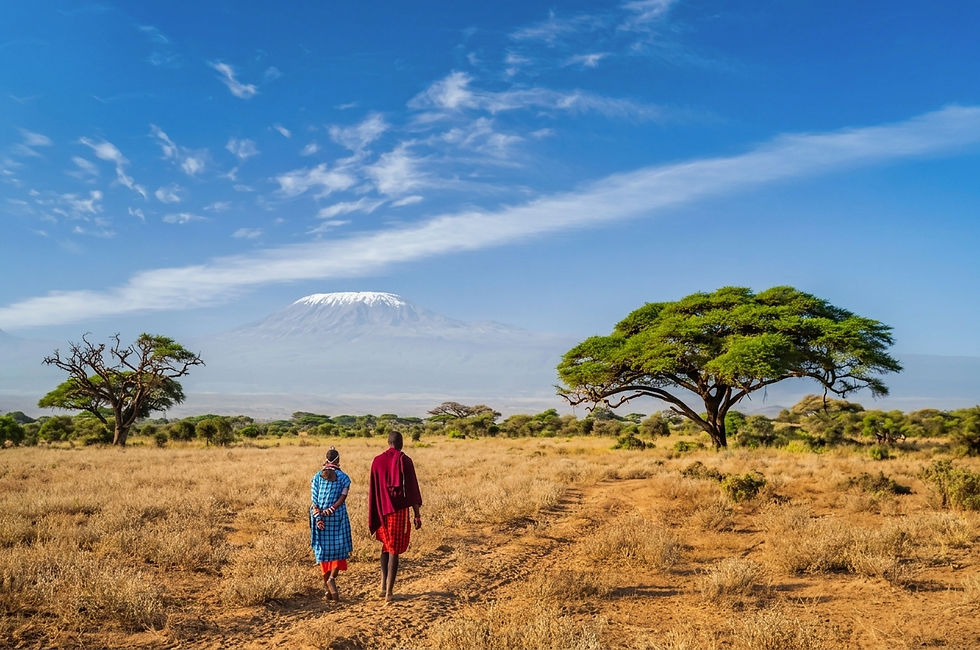
Every safari begins with an idea. Perhaps you dream of experiencing the sunrise over the Masai Mara, watching elephants in front of Kilimanjaro, or ending the day overlooking the Indian Ocean.
Whether you are traveling to Africa for the first time or have already experienced many safaris – we plan your Kenya trip individually and with great attention to detail.
We focus on personal consultation, carefully selected accommodations and travel itineraries that match your preferences.
Ready for your safari in Kenya?
Let's plan the perfect trip for you together. We'll advise you personally and put together a customized itinerary – tailored to your wishes, budget, and travel dates.
Frequently asked questions about a safari in Kenya
Kenya can generally be visited year-round. The months from January to March and from June to October are particularly popular, as dry conditions make wildlife viewing easier. Those wishing to witness the Great Migration usually travel to the Masai Mara between July and October.
Für einen ersten Eindruck empfehlen wir mindestens sieben Tage. Idealerweise planen Sie jedoch zehn bis vierzehn Tage ein, um mehrere Regionen miteinander zu kombinieren und die unterschiedlichen Landschaften Kenias kennenzulernen.
Yes. Kenya is one of the few African countries where all of the Big Five can be found. The chances of seeing them are particularly good in the Masai Mara, Amboseli, Laikipia, and Lake Nakuru National Parks.
The herds usually reach the Masai Mara between July and October. Since the migration follows the rainfall, the exact timing can vary slightly each year.
Absolutely. Kenya offers excellent infrastructure, experienced guides, and a wide range of accommodation options. This makes it an ideal country for a first safari.
Yes. While the Great Migration is one of Africa's most famous natural events, Kenya offers excellent wildlife viewing year-round. Lions, elephants, giraffes, and cheetahs can be regularly spotted regardless.
Besides the Big Five, Tanzania is home to cheetahs, giraffes, zebras, hippos, crocodiles, hyenas, African wild dogs, numerous antelope species, and over 1,100 bird species. Wild chimpanzees can also be observed in the Mahale Mountains and Gombe National Park.
Yes. This combination is one of Kenya's greatest strengths. After a safari, Diani Beach, Watamu, Kilifi, or Lamu are ideal for a few relaxing days on the Indian Ocean.
Yes. Many lodges offer family rooms, private safari vehicles, and special activities for children. A well-planned itinerary with reasonable driving times is particularly important.
Most national parks and private conservancies are considered very safe travel destinations. During a guided safari, you will be accompanied by experienced guides who know both the wildlife and the region extremely well.
An Electronic Travel Authorization (ETA) is currently required for entry. Please check the current regulations before traveling.
The combination of Amboseli and the Masai Mara is one of the most popular travel itineraries for first-time visitors. It combines breathtaking landscapes with excellent opportunities for wildlife viewing.
Ja. Gerade bei längeren Rundreisen sparen Inlandsflüge viel Zeit und ermöglichen es, mehrere Safari-Gebiete komfortabel miteinander zu verbinden.
Kenya is one of Africa's leading luxury destinations. Exclusive camps with exceptional service, private guides, and first-class cuisine can be found, particularly in private conservancies.
Recommendations may vary depending on the country of origin and travel itinerary. Travel health advice should be sought before departure.
Yes. Especially in the Masai Mara, hot air balloon rides are among the most impressive experiences of a safari.
The official languages are English and Swahili. English is spoken almost everywhere in hotels, lodges, and safari camps.
Distances vary considerably depending on the region. While some parks are easily accessible by road, domestic flights are often recommended for more distant areas.
Yes. Open landscapes, a high density of animals and exceptionally beautiful light make Kenya one of the best destinations for wildlife photography.
A tailor-made trip allows you to perfectly match national parks, accommodations, and activities to your interests. This creates a balanced itinerary with ample time for immersive nature experiences.
Our Kenya trips
Kenya is a land of contrasts. Vast savannas meet dense mountain forests, arid landscapes meet lush lake regions, and spectacular wildlife sightings meet very different cultures and habitats.
Whether you want to experience the Masai Mara for the first time, observe the elephants in Amboseli against the backdrop of Kilimanjaro, or discover the remote landscapes of Samburu and Laikipia – we will tailor your trip to your individual preferences. A safari can also be wonderfully combined with relaxing days on the Kenyan coast.
With carefully selected lodges and camps, experienced guides and a route that suits your travel style, a Kenya trip is created that goes far beyond a classic safari.
Ready for your safari in Kenya?
Let's plan your personal Kenya trip together. We'll advise you individually and develop a route that perfectly suits your wishes, travel dates, and budget.
