

Safari in Uganda
Discover gorillas, rainforests and the original side of Africa.
Safari in Uganda – The Green Heart of Africa
Some trips are defined by spectacular landscapes. Others by impressive wildlife sightings. Uganda combines both in a way that is virtually unparalleled in Africa.
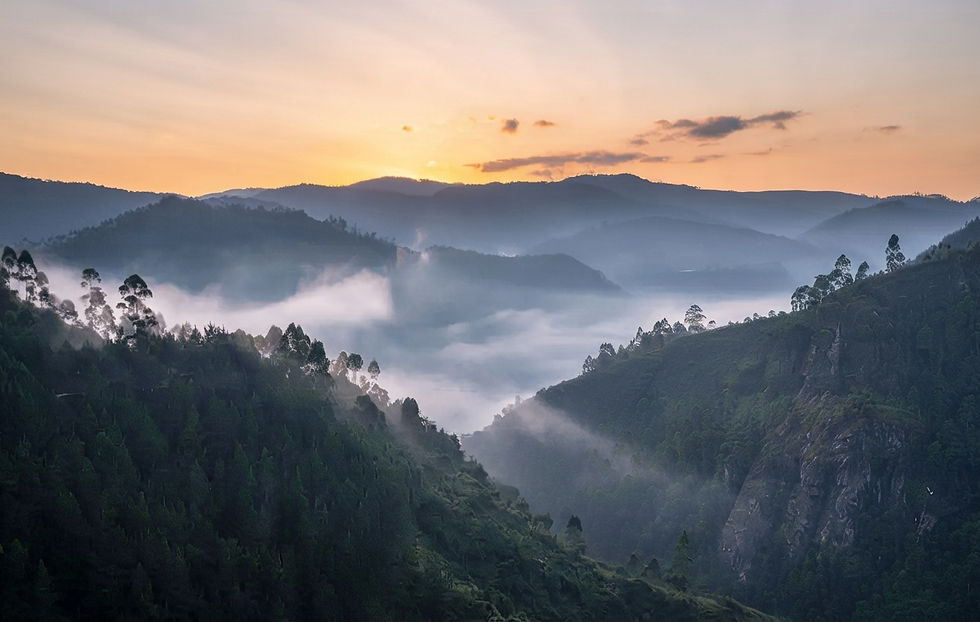
Dense rainforest gives way to vast savannas. Mist-shrouded mountains meet mighty waterfalls, while rivers, lakes, and wetlands are home to an extraordinary diversity of species. Here you can follow chimpanzees through the forest in the morning, observe elephants on a game drive in the afternoon, and gaze deep into the eyes of a mountain gorilla the next day.
Hardly any other country offers such diverse nature experiences in a comparatively small area.
This is precisely why Uganda is still considered one of Africa's most exciting hidden gems. While well-known safari destinations like Botswana, South Africa, or Tanzania attract numerous visitors every year, in Uganda you often travel off the beaten track.
Those who want to experience Africa in its original, diverse and intense form will find ideal conditions here.
On this page you will find everything you need to know for your trip to Uganda – from the most beautiful national parks to gorilla and chimpanzee trekking, the best time to travel and our personal recommendations.

Why Uganda?
Uganda is one of the most diverse travel destinations in Africa.
The country combines some of the rarest animal species in the world with an impressive diversity of landscapes. Besides classic game drives, you can expect rainforests, volcanoes, lakes, rivers, and spectacular mountain scenery.
Gorilla trekking, in particular, has made Uganda world-famous. Only three countries offer the opportunity to observe mountain gorillas in the wild – Uganda is among the best of these.
But Uganda is much more than just gorillas. Murchison Falls National Park impresses with its magnificent waterfalls and large herds of elephants, Queen Elizabeth National Park is known for its tree-climbing lions and boat safaris, while Kibale National Park is considered one of the best places in Africa for chimpanzee trekking.
This diversity makes Uganda a destination for anyone who wants to experience different landscapes and animal species on a single trip.


Uganda at a glance
Capital city
Largest city
Size
Resident
Language
currency
Time zone
entry
Safari possible
Best time to travel
Highlights
Kampala
Kampala
approx. 241,038 km²
approximately 51.4 million
English, Swahili & other local languages
Ugandan shilling (UGX)
UTC +3
Visa requirements vary depending on nationality; application online.
Year-round
June to September & December to February
Gorillas, chimpanzees, Queen Elizabeth National Park, Murchison Falls, Bwindi Impenetrable Forest

Where is Uganda?
Uganda is located in the heart of East Africa and borders Kenya, Tanzania, Rwanda, South Sudan and the Democratic Republic of Congo.
Due to its location on the equator, the climate is pleasantly warm all year round. At the same time, the varying altitudes mean that temperatures and landscapes differ significantly.
While dense mountain rainforests in the southwest are home to the mountain gorillas, open savannas and extensive plains characterize the landscape in the north.
Lake Victoria, the largest lake in Africa, also plays an important role. It influences the climate and is the source of the White Nile, which flows through Uganda.
Uganda – Where rainforest meets savanna
There is hardly another safari destination in Africa where rainforest and classic safari can be combined so directly as in Uganda.
In Bwindi Impenetrable National Park, narrow paths wind through dense mountain rainforest before a group of mountain gorillas suddenly appears among ferns and ancient trees. A few days later, lions may roam the savannah in Queen Elizabeth National Park, while hippos wallow in the Kazinga Channel. But Uganda is much more than gorilla trekking.
The country is one of Africa's most exciting destinations for primate watching. Besides mountain gorillas, it is home to chimpanzees, golden monkeys, and numerous other monkey species. Kibale Forest National Park is one of the most important chimpanzee sanctuaries in East Africa – and a hike through the rainforest offers a completely different perspective on the continent's wildlife.
At the same time, Uganda's savannah landscapes surprise visitors with their great biodiversity. In Murchison Falls National Park, elephants, giraffes, lions, and buffalo meet the Nile, which here forces its way through a narrow gorge and plunges over the Murchison Falls. In Queen Elizabeth National Park, a boat trip on the Kazinga Channel combines intensive wildlife viewing with a completely different way of experiencing the landscape.
What makes Uganda special is the change between habitats: from dense rainforest to open savannah, from volcanic landscapes to large lakes, and from gorilla tracking to classic game drives.
A trip to Uganda is therefore rarely just a safari. It is a journey through some of the most diverse landscapes in East Africa – and an encounter with animals that one would not experience on a classic safari.
It is precisely this combination that makes Uganda a travel destination that is worthwhile even for experienced Africa travelers: less predictable, incredibly diverse and full of experiences that are hardly comparable.

What sets Uganda apart from other safari destinations
Uganda offers experiences rarely found on a traditional safari. Gorilla and chimpanzee tracking, game drives, boat safaris, and hikes through dense rainforest can all be combined within a single trip. At the same time, the diverse landscapes – from the mountain rainforests of the west to the vast savannas of the north – provide an extraordinary variety of experiences.
The encounters with mountain gorillas and chimpanzees are what make Uganda truly unique. Instead of observing animals solely from a safari vehicle, you'll be tracking them on foot, experiencing them in their natural habitat in a completely different, more direct way.
In addition, many regions have a comparatively low visitor density. As a result, Uganda feels less like a classic safari destination and more like a journey of discovery through diverse habitats, where each region offers its own unique experience.
Who is Uganda suitable for?
Uganda is the ideal travel destination for anyone who wants to experience Africa intensely and in a diverse way.
The country is particularly suitable for:
Nature enthusiasts
Gorilla trekking
Chimpanzee Trekking
Safari lovers
photographers
Repeat travelers who are already familiar with Africa
couples
adventurous
birdwatchers
Uganda is less suitable for travelers seeking only a classic Big Five safari with short travel times. The distances between national parks are sometimes greater than in other countries, and many roads lead through rural areas. However, this is precisely what makes Uganda so special.
Uganda – More than just gorilla trekking
Many people associate Uganda solely with its famous mountain gorillas.
The country offers much more than that. Hardly any other travel destination combines rainforest, savannah, rivers, lakes, and mountains in such a small area. This diverse landscape ensures that almost every leg of a tour offers new impressions.
Those who have enough time will experience Uganda not only as a gorilla destination, but as one of the most diverse safari countries in Africa.
Why a safari in Uganda is worthwhile
Home of the Serengeti and the Ngorongoro Crater
Scene of the Great Migration
Vast national parks with impressive wilderness
Excellent chances of making the Big Five
Great diversity of landscapes and ecosystems
Safari and Zanzibar can be perfectly combined
Exclusive safari camps and luxury fly-in safaris
Year-round safari opportunities with different seasonal highlights
Gorilla trekking in the rainforest
Experience chimpanzees up close
Classic Big Five Safaris
Boat safaris on the Nile
Kazinga Canal with hippos
Diverse landscapes
Less visited safari areas
Unique primate diversity
The most beautiful national parks in Uganda
Uganda offers an extraordinary variety of national parks. From dense rainforests to open savannas, and from rivers and lakes to spectacular waterfalls, each region is distinctly different from the others.
It is precisely this diverse landscape that makes a tour through Uganda so special. Instead of repetitive game drives, you can expect a wide variety of nature experiences and wildlife encounters.
Bwindi Impenetrable National Park
The home of the mountain gorillas
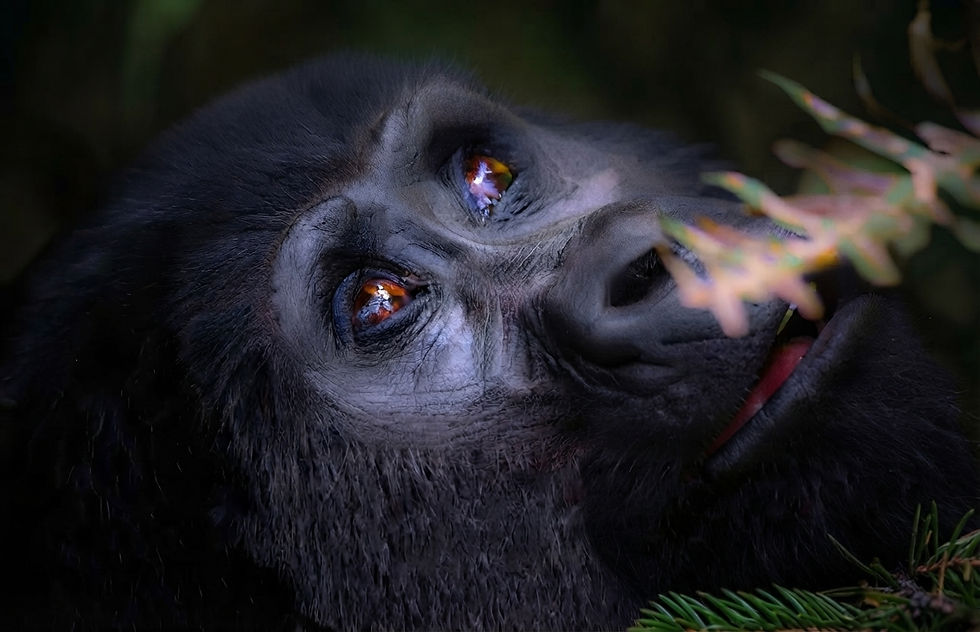
Bwindi Impenetrable National Park is one of the most extraordinary protected areas in Africa and is Uganda's most famous tourist destination.
The dense mountain rainforest is a UNESCO World Heritage Site and is home to almost half of all free-living mountain gorillas worldwide.
A hike through the cloud forest, accompanied by experienced rangers, is one of the most moving nature experiences Africa has to offer. Once a gorilla family is located, you can spend an hour with the animals and observe their natural behavior up close.
Besides the gorillas, the park is home to numerous other primates, over 350 bird species, and countless plant species.
Highlights
Gorilla Trekking
UNESCO World Natural Heritage
Cloud forest
Rare bird species
Exceptional nature photography
Queen Elizabeth National Park
Uganda's most diverse national park
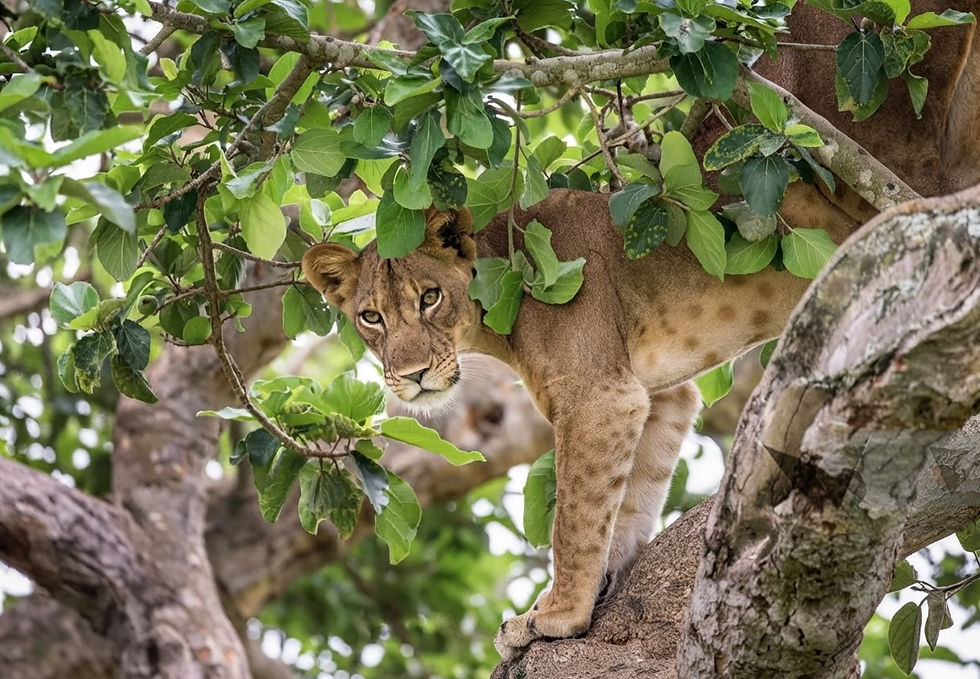
Queen Elizabeth National Park combines classic safari experiences with stunning landscapes.
Open savannas alternate with crater lakes, wetlands, and tropical forests. The park is particularly famous for its tree-climbing lions in the Ishasha sector – a behavior that can only be observed regularly in a few places worldwide.
Another highlight is the Kazinga Channel, which connects Lake Edward with Lake George. Boat safaris on this channel offer some of the richest wildlife experiences in Africa. Elephants, hippos, buffalo, crocodiles, and numerous bird species can often be observed at close range.
Highlights
Tree-climbing lions
Boat safari on the Kazinga Channel
Elephants
Hippos
Over 600 bird species
Murchison Falls National Park
Where the Nile makes its way

Murchison Falls National Park is the largest national park in Uganda and impresses with a unique combination of river landscapes, savannas and the spectacular Murchison Falls.
Here, the mighty Nile forces its way through a narrow crevice in the rock, only a few meters wide, before plunging some 40 meters into the depths below. The enormous power of the water can be heard from afar.
Besides the waterfalls, the park offers excellent opportunities for classic game drives. Elephants, giraffes, lions, buffalo, and numerous antelope species are regularly sighted here. A boat trip upstream to the base of the falls is one of the highlights of any Uganda trip.
Highlights
Murchison Falls
Boat safari on the Nile
Giraffes
Elephants
Lions
Crocodiles
Kibale National Park
The best chimpanzee trekking in Africa

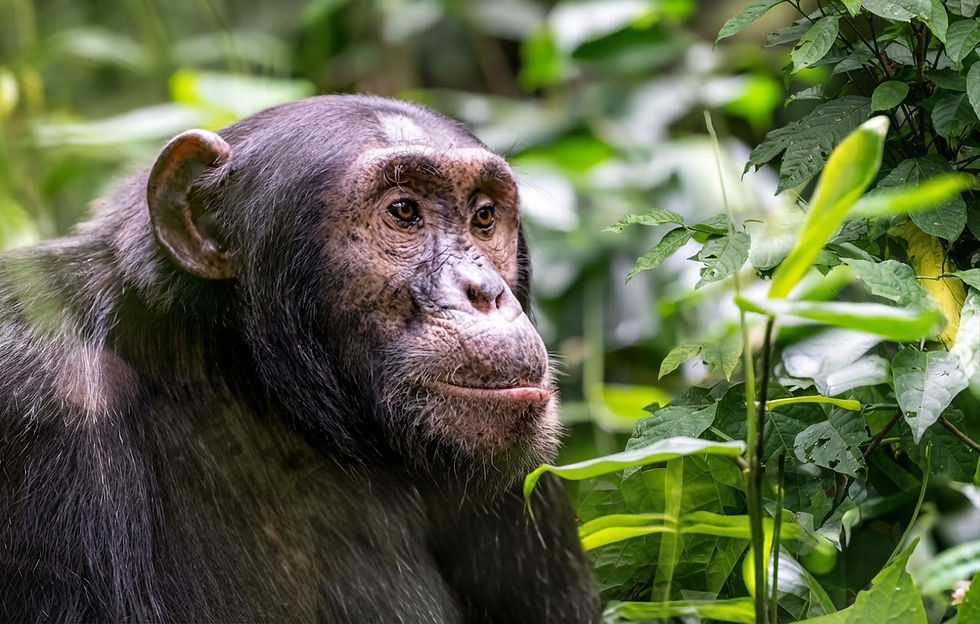
Kibale National Park is considered one of the best places in the world to observe chimpanzees in the wild.
The evergreen rainforest is home to more than 1,500 chimpanzees and a total of 13 primate species – more than almost any other national park in Africa.
During chimpanzee trekking, experienced rangers accompany small groups through the forest. Once the animals are located, you can experience their social behavior, communication, and impressive intelligence up close.
Highlights
Chimpanzee Trekking
rainforest
13 primate species
Birdwatching
Kidepo Valley National Park
Uganda's wildest safari area
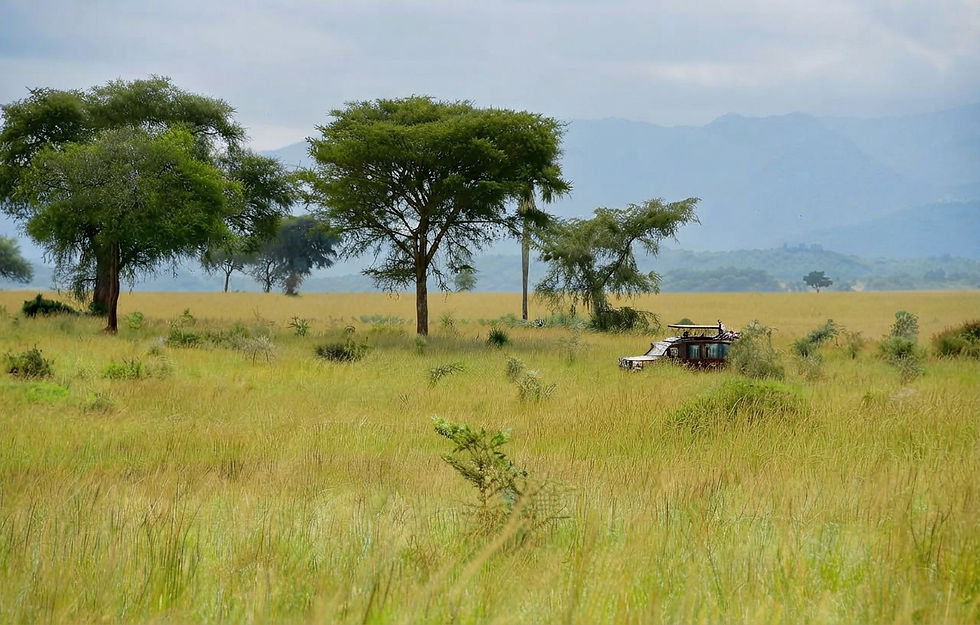
Im äußersten Nordosten Ugandas liegt der Kidepo Valley National Park. Durch seine abgelegene Lage zählt er zu den ursprünglichsten und am wenigsten besuchten Nationalparks Afrikas.
Weite Savannen, schroffe Berge und ausgetrocknete Flussläufe prägen die Landschaft. Die geringe Besucherzahl sorgt dafür, dass Pirschfahrten hier oft ein besonders exklusives Gefühl vermitteln. Zu den Bewohnern gehören unter anderem Löwen, Geparden, Elefanten, Büffel, Giraffen, zahlreiche Antilopenarten, sowie die Husarenaffen.
Highlights
-
Abgeschiedene Wildnis
-
Große Raubtiere
-
Spektakuläre Landschaften
-
Wenige Besucher
Primate trekking in Uganda
Gorilla Trekking in Uganda
For many travelers, gorilla trekking is the main reason for a trip to Uganda. Only about 1,000 mountain gorillas still live in the wild – and a large proportion of them live in Bwindi Impenetrable National Park.
The trek begins early in the morning with a briefing by the rangers. Afterwards, you set off in small groups through the rainforest.
It's impossible to predict exactly how long the trek will take. Some gorilla families are found after just an hour, others only after several hours. Once the animals are reached, one of the most impressive moments of an African trip begins.
For one hour you can observe the gorillas up close – while they eat, play, or rest. The encounter is conducted calmly and respectfully to disturb the animals as little as possible.
Many travelers describe this moment as the emotional highlight of their entire trip.
A little-known fact: A silverback is an adult male gorilla, typically between 12 and 15 years old. It gets its name from the characteristic silvery-gray fur on its back. As the leader of the group, it protects and guides its family.

Which safari region suits you best?
What you should know about gorilla trekking
Small groups with a maximum of eight people
Accompanied by experienced rangers
Good basic fitness is recommended.
Sturdy footwear and long clothing are advisable.
The time spent with the gorillas is a maximum of one hour.
Permits should be reserved early, as the number per day is limited.
The minimum age for gorilla trekking is 15 years, both in Uganda and Rwanda.
Chimpanzee Trekking
Besides gorillas, chimpanzees are among Africa's most fascinating primates. In Kibale National Park, you have the opportunity to observe these intelligent animals in their natural habitat.
Unlike gorillas, chimpanzees often move quickly through the treetops and communicate loudly with each other. This makes the experience significantly different from gorilla trekking and ideally complements a trip to Uganda.
Many travelers combine both activities, gaining a unique insight into the lives of our closest relatives in the animal kingdom.

Uganda's wildlife - From the Big Five to rare primates
Uganda is one of the most biodiverse countries in Africa. While many travelers come primarily to see the mountain gorillas, the country also boasts an astonishing variety of wildlife.
From the vast savannas in the north to the dense rainforests in the southwest, hundreds of mammal species and more than 1,000 bird species live here. This makes it possible to discover completely different habitats on a single trip.
Although Uganda is primarily known for gorilla trekking, you can regularly observe four of the Big Five here. The Big Five include the following animals:
Lion
leopard
elephant
African Buffalo
Rhinos no longer roam freely in Uganda's national parks. Those wishing to experience the Big Five in their entirety can visit the Ziwa Rhino Sanctuary. This protected area plays a vital role in the reintroduction of white rhinos to Uganda and is frequently visited on the way to Murchison Falls National Park.

Bergorillas
Die Berggorillas sind ohne Zweifel das bekannteste Symbol Ugandas.
Sie leben ausschließlich in den Bergregenwäldern Ugandas, Ruandas und der Demokratischen Republik Kongo. Uganda beherbergt dabei den größten Bestand dieser seltenen Primaten. Die Begegnung mit einer Gorilla-Familie zählt zu den intensivsten Naturerlebnissen weltweit.

Chimpanzees
Uganda is considered one of the best places in Africa to observe chimpanzees in the wild.
Large groups of these fascinating primates live primarily in Kibale National Park.

Lion
Queen Elizabeth National Park is particularly known for its tree-climbing lions.
Lions are also found in Murchison Falls National Park and Kidepo Valley National Park.

Leopard
Leoparden sind in Uganda deutlich seltener zu sehen als Löwen.
Mit etwas Geduld und einem erfahrenen Guide bestehen dennoch gute Chancen auf Sichtungen – besonders in den frühen Morgenstunden oder nach Sonnenuntergang.

Elefant
Große Elefantenherden leben unter anderem im Queen Elizabeth National Park und im Murchison Falls National Park.
Besonders eindrucksvoll sind Begegnungen während einer Bootssafari, wenn Elefanten zum Trinken an den Nil oder den Kazinga-Kanal kommen.

Giraffes
Uganda ist Heimat der seltenen Rothschild-Giraffe, einer der am stärksten bedrohten Giraffen-Unterarten.
Die besten Chancen auf Beobachtungen bestehen im Murchison Falls National Park.

African wild dogs
Wild dogs are extremely rare in Uganda and are only occasionally observed in the north of the country.
Those who want to specifically experience these fascinating predators will find significantly better conditions in Botswana or Zimbabwe.
Uganda for birdwatchers
With over 1,000 documented bird species, Uganda is one of the best birding destinations in the world.
From the colorful turaco to the majestic crowned crane, Uganda's national bird, to the rare shoebill, the country offers an extraordinary diversity.
Shoebill

For birdwatchers, the shoebill is one of the absolute highlights of a trip to Uganda.
With its distinctive beak and calm nature, it is one of the most extraordinary bird species in Africa.
The Mabamba swamps on Lake Victoria are among the best places in the world to observe it.
weitere Vogelarten

From the colorful turaco to the majestic crowned crane, Uganda's national bird, to the rare shoebill, the country offers an extraordinary diversity.
Particularly recommended are:
Bwindi Impenetrable National Park
Kibale National Park
Queen Elizabeth National Park
Mabamba Wetlands
Murchison Falls National Park
Even travelers who previously had little interest in birdwatching often discover a new enthusiasm in Uganda.
Combining safari and beach
From the mountain rainforest to the coast
A trip to Uganda can be perfectly extended with a few days on the Indian Ocean coast. After intense experiences such as gorilla tracking, chimpanzee trekking, and game drives, a change of scenery to the sea is a wonderful way to end the trip in a relaxed manner.
Mombasa and the Kenyan coast, as well as Zanzibar, are particularly easy to reach. Both destinations are directly accessible from Entebbe, making it possible to integrate a beach extension into a Uganda trip without long flights or unnecessary detours.
Mombasa is particularly suitable for travelers who want to experience not only the beach but also Swahili culture and Kenya's coastal scenery. You can, for example, combine your safari with a few days on Diani Beach or in a stylish beach resort. Those who want to experience even more can add a visit to Mombasa's historic old town or a trip along the coast to their stay.
Zanzibar, on the other hand, offers the classic tropical finale to a safari. White sandy beaches, warm water, and small boutique hotels or high-end resorts create a stark contrast to the Ugandan wilderness. You can also enhance your trip with a stay in Stone Town, a spice tour, or a boat trip.
We plan the safari and beach holiday as one continuous journey: from the rainforests of Uganda and encounters with gorillas and chimpanzees to a few days by the sea. This creates a diverse combination of adventure, nature, and relaxation, without the beach extension becoming a second, completely independent destination.
Ideal for
Safari combined with beach holiday
Relaxed trip extension
White sandy beaches
Snorkeling & Diving
Swahili culture
honeymoon

The best time to go on a safari in Uganda
Uganda can generally be visited year-round. Due to its varying altitudes, it enjoys a relatively pleasant climate, quite different from many other countries on the equator. However, certain months are considered particularly recommended for safaris and gorilla trekking.
An overview of the seasons
Period
Dezember bis Februar
March to May
June to September
Oktober bis November
character
Trockenzeit
Long rainy season
Dry season
Short rainy season
Especially suitable for
Gorilla trekking, safari, chimpanzees
Lush landscapes, birdwatching
Safari, gorilla trekking, round trips
Fewer visitors, green landscapes
December to February
These months are among the most popular times to travel. The trails in the rainforest are often easier to navigate, and the conditions for gorilla and chimpanzee trekking are particularly pleasant.
Even traditional safaris benefit from the drier vegetation.
March to May
During the rainy season, Uganda reveals its greenest side. Rain showers usually occur in the afternoon, transforming the landscape into a lush green. This time is particularly appealing for photographers and birdwatchers.
June to September
These months are also considered an ideal time to travel.
They are ideally suited for round trips that combine several national parks.
October to November
The short rainy season brings fresh vegetation and fewer visitors.
With flexible travel planning, excellent wildlife viewing is possible even during these months.
How many days should one plan for Uganda?
Uganda thrives on its diversity. That's why it's worth planning enough time.
6 bis 8 Tage
Ideal für:
Kurztrip
Gorilla Trekking
Bwindi
Queen Elizabeth National Park
10 to 12 days
Our recommendation for first-time visitors.
Example:
Murchison Falls National Park
Kibale National Park
Queen Elizabeth National Park
Bwindi Impenetrable National Park
14 to 16 days
Perfect for anyone who wants to experience Uganda intensively or combine it with a beach holiday.
Additionally, areas such as Lake Mburo National Park or Kidepo Valley National Park can be integrated.

Uganda or Rwanda
Many travelers wonder which country is better suited for primate trekking. Both destinations offer extraordinary encounters with mountain gorillas and chimpanzees, but differ in character.
Uganda
More national parks
Very varied round trips
Often cheaper
A combination of safari and primates
Rwanda
Shorter travel times
Focus on primate trekking
Exclusive Lodges
Comfortable infrastructure
Our recommendation: If you want to experience a diverse safari with varied landscapes and animal species, Uganda is the ideal choice. If your focus is on a shorter, particularly comfortable trip with gorilla trekking as the main activity, Rwanda is an excellent alternative.
Accommodation in Uganda
From stylish safari camps to luxurious forest lodges
Uganda offers a surprisingly wide selection of high-quality accommodations. Unlike some classic safari destinations, smaller lodges and personal hosts are often the focus here.
Many accommodations are nestled in nature and offer direct views of rainforests, savannas, or rivers. Instead of large hotel complexes, you can expect authentic safari camps, luxurious lodges, and exclusive boutique accommodations with plenty of privacy.
Especially after a day full of wildlife viewing or a challenging hike to see the mountain gorillas, a special atmosphere is created here: a sundowner on the terrace, the calling of birds in the background and the view of the untouched landscape of Uganda.
Classic safari lodges
In the savannah national parks, such as Queen Elizabeth National Park or Murchison Falls National Park, you can expect classic safari lodges.
Large viewing decks, open lounges, and stylish rooms create a relaxing atmosphere after a day on game drives. Many lodges are situated directly on rivers or waterholes, so animals can often be spotted right from the accommodation.

Forest Lodges
The most famous lodges around Bwindi Impenetrable National Park are nestled in the mountain rainforest.
From the terrace you have a direct view of the dense canopy of leaves, while in the mornings wisps of fog often drift through the treetops.
Many of these accommodations combine high comfort with a sustainable concept and work closely with the surrounding communities.

Luxury lodges
Uganda offers a growing selection of exclusive accommodations for discerning travelers.
Private cottages, spacious suites, excellent cuisine and personal service ensure that nature experience and comfort complement each other perfectly.
Many luxury lodges place particular emphasis on sustainability and actively support nature and species conservation projects.

Sustainable accommodations
Sustainability plays an important role in Uganda.
Many lodges rely on solar energy, regional food, water conservation measures, and employ staff from the surrounding communities.
By traveling, you not only support the protection of national parks, but also local projects in the areas of education, healthcare and nature conservation.
For us, sustainable accommodations are simply an essential part of a successful safari.

Arrival in Uganda
Most international travelers arrive in Uganda via Entebbe International Airport (EBB). Located directly on Lake Victoria, the airport is the country's main international arrival point. Depending on the travel route, there are various options for connecting the different regions of Uganda.
Entebbe International Airport is the central starting point for travel through Uganda. From here, you can easily reach the national parks in the west and southwest, as well as the regions around Kampala and Lake Victoria. Many travelers spend one or two nights in Entebbe at the beginning or end of their trip.
Domestic flights
For longer distances within Uganda, domestic and charter flights can be a practical alternative to the sometimes long journeys by land.
Airfields can be found near Bwindi, Kihihi, Kisoro, Kasese, and in several national parks. Especially when combining visits to different regions, flights can save a lot of time and make it easy to connect even more distant destinations.
However, flying is not always necessary for classic safari routes. Depending on the itinerary, several highlights can also be easily combined by traveling overland.
Land transfers
Traveling overland plays a particularly important role in Uganda. Many of the most interesting regions are relatively close to each other and can be combined into a varied and interesting tour.
The journeys lead through green landscapes, small villages, tea plantations, and rural regions, making them much more than mere transfers. Especially on the route between Kibale, Queen Elizabeth, Bwindi, and the Lake Mburo area, one gains a wonderful impression of everyday life and the Ugandan landscape.
The best combination of road travel and domestic flights ultimately depends on the route, available travel time, and planned activities. We schedule transfers to maximize time for the main experiences.
Security in Uganda
Uganda is a fascinating and easily accessible travel destination. Especially in tourist regions and national parks, visitors generally travel safely and with good organization.
Safaris and gorilla treks take place exclusively accompanied by experienced rangers and guides who know the areas very well and ensure a safe experience.
As with any long-distance trip, we still recommend observing some basic guidelines:
Do not openly display valuables.
Follow the instructions of the guides and rangers.
Never approach or feed wild animals on your own.
Bring enough drinking water.
Treat nature and culture with respect.
With careful travel planning and experienced local partners, nothing stands in the way of a relaxing stay.

Sustainable travel in Uganda
Uganda is one of the most important countries for the protection of endangered primates. The revenue from gorilla and chimpanzee trekking goes directly towards the protection of national parks, research programs, and the development of surrounding communities.
Every trekking permit booked contributes to securing the habitat of the mountain gorillas in the long term.
Even as a traveler, you can make a contribution:
Maintain the prescribed minimum distance from wild animals.
Avoid single-use plastics.
Support local accommodations and guides.
Respect cultural traditions.
Do not leave any trash in the national parks.
Sustainable tourism is one of the main reasons why mountain gorilla populations have developed positively in recent years.

Our philosophy
At InfiniteWild, we believe that exceptional safari experiences always come with responsibility.
Therefore, we prefer to work with carefully selected partners who are committed to nature conservation, sustainable tourism and supporting local communities in the long term.
Our goal is to create journeys that not only provide unforgettable experiences but also make a positive contribution to protecting Africa's unique nature.
Our Uganda tours
Uganda is particularly suitable for travelers who want to experience Africa in all its diversity.
The combination of gorilla trekking, chimpanzees, classic safaris and spectacular landscapes makes the country unique.
We recommend planning at least ten to twelve days. This allows enough time to explore different regions and enjoy the trip at a comfortable pace.
The combination of Bwindi Impenetrable National Park, Kibale National Park, Queen Elizabeth National Park, and Murchison Falls is particularly appealing. Each of these regions has its own unique character and complements the others perfectly.
Those who want to discover even more can combine Uganda perfectly with a trip to Rwanda or Kenya.
Ready for your safari in Uganda?
Whether it's your first safari, a family trip, a honeymoon or an exclusive fly-in safari – we'll help you put together the perfect route to suit your needs.
Frequently asked questions about a safari in Uganda
The dry seasons from December to February and from June to September are considered the best time to travel. During these months, conditions for safaris and gorilla and chimpanzee trekking are particularly good.
For a round trip, we recommend at least ten to twelve days. This allows you to effectively combine several national parks and a gorilla trek. For a shorter stay where trekking is the main focus, you can plan for six to seven days.
Four of the Big Five live in Uganda's national parks: lion, leopard, elephant, and African buffalo. Rhinos can be observed in the Ziwa Rhino Sanctuary.
This depends on the specific gorilla family and the terrain. Some hikes only last one to two hours, while others can be considerably longer. Good physical condition and sturdy footwear are recommended.
The minimum age for gorilla trekking in Uganda is 15 years.
Yes. Many tours combine Bwindi Impenetrable National Park with Kibale National Park. This allows you to combine both experiences in one trip.
Yes. For those who want to experience rainforests, primates and diverse landscapes in addition to classic game drives, Uganda is an exceptionally versatile travel destination.
Yes. Uganda can be easily combined with a few days on the Indian Ocean. Zanzibar and the Kenyan coast around Mombasa and Diani Beach are particularly well-suited as a relaxing end to gorilla tracking, chimpanzee trekking, and safaris. There are direct connections from Entebbe to Zanzibar and Mombasa, so the beach extension can be easily integrated into the trip without major detours.
We plan safari and beach as one continuous trip, coordinating the route, flights and accommodations so that after the intense experiences in the bush there is enough time to relax by the sea.
Yes. Combinations with Rwanda, Kenya, or Tanzania are particularly popular. This allows you to combine different landscapes and safari experiences in one trip.
Uganda has two official languages: English and Swahili. In addition, numerous local languages are spoken in the country, including Luganda, Runyankole, and Acholi. English is widely used in everyday life, in tourism, and in most lodges and hotels.
For travelers, communication is therefore uncomplicated – English is spoken without difficulty on safaris, in lodges and during guided activities.
Yes. Uganda is particularly exciting for photographers who want to photograph primates, birds, rainforest, and diverse landscapes in addition to classic wildlife photography. Gorilla and chimpanzee tracking offers exceptional opportunities for intense animal portraits and behavioral shots, while national parks such as Queen Elizabeth, Murchison Falls, and Kidepo Valley complement classic safari subjects.
Uganda is also ideally suited for bird photography. The great diversity of species and the different habitats allow for a wide variety of subjects to be combined in one trip.
Uganda is therefore less of a pure Big Five photography destination, but above all interesting for photographers who are looking for diversity, special animal encounters and different photographic habitats.
Yes. Uganda is one of the best destinations in Africa for observing the shoebill in the wild. The Mabamba Swamps on Lake Victoria are particularly well-known, where the chances of a sighting are relatively good. These impressive birds can also be found in Murchison Falls National Park and other wetlands in Uganda.
Searching for a shoebill can easily be incorporated into a trip to Uganda and is a particularly extraordinary experience for birdwatchers and photographers. With a bit of luck, you might see the birds fishing or be able to photograph a shoebill at close range.
A tailor-made trip allows you to perfectly match national parks, accommodations, and activities to your interests, travel dates, and budget. This creates a balanced itinerary with ample time for immersive nature experiences and special encounters.
Plan your individual safari in Uganda with us
Uganda is one of the most diverse safari countries in Africa, boasting a unique mix of rainforest, savannah and exceptional wildlife viewing.
Whether it's gorilla trekking in Bwindi Impenetrable National Park, chimpanzees in Kibale Forest or classic game drives in Queen Elizabeth National Park – we plan your trip individually and tailored to your wishes.
Together we will find the right route, the right accommodations and the ideal travel pace for your personal African experience.
Ready for your safari in Uganda?
Let's plan your personal Uganda trip together. We'll advise you individually and develop a route that perfectly suits your wishes, travel dates, and budget.
