

Safari in Zambia
Untouched wilderness, walking safaris and Africa's most authentic safari experience
Safari in Zambia – Where the safari originated
There are countries where safari means driving from one animal to the next. And then there's Zambia.
This isn't about racking up as many sightings as possible in a short time. It's about experiencing the wilderness with all your senses. The fresh scent of the bush after a brief rain shower. The tracks of a leopard in the sand. The distant trumpeting of a herd of elephants, even before they come into view.
Zambia is considered the birthplace of the walking safari. Nowhere else is the experience of discovering the African wilderness on foot so deeply rooted in safari culture. Accompanied by experienced guides, you'll learn to see the bush with different eyes. The focus isn't just on the large animals, but also on tracks, plants, birds, and the small details that hold the ecosystem together.
But Zambia is much more than walking safaris. South Luangwa National Park is one of the best places in Africa for leopard viewing. In Lower Zambezi National Park, river and land activities combine in a unique way, while Kafue National Park, with its seemingly endless wilderness, is one of the continent's last great hidden gems.
The journey culminates with a visit to one of Africa's greatest natural wonders: Victoria Falls. On the border between Zambia and Zimbabwe, the Zambezi River plunges almost two kilometers into the depths, creating a natural spectacle that impresses even seasoned Africa travelers.
If you want to experience Africa in its original, exclusive, and off-the-beaten-path state, Zambia is one of the most fascinating destinations in the world.

Why Zambia?
Zambia is one of Africa's most pristine safari destinations. While well-known national parks in other countries can be crowded, here you often won't encounter another safari vehicle for hours. This feeling of vastness and solitude is what makes the country so special.
Many of Africa's most experienced safari guides come from Zambia. Consequently, the quality of guided safaris is exceptionally high. Walking safaris, in particular, enjoy an outstanding reputation worldwide and offer a completely new perspective on nature.
River safaris also play an important role. On the Zambezi, you glide silently among hippos, crocodiles, and elephants, observing life along the water from a completely different perspective.
Zambia is aimed at travelers who want to do more than just see animals; they want to understand the wilderness.


Zambia at a glance
Capital city
Largest city
Size
Resident
Language
currency
Time zone
entry
Safari possible
Best time to travel
Highlights
Lusaka
Lusaka
approx. 752,618 km²
approximately 21.9 million
English & numerous local languages
Zambian Kwacha (ZMW)
UTC +2
Visa requirements vary depending on nationality; some visas are available e-visas.
possible
Year-round
May to October
South Luangwa, Lower Zambezi, Kafue National Park, Victoria Falls, Walking Safaris

Where is Zambia?
Zambia is located in southern Africa and borders, among others, Angola, Namibia, Botswana, Zimbabwe, Malawi, Tanzania and the Democratic Republic of Congo.
Due to its central location, the country is ideally suited for combinations with other safari destinations. Zambia is defined by the mighty Zambezi River, which forms the lifeblood of many national parks. Along the river, diverse habitats of floodplains, forests, and open plains thrive, supporting exceptional biodiversity.
Vast floodplains stretch across the west, while the east is known for its dense wildlife populations. This diverse landscape ensures that each region possesses its own unique character.
Zambia – Safari in its most original form
Zambia is one of the few countries in Africa where nature still feels largely untouched.
Many camps are small, exclusive, and deliberately located far apart. This creates the feeling of having the wilderness almost entirely to oneself.
It is not uncommon for the day to begin with a walking safari, followed by a relaxing boat trip on the Zambezi and a game drive at dusk.
This diversity makes Zambia a travel destination that impresses not through spectacular individual moments, but through the overall experience.
Those who have been here often remember less of a single animal sighting than the feeling of having truly been part of nature.

What sets Zambia apart from other safari destinations
Zambia ist kein Reiseziel für Eile. Hier geht es darum, Zeit in der Natur zu verbringen und den Rhythmus des Buschs anzunehmen. Viele der großen Schutzgebiete sind weitläufig, dünn besiedelt und werden vergleichsweise wenig besucht. Statt vieler Fahrzeuge an einer Sichtung erlebt ihr häufig weite Landschaften, in denen ihr lange Zeit keinem anderenSafari-Fahrzeug begegnet.
Diese Ruhe verändert auch die Art, wie ihr Safari erlebt. Guides nehmen sich Zeit, Spuren zu lesen, Vogelstimmen zu bestimmen oder das Verhalten einzelner Tiere zu beobachten. Eine Safari besteht hier nicht nur daraus, möglichst viele Tiere zu sehen. Es geht genauso darum, die Landschaft zu verstehen und die vielen kleinen Details wahrzunehmen, die den Busch ausmachen.
Besonders deutlich wird dieser Ansatz bei den Walking Safaris, für die Zambia international bekannt ist. Vor allem im South Luangwa National Park hat das Wandern zu Fuß einelange Tradition. Begleitet von einem erfahrenen Guide bewegt ihr euch durch die Wildnis und entdeckt Spuren, Pflanzen und kleinere Tiere, die vom Fahrzeug aus leicht übersehenwerden. Dabei steht nicht die Nähe zum Tier im Mittelpunkt, sondern das Erlebnis, sich selbst durch seinen Lebensraum zu bewegen.
Gleichzeitig bietet Zambia eine außergewöhnliche Vielfalt an Möglichkeiten, den Busch zu erleben. Neben klassischen Pirschfahrten gehören Walking Safaris, Bootsafaris, Kanutouren und Night Drives zum Angebot. Auf einer nächtlichen Pirschfahrt verändert sich die Tierwelt noch einmal grundlegend: Leoparden, Ginsterkatzen, Hyänen und anderenachtaktive Tiere werden aktiv, während sich der Busch nach Sonnenuntergang völlig anders anfühlt.
Auch auf dem Wasser lässt sich Zambia erkunden. Im Lower Zambezi National Park könnt ihr mit dem Kanu oder Boot nahezu lautlos entlang des Zambezi unterwegs sein und Elefanten am Ufer, Flusspferde im Wasser oder zahlreiche Vogelarten beobachten. So lassen sich innerhalb einer Reise ganz unterschiedliche Perspektiven auf die Wildnismiteinander verbinden.
Gerade diese intensive und entschleunigte Art des Reisens macht Zambia für viele erfahrene Afrika-Reisende besonders interessant. Das Land versucht nicht, möglichst vieleErlebnisse in möglichst kurzer Zeit unterzubringen. Stattdessen schafft es Raum dafür, länger an einem Ort zu bleiben, genauer hinzusehen und den Busch in seinem eigenenRhythmus zu erleben.
Dazu kommen hochwertige, häufig kleine Camps, abgelegene Wildnisgebiete und eine beeindruckende saisonale Dynamik. Während sich die Tiere in der Trockenzeit an Flüssenund Wasserstellen konzentrieren, verwandelt die grüne Jahreszeit die Landschaft in üppige Wildnis und schafft besondere Bedingungen für Landschafts- und Vogelfotografie.
Zambia ist damit besonders für Reisende interessant, die Safari nicht nur sehen, sondern erleben möchten – intensiver, ruhiger und mit deutlich mehr Zeit für die kleinenGeschichten, die sich abseits der klassischen Tierbeobachtung abspielen.
Für wen eignet sich Zambia?
Zambia ist ideal für Reisende, die Afrika möglichst authentisch erleben möchten.
Besonders geeignet ist das Land für:
-
Safari-Wiederholer
-
Naturfotografen
-
Walking Safaris
-
Luxusreisende
-
Honeymoon
-
Vogelbeobachter
-
Abenteuerlustige
-
Individualreisende
Auch für erfahrene Safari-Gäste, die bereits Botswana, Südafrika oder Tanzania kennen, bietet Zambia noch einmal eine ganz andere Perspektive auf die afrikanische Wildnis. Wer dagegen vor allem eine erste klassische Safari mit möglichst kurzen Fahrzeiten und vielen touristischen Angeboten sucht, findet in anderen Destinationen häufig einen einfacheren Einstieg.
Why a safari in Zambia is worthwhile
Home of the Serengeti and the Ngorongoro Crater
Scene of the Great Migration
Vast national parks with impressive wilderness
Excellent chances of making the Big Five
Great diversity of landscapes and ecosystems
Safari and Zanzibar can be perfectly combined
Exclusive safari camps and luxury fly-in safaris
Year-round safari opportunities with different seasonal highlights
Walking safaris in the wilderness
Large, seldom-visited national parks
South Luangwa & its high wildlife density
Canoe safaris on the Zambezi
Classic game drives without mass tourism
Exceptional birdwatching
Victoria Falls as a spectacular travel component
Small camps & authentic safari experiences
The most beautiful safari regions in Zambia
Zambia is one of Africa's wildest safari destinations. Its national parks are vast, sparsely visited, and offer an extraordinary diversity of landscapes and wildlife. While dense wildlife populations and riverine landscapes dominate the east of the country, the west is characterized by wide floodplains and open savannas.
It is precisely this unspoiled nature that makes Zambia so special. Instead of encountering many vehicles at a wildlife sighting, you often enjoy intense wildlife observations in virtually untouched nature.
South Luangwa National Park
The cradle of the walking safari

South Luangwa National Park is considered one of the best safari parks in Africa and is Zambia's most famous protected area.
The park became famous for developing the walking safari. Together with highly qualified guides, you explore the bush on foot and learn to experience nature from a completely new perspective.
Besides the walking safaris, South Luangwa boasts exceptionally good wildlife viewing opportunities. Leopards, in particular, are regularly sighted here, which is why the park enjoys an excellent reputation among photographers.
The Luangwa River runs as a lifeline through the national park, attracting large herds of elephants, hippos, crocodiles and numerous antelopes.
Highlights
Walking Safaris
Excellent leopard sightings
Night Drives
Luangwa River
Large elephant population
Lower Zambezi National Park
Safari between river and wilderness
The Lower Zambezi National Park is located directly on the Zambezi River and is one of the most scenic national parks in Africa.
Here, classic game drives merge with boat safaris, canoe trips and fishing excursions to create a particularly diverse safari experience.
While elephants regularly cross the river, hippos, crocodiles, and numerous bird species can be easily observed from the water. Predator sightings are also among the highlights of the park.
Highlights
Boat safaris
Canoe safaris
Elephants on the Zambezi
Lions
Leopards
Tigerfish for anglers
Kafue National Park
One of the last great wildernesses of Africa

Kafue National Park is one of the largest national parks in Africa, yet it is surprisingly little visited.
Its enormous size ensures that animals can move freely and visitors often do not encounter another vehicle for hours.
The Busanga Plains in the north of the park are particularly famous. During the dry season, they transform into a paradise for lions, cheetahs, and antelopes. Kafue also boasts exceptionally high biodiversity and excellent birdwatching opportunities.
Highlights
Busanga Plains
Lions
Cheetahs
Wild dogs
Great Wilderness
Birdwatching
Liuwa Plain National Park
Zambia's hidden natural wonder


The Liuwa Plain is one of Africa's least known national parks. Precisely for this reason, it is considered by many safari experts to be one of the continent's most fascinating regions.
During the rainy season, one of Africa's largest wildebeest migrations takes place here – an impressive natural spectacle that few travelers witness. Hyenas and cheetahs are also regularly seen here.
Highlights
Great Migration of Wildebeest
Wide plains
Few visitors
Hyenas
Cheetahs
Kasanka National Park
Millions of fruit bats in the evening sky

Although Kasanka National Park is significantly smaller than Zambia's large safari areas, it possesses one of Africa's most extraordinary natural phenomena.
Between October and December, millions of straw-colored fruit bats gather here. Shortly before sunset, they all rise simultaneously from the forest, darkening the sky for a few minutes. This spectacle is considered the largest mammal migration in the world.
Highlights
Millions of fruit bats
Birdwatching
Rare natural spectacle
Photographic highlight
Which safari region suits you best?
Which safari region suits you best?
Zambia offers several very different safari regions, distinguished primarily by their landscapes, wildlife, and the type of safari experience. South Luangwa combines intensive game drives with walking safaris and waterways along the Luangwa River. In Lower Zambezi, the river plays an even more central role, offering unique opportunities for canoe and boat safaris. The vast Kafue National Park, on the other hand, represents expansive wilderness, diverse habitats, and exceptionally remote safari experiences.
Region
South Luangwa
Lower Zambezi
Kafue National Park
Liuwa Plain
North Luangwa
Mosi-oa-Tunya
Ideal for
Walking safaris, photography
Water activities, fishing
Wilderness, landscapes, wildlife
Landscapes, migration
Adventure, solitude
Elephants, Victoria Falls
Special feature
Luangwa River & Lagoons
Safari on the Zambezi
Vast, untouched areas
Vast grasslands
Little-visited wilderness
Safari on the Zambezi
Our recommendation
Für eine erste Zambia-Reise ist die Kombination aus South Luangwa und Lower Zambezi besonders vielseitig. South Luangwa verbindet hervorragende Tierbeobachtungen mitWalking Safaris und den abwechslungsreichen Landschaften entlang des Luangwa River. Im Lower Zambezi kommt mit dem Zambezi eine weitere Perspektive hinzu: Ihr könnt den Busch vom Fahrzeug, zu Fuß oder vom Wasser aus erleben.
Wer Zambia bereits kennt oder bewusst noch mehr Abgeschiedenheit sucht, kann den Kafue National Park ergänzen. Durch seine enorme Größe und die unterschiedlichenLebensräume eignet er sich besonders für längere Aufenthalte und Reisende, die viel Raum und möglichst wenig andere Fahrzeuge suchen.
Die beste Region hängt deshalb weniger davon ab, welche Tiere ihr sehen möchtet, sondern vor allem davon, wie ihr Zambia erleben möchtet – bei intensiven Walking Safaris, auf dem Wasser, auf klassischen Pirschfahrten oder in möglichst unberührter Wildnis.

Zambia's wildlife and the Big Five
Four of the Big Five can be regularly observed in Zambia.
This includes:
Lion
leopard
elephant
African Buffalo
Rhinos are now only found in a few strictly protected areas and are much more difficult to observe than in countries like South Africa or Rwanda.
Those who focus on a classic Big Five safari often combine Zambia with Botswana or Zimbabwe. However, those seeking authentic wilderness and intensive wildlife viewing will love Zambia.
What animals can you see in Zambia?
Zambia is one of the most wildlife-rich countries in Africa. The combination of extensive national parks, few visitors, and excellent conservation policies ensures that wild animals can move about largely undisturbed.
Besides the Big Five, Zambia is especially known for its exceptionally good leopard sightings, large populations of African wild dogs, and huge herds of hippos. Precisely because many national parks are rarely crowded, wildlife viewing often feels particularly intense and natural.

Löwe
Große Löwenrudel leben vor allem im South Luangwa National Park, im Lower Zambezi National Park und im Kafue National Park.
Mit etwas Glück kannst du beobachten, wie sie gemeinsam jagen oder sich nach einer erfolgreichen Nacht im Schatten ausruhen.
Die Busanga Plains im Norden des Kafue National Park sind besonders für ihre eindrucksvollen Löwenbeobachtungen bekannt.

leopard
Der South Luangwa National Park zählt zu den besten Orten Afrikas, um Leoparden in freier Wildbahn zu beobachten.
Dank der hohen Wilddichte und der erfahrenen Guides gelingen hier regelmäßig Sichtungen – sowohl tagsüber als auch während spannender Night Drives.
Für viele Fotografen gehört South Luangwa deshalb zu den besten Leoparden-Destinationen des Kontinents.

elephant
Große Elefantenherden ziehen durch nahezu alle bedeutenden Nationalparks Zambias.
Besonders beeindruckend sind Begegnungen am Sambesi oder am Luangwa-Fluss, wenn die Tiere zum Trinken ans Wasser kommen oder gemächlich den Fluss durchqueren.

African Buffalo
African buffalo are among Zambia's most characteristic large animals and can be observed in large herds, particularly in South Luangwa, Lower Zambezi, and Kafue. They are often found near rivers, wetlands, and open grasslands. Large herds moving together through the tall grass or quenching their thirst at the riverbanks are especially impressive. On a game drive, one can observe not only individual animals but often the complex social structures within the herds.

rhino
Rhinos are a much rarer sight in Zambia and represent one of the country's most special wildlife encounters. White rhinos have been successfully reintroduced in recent years and can now be found in Mosi-oa-Tunya National Park near Victoria Falls, as well as in other protected areas. Black rhinos are also being reintroduced as part of conservation programs. A rhino sighting is therefore not only a unique safari experience but also a testament to the successful efforts to protect these iconic animals in Zambia for the long term.
Other impressive wildlife
The Big Five are just a small part of Zambia's fascinating wildlife. Depending on the region, you can expect to see numerous other species, making every game drive diverse and exciting.

Gepard
Geparden sind in Zambia seltener als in Tanzania oder Botswana.
Die besten Chancen auf Sichtungen bestehen in den offenen Ebenen der Busanga Plains im Kafue National Park.

Afrikanische Wildhunde
Zambia zählt zu den besten Ländern Afrikas, um Afrikanische Wildhunde zu beobachten.
Die hochsozialen Raubtiere leben in Rudeln und gehören zu den erfolgreichsten Jägern des Kontinents.
Vor allem im South Luangwa National Park und im Kafue National Park bestehen gute Chancen auf Sichtungen.
Für viele Safari-Liebhaber gehören Wildhunde zu den absoluten Höhepunkten einer Reise nach Zambia.

Flusspferde
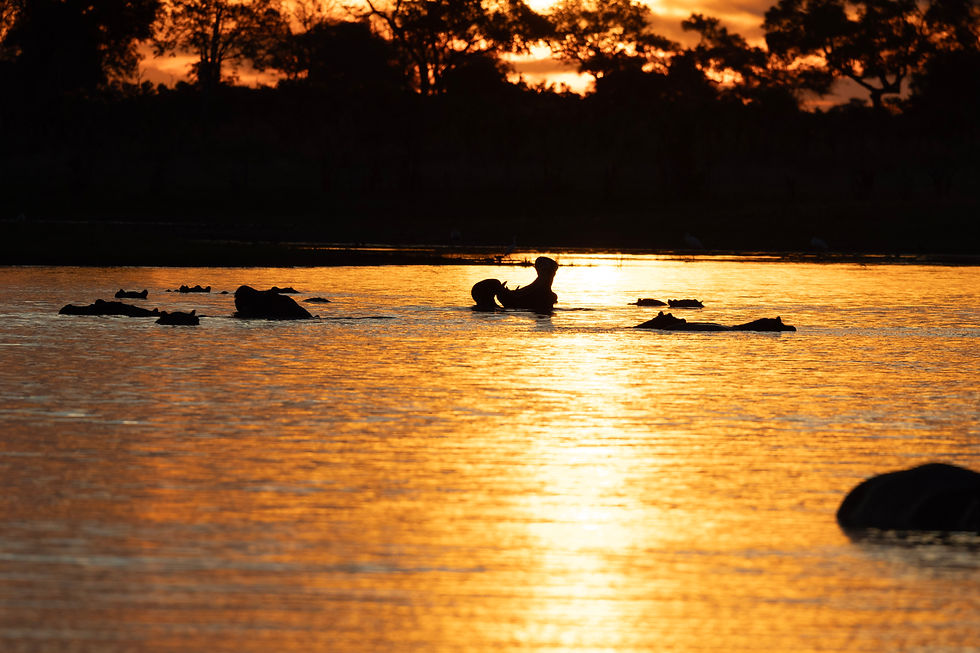
Der Luangwa-Fluss beherbergt eine der größten Flusspferdpopulationen Afrikas.
Vor allem während der Trockenzeit sammeln sich Hunderte Tiere in den verbleibenden Wasserstellen – ein beeindruckendes Schauspiel, das oft von lautstarken Revierkämpfen begleitet wird.

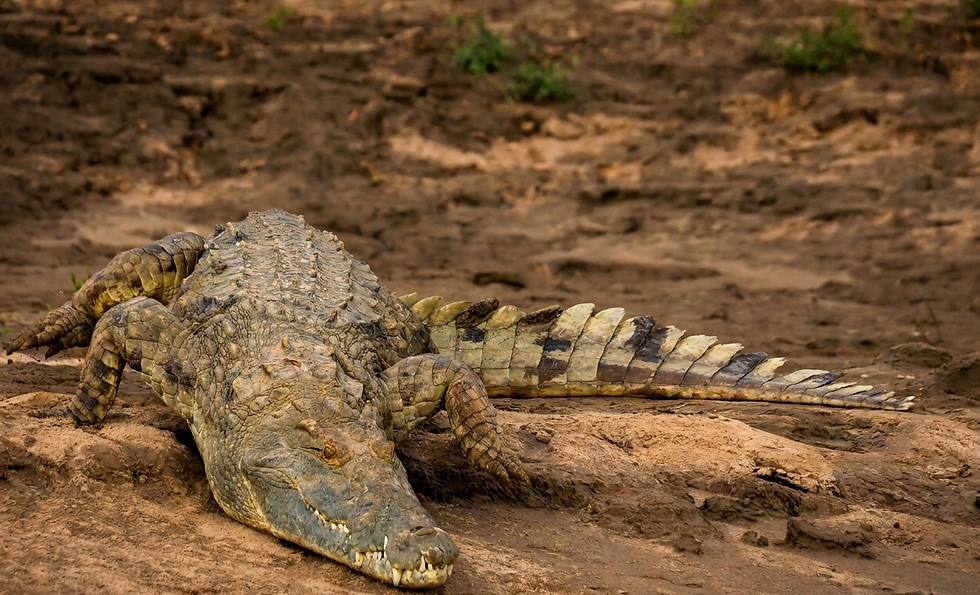
Nile crocodile
Nile crocodiles are among the most common reptiles in Zambia.
They can be observed particularly well during boat safaris or on the riverbanks.
With their impressive size, they are among the most fascinating inhabitants of river landscapes.

Antelope diversity
Zambia is home to an extraordinary variety of antelope species.
Besides impalas, waterbucks and kudus, rarer species such as puku, lechwe or sitatunga can also be found here.
It is precisely this biodiversity that forms the basis for the high density of predators.
Zambia for birdwatchers

With over 750 bird species, Zambia is one of the most interesting birding destinations in southern Africa.
The diverse habitats offer ideal conditions for numerous birds of prey, kingfishers, bee-eaters, herons, and storks. Particularly recommended are:
South Luangwa National Park
Lower Zambezi National Park
Kafue National Park
Bangweulu Wetlands
Kasanka National Park
The Bangweulu swamps, in particular, are world-renowned for the rare shoebill bird.
What types of safaris are available in Zambia?
Zambia offers far more than the classic game drive. Depending on the region, you can experience the wilderness on foot, from a vehicle, or from the water. It is precisely these different perspectives that make a safari in Zambia so diverse – and allow you to discover the bush in a completely new way each time.

Classic game drives
The classic game drive is the foundation of many safari experiences in Zambia. Especially in South Luangwa National Park, Lower Zambezi National Park, and Kafue National Park, you can search for elephants, buffalo, lions, leopards, and many other wild animals with experienced guides. The safari experience changes significantly with the seasons.
During the dry season, roughly from June to October, many animals increasingly concentrate on the remaining water sources. Vegetation thins and visibility improves, often resulting in particularly intense wildlife viewing. In South Luangwa, excellent game drive conditions develop along the Luangwa River and at the remaining waterholes.
With the onset of the rainy season in November, the bush undergoes a fundamental transformation. The landscape turns green, animals become more dispersed, and numerous young are born. At the same time, rivers, lagoons, and floodplains fill up. In some regions, this also means that roads become temporarily impassable for safari vehicles. Then the boat itself becomes the safari vehicle: instead of traveling overland, the journey follows the rivers and traverses flooded landscapes, passing hippos, crocodiles, elephants, and an impressive variety of water birds.
It is precisely these seasonal changes that make a safari in Zambia so special. Depending on the water level and the time of year, the same region can be experienced in completely different ways – by car, on foot, or from the water.
Walking Safaris in Zambia
Few other countries are as closely associated with walking safaris as Zambia. It was here that the idea originated to experience the African wilderness not only from a vehicle, but also on foot.
Together with a professional safari guide and an armed ranger, you will walk slowly through the bush. You will learn to read tracks, understand animal behavior, and perceive even the smallest details.
These hikes often lead to intense encounters with nature that go far beyond classic wildlife observation. A walking safari permanently changes one's perspective on Africa.
What makes a walking safari so special?
While game drives usually focus on large animals, a walking safari offers a completely new perspective.
Suddenly, termite mounds, plants, bird sounds or fresh lion tracks become just as exciting as elephants or giraffes.
You consciously move more slowly and perceive your surroundings much more intensely.
It is precisely this slowing down that makes it so appealing to many guests.
Is a walking safari safe?
Generally, yes. Walking safaris are conducted exclusively by specially trained guides and armed rangers.
The groups are small, the routes are carefully chosen, and the safety of the guests is always the top priority. This is one of the reasons why walking safaris in Zambia have been considered the benchmark for this special type of safari experience for decades.
Safari on the river
The Zambezi and the Luangwa are among the most important rivers in Africa and shape many regions of Zambia.
Boat and canoe safaris are among the most beautiful ways to observe wildlife from a completely different perspective.
Elephants come to the shore to drink, hippos rest in the water, and crocodiles sunbathe on the sandbanks.
With a bit of luck, you might even spot lions or leopards lurking along the river, waiting for prey. Especially in Lower Zambezi National Park and South Luangwa, a boat safari is one of the absolute highlights of any trip.

Combining safari and beach
A safari in Zambia can be wonderfully extended with a few days on the Indian Ocean coast. After intensive game drives, walking safaris, and boat trips through the bush, the change to the coast offers a welcome contrast: instead of continuing through the wilderness, turquoise waters, white sandy beaches, and warm tropical days await.
The combination with Zanzibar is particularly interesting. Currently, there are no direct flights from Lusaka to Zanzibar, but there are direct flights to Dar es Salaam, from where you can easily reach the island. This allows you to combine, for example, a safari in South Luangwa or Lower Zambezi with a few relaxing days on Zanzibar. Besides long days on the beach, you can snorkel or dive, take a spice tour, go out to sea on a traditional boat, or explore Stone Town.
Mozambique is also an exciting addition to Zambia, especially if you want to combine a beach holiday with a high-quality island or coastal vacation. However, there are currently no direct flights from Lusaka to Maputo or Pemba. Depending on your route, onward travel can be arranged via Johannesburg or Dar es Salaam, for example. Therefore, it's particularly worthwhile to consider flight connections when planning your trip, especially for more remote beach destinations in Mozambique.
Another option is to end your trip in Livingstone, around Victoria Falls , before continuing on to the coast. Livingstone is directly accessible from Lusaka, making it an excellent addition to a Zambia trip.
Which combination makes sense depends heavily on your route and desired travel dates. We plan safaris and beach holidays as a single, cohesive trip, coordinating flights, lodges, and transfers to minimize time wasted on unnecessary detours. This allows you to experience the intense wilderness of Zambia and then conclude your journey where Africa meets the Indian Ocean.

Our recommendation
Plan approximately 7 to 10 days for your safari in Zambia. This will allow you to combine two different regions and experience Zambia more than just passing through. For the subsequent beach stay, we recommend 4 to 6 days – enough time to truly unwind after the intense safari experiences without the beach portion dominating your trip.
The best time to go on a safari in Zambia
The best time to travel depends on which regions and activities you want to experience. For classic safaris, the dry months are considered ideal.
An overview of the seasons
Period
May to August
September to October
November
December to April
character
cooler, dry
hot, dry
Transitional period, light rain
Rainy season
Good for
Walking safaris, round trips
Beste Tierbeobachtungen
fewer visitors
Birdwatching, green landscapes, some camps closed
May to August
After the rainy season, Zambia reveals itself in lush green. The temperatures are pleasant and many national parks reopen their camps. These months are ideal for walking safaris.
September to October
The safari season is now reaching its peak. As water sources become scarce, numerous animals congregate along the rivers. The chances of spectacular wildlife sightings are particularly high.
November
Temperatures rise significantly in November. The first thunderstorms herald the rainy season, and many animals continue to congregate at the last remaining water sources.
December to April
During the rainy season, Zambia transforms into a green oasis. Many seasonal camps close because some roads become difficult to traverse.
Nevertheless, this time of year offers exceptional subjects for birdwatchers and photographers.
How many days should one plan for Tanzania?
Zambia truly reveals its unique character when you have ample time to explore.
7 Tage
Ideal für:
-
South Luangwa National Park
-
Walking Safari
-
Night Drives
10 to 12 days
10 bis 12 Tage
Unsere Empfehlung für Erstbesucher.
Beispiel:
South Luangwa National Park
Lower Zambezi National Park
Victoriafälle
14 to 16 days
Perfect for anyone who wants to experience Zambia intensely.
Additionally, Kafue National Park or Liuwa Plain National Park can be included.
Zambia or Botswana?
Both countries are among the most exclusive safari destinations in Africa, but they differ significantly.
Zambia
Walking Safaris
Weniger Besucher
Ursprüngliche Wildnis
Besonders gute Leopardensichtungen
Safari zu Fuß und auf dem Wasser
Botwana
Water safaris in the Okavango Delta
Higher camp density
More Fly-In Safaris
Large elephant populations
Focus on luxury and exclusive concessions
Our recommendation
If you want to experience the wilderness as intensely as possible and discover new perspectives such as walking or canoe safaris, Zambia is the ideal choice. If your focus is on fly-in safaris and the unique waterscapes of the Okavango Delta, Botswana offers a different, equally extraordinary safari experience.
Accommodation in Zambia

Exclusive safari camps in the heart of the wilderness
Zambia stands for authentic safari experiences – and this is reflected in the accommodations.
Instead of large lodges, you'll find mostly small, personally run safari camps with just a few tents or chalets. Many are located directly on the river or at watering holes and offer an intense nature experience without sacrificing comfort.
The atmosphere is relaxed, the service personal, and the proximity to the wilderness unique. It's not uncommon to be woken in the morning by the call of an African fish eagle or to observe elephants directly from your terrace.
Classic safari camps
Safari camps are the heart of a trip through Zambia. They combine comfort with an authentic bush experience and blend harmoniously into the landscape.
Many camps feature spacious tents with en-suite bathrooms, open lounges, and fire pits where guests can relax after a day on safari. Their small size creates a personal atmosphere that sets Zambia apart from many other safari destinations.

Luxury lodges
Those who place particular value on comfort will find a selection of exceptional luxury lodges in Zambia.
Private suites, excellent cuisine, personal guides and exclusive activities ensure a safari experience of the highest standard.
Many of these lodges are located in private concessions or particularly quiet areas of the national parks.

Bush Camps
A special feature of Zambia are the so-called bush camps. These small, often very exclusive camps are located far away from the main lodges and offer a particularly intense nature experience.
They are often visited as part of a walking safari. This involves hiking from camp to camp and discovering a new section of the wilderness each day.
Those who want to experience the original Africa will find one of the most authentic safari experiences anywhere here.

Lodges on the Zambezi
Some of the country's most beautiful safari accommodations are located along the Zambezi River.
From the terrace you can watch elephants on the riverbank, while hippos grunt in the water and African fish eagles glide over the river.
These lodges are ideal for combining game drives, boat safaris and canoe trips.

Sustainable accommodations
Sustainability has been a core principle of many safari camps in Zambia for many years.
Numerous accommodations work closely with the surrounding communities, support local education projects, and actively invest in wildlife conservation. Solar energy, regional food, and responsible water use are already standard practice in many camps.
By making this trip, you are directly supporting the preservation of this unique wilderness.

Family-friendly accommodations
Zambia is also a great country to visit with children. Many camps offer family rooms or spacious tents, and some even provide private vehicles and flexible safari times. Depending on their age, game drives can be combined with shorter activities and water-based experiences. We select accommodations to suit your family and the ages of your children.

Arrival in Zambia
Arrival and getting around
Most international travelers arrive in Zambia via Kenneth Kaunda International Airport (LUN) in Lusaka, the country's main international airport. From Lusaka, the various safari regions can be easily combined. For trips around Victoria Falls, Harry Mwaanga Nkumbula International Airport (LVI) in Livingstone is a convenient starting or ending point.
Domestic flights
Due to the vast distances between national parks, domestic and charter flights play a vital role in a Zambian safari. For example, there are regular connections from Lusaka to Mfuwe, the main access point to South Luangwa National Park, as well as to Livingstone. The Lower Zambezi can also be reached directly via its own airstrips. Depending on the route, the various safari areas can be connected without the need for long drives.
Especially when combining South Luangwa, Lower Zambezi, and Kafue, fly-in safaris offer a convenient way to spend more time in each region. Many camps are accessed via small bush airstrips, from which the final leg to the accommodation is usually a short transfer.
Land transfers
Parts of a Zambia trip can also be easily combined by land. Depending on the route, Lusaka, Kafue, and Livingstone, for example, can be combined. For more remote safari areas, however, we usually recommend flying: This leaves more time for the actual safari and allows you to reach regions that are difficult to connect via long road routes.
It is precisely this combination of road transfers, domestic flights and small bush planes that makes it possible to customize your Zambia trip – from the first night in Lusaka to the last game drive in South Luangwa or a stay at Victoria Falls.

Our recommendation
First-time visitors to Zambia shouldn't try to cram in as many national parks as possible. The distances are vast, and the more remote regions in particular deserve time.
A combination of South Luangwa and Lower Zambezi offers a versatile starting point: Here you can combine classic game drives, walking safaris, and safari experiences on the water. If you have more time, the trip can be extended to include Kafue National Park or Victoria Falls.
For us, the principle is: better to experience two regions intensively than to only pass through four.
Safety on a safari in Zambia
Zambia is considered a safe and pleasant safari destination. The tourist regions are well-organized, and safaris are conducted exclusively by experienced guides.
Especially high safety standards apply to walking safaris. Every tour is accompanied by specially trained guides and armed rangers who are intimately familiar with the behavior of wild animals.

As with any trip, we still recommend some basic precautions:
Do not openly display valuables.
Follow the guides' instructions at all times.
Never approach wild animals on your own.
Bring enough water and sunscreen.
Treat nature and culture with respect.
With careful planning, nothing stands in the way of a relaxing safari.
Zambia with children
Zambia is a wonderful place to explore with children, offering a completely different kind of safari experience than many classic family destinations. Besides game drives in open safari vehicles, depending on the region you can also travel by boat, observe animals from the water, or learn more about the bush through age-appropriate nature activities. This variety can be particularly exciting for children, as no two days are the same.
At the same time, Zambia is a very authentic safari destination. Many camps are located in remote areas within vast wilderness regions and are intentionally small. This creates a personal atmosphere, but it also means that not every accommodation is suitable for families with young children. Furthermore, some activities, such as walking safaris or canoeing trips, are only possible from a certain age. Therefore, when planning a family trip, it is particularly important to combine the right regions, camps, and activities.
When planning, we make sure that the safari doesn't become a tightly scheduled program. Between intensive game drives, there should be enough time to relax by the pool, explore the area around the camp, or simply enjoy a quiet afternoon. This way, you can experience Zambia together as a family without the trip becoming too strenuous for the younger members of your party.

From what age is a safari suitable?
There is no general age limit. Many lodges welcome children, while others set a minimum age due to their location or for safety reasons. Walking safaris, canoe trips, and certain other activities may also have their own age restrictions.
When planning, we always take your children's ages into account and select accommodations, activities, and regions accordingly. Especially with younger children, we also ensure that the route doesn't include too many long transfers.
Our recommendations for families
For families we recommend:
Shortest possible transfer distances
Private safari vehicles for greater flexibility
Family-friendly lodges and camps
Accommodations with a pool or additional activities
Safari times that are suitable for the children's ages
Sufficient time for breaks and relaxing days
This creates a safari that not only delights adults but also becomes a real experience for children.
Zambia for photographers
We would particularly recommend Zambia if you not only want to photograph as many animals as possible, but also capture powerful images from the entire safari experience. The vast, sparsely visited wilderness areas offer exceptionally good conditions for this. There are fewer vehicles around, more space for quiet observation, and often the opportunity to follow a scene for an extended period instead of moving on after just a few minutes.

Why Tanzania is so special for photographers
South Luangwa is particularly photographically diverse. Leopards, lions, wild dogs, elephants, and large herds of buffalo offer classic wildlife subjects, while the Luangwa River, lagoons, and open bushland provide varied backdrops. Especially in the early morning and late afternoon, warm light, dust, and long shadows create particularly atmospheric images.
The perspective in Zambia can also be constantly changed. On a classic game drive, you can focus specifically on certain sightings and choose the vehicle's position to optimally combine light and background. Boat safaris in the Lower Zambezi offer a completely different photographic perspective: you are closer to the water's surface, can work with reflections, and photograph animals on the banks from a significantly lower angle.
Walking safaris offer a different photographic approach. The goal isn't to get as close as possible to an animal with a long telephoto lens. Tracks, plants, insects, landscapes, and the behavior of smaller animals suddenly become just as interesting as the major sightings. At the same time, you develop a much stronger sense of the habitat you're in.
The seasons also play an important role for you as a photographer. During the dry season, many animals concentrate around the remaining water sources, and the landscape becomes more open. In contrast, Zambia transforms completely during the green season: the vegetation becomes denser, migratory birds return, and thunderstorms, clouds, and vibrant greenery create entirely different photographic opportunities.
A good photo safari doesn't just depend on which animals you see. Crucial factors also include how much time you have for each sighting, the perspective from which you can photograph, how the light and background develop, and whether you have the opportunity to truly observe a situation. As a photographer, I know what matters – and we take precisely these factors into account when planning your photography-focused trip.
Sustainable travel in Zambia
Many of Zambia's national parks are among the last great wilderness areas in Africa.
Their long-term protection is only possible through sustainable tourism.
The revenue from safari trips contributes significantly to training rangers, financing anti-poaching projects, and ensuring the long-term preservation of habitats.
Many safari camps are also actively involved in protecting endangered species and in supporting education and health projects in the surrounding communities.

As a traveler, you can also make a contribution:
Support sustainable safari camps.
Keep a safe distance from wild animals.
Avoid single-use plastics.
Respect the instructions of your guides.
Leave no trace in nature.
Responsible tourism is one of the main reasons why Zambia has been able to preserve its original wilderness to this day.
Our philosophy
At InfiniteWild, we believe that exceptional safari experiences always come with responsibility.
Therefore, we prefer to work with carefully selected partners who are committed to nature conservation, sustainable tourism and supporting local communities in the long term.
Our goal is to create journeys that not only provide unforgettable experiences but also make a positive contribution to protecting Africa's unique nature.
Our Zambia trips
Zambia is a destination for those who want to experience Africa intensely and authentically. Walking safaris, boat safaris on the Zambezi, excellent leopard sightings, and small, exclusive camps make the country one of the continent's most unspoiled safari destinations.
We recommend planning at least ten to twelve days. This allows enough time to combine South Luangwa National Park with Lower Zambezi National Park or Victoria Falls. Those wishing to delve even deeper into southern Africa can ideally combine Zambia with Botswana or Zimbabwe.

Zambia is one of Africa's most authentic safari destinations. If you want to experience the wilderness far from the crowds, hike through the bush, or discover the Zambezi River from a boat, Zambia offers exceptional opportunities.
Together we plan your individual safari – with carefully selected camps, experienced guides and a route that perfectly matches your expectations.
Ready for your safari in Zambia?
Whether it's your first safari, a family trip, a honeymoon or an exclusive fly-in safari – we'll help you put together the perfect route to suit your needs.
Frequently asked questions about a safari in Zambia
The dry season from May to October is considered the best time to travel. Wildlife viewing is particularly excellent in September and October.
We recommend 7–10 days for a Zambia safari. This allows you to combine two different regions and gives you enough time to truly experience the wilderness. Those with more time can extend the trip to 10–14 days.
Yes, the Big Five are present in Zambia. Elephants, buffalo, lions, and leopards can be observed primarily in regions such as South Luangwa, Lower Zambezi, and Kafue. Rhinos are considerably less common and not found in all safari areas. Those specifically aiming to see all five species should plan their route and selection of national parks and reserves accordingly.
Yes, however, Zambia is particularly geared towards travelers seeking an authentic and peaceful safari away from large crowds.
Yes.
Combinations with Botswana or Zimbabwe are particularly popular. An extension to Victoria Falls can also be easily integrated.
On a walking safari, you explore the bush on foot together with a professional guide and an armed ranger. The focus is not only on large animals, but also on tracks, plants, and the entire ecosystem.
For first-time visitors, we recommend South Luangwa National Park and Lower Zambezi National Park. Those with more time should also include Kafue National Park or Victoria Falls in their itinerary.
Yes, Zambia is also suitable for families. The age of the children and the choice of camp are crucial. Many lodges offer family accommodations and flexible safari activities, while walking safaris, canoe trips, or certain camps may have age restrictions.
For families, we would recommend a route with fewer regions, short transfers, and sufficient time between safaris. This way, the trip remains varied without becoming too tiring.
Yes, a safari in Zambia is generally considered safe if it is well-organized and conducted with experienced guides. In the national parks, you will usually be accompanied by professional guides who are very familiar with the animals, the local conditions, and the safety regulations.
As with any safari, please follow your guide's instructions and observe the safety rules of each lodge. Additional precautions apply to walking safaris and water-based activities. We select accommodations and activities to suit your itinerary and individual preferences.
Whether you need a visa to enter Zambia depends on your nationality. Many nationalities can enter visa-free, while others must apply for a visa before traveling. The permitted length of stay can also vary depending on your nationality.
We check the current entry requirements for you when planning your trip and inform you which documents you need for your trip to Zambia. Since entry requirements can change at any time, we also recommend checking the regulations of the relevant embassy or immigration authority in your destination country.
For a first safari in Zambia, the South Luangwa National Park is particularly suitable. There you will get a very good impression of what makes Zambia such a safari destination: classic game drives, walking safaris, diverse wildlife and the varied landscape along the Luangwa River.
If you have 7-10 days available, I would combine South Luangwa with the Lower Zambezi. This way you'll experience two very different sides of Zambia – from the dry bush and walking safaris to boat and canoe safaris on the Zambezi.
Yes. Zambia offers an excellent selection of high-quality safari camps and exclusive lodges. Particularly in South Luangwa and the Lower Zambezi, you'll find small, stylish accommodations nestled in the wilderness, some with private pools, spacious suites, and highly personalized service.
Luxury is not the main focus, but rather blends seamlessly into the experience of nature. Secluded locations, intensive wildlife viewing, private safari experiences, and tranquility make a luxury safari in Zambia truly special.
Which vaccinations and preventative measures are advisable for your trip depends on factors such as your origin, itinerary, and length of stay. Vaccinations against hepatitis A, hepatitis B, and typhoid are frequently recommended, as well as up-to-date standard vaccinations.
Since there is a year-round risk of malaria in Zambia, you should also seek advice on appropriate protective measures well in advance. Depending on the type of trip and route, a rabies vaccination may also be advisable.
We recommend that you seek individual advice from a tropical medicine specialist or travel medicine clinic before your trip. You should also check the current entry and health regulations before departure.
A tailor-made trip allows you to perfectly match national parks, accommodations, and activities to your interests, travel dates, and budget. This creates a balanced itinerary with ample time for immersive nature experiences and special encounters.
Ready for your safari in Zambia?
Let's plan your personal Zambia trip together. We'll advise you individually and develop a route that perfectly suits your wishes, travel dates, and budget.
