

Safari in Zimbabwe
Pristine national parks, legendary guides and the home of Victoria Falls
Zimbabwe – Africa's best-kept safari secret
If Botswana stands for exclusive wilderness and Kenya for iconic savannas, then Zimbabwe is the country for anyone who wants to experience safari in its most original form.
This isn't about spectacular lodges or having as many vehicles as possible at a lion sighting. Instead, the focus is on exceptional guides, authentic nature experiences, and some of Africa's wildest national parks.
Zimbabwe has been one of the continent's most prestigious safari destinations for decades. Many of Africa's best safari guides were trained here, and hardly any other country combines in-depth knowledge of nature with such a deeply rooted safari tradition.
Whether it's huge herds of elephants in Hwange National Park, canoe safaris in Mana Pools National Park or the mighty Victoria Falls – Zimbabwe surprises many travelers with its diverse landscapes and exceptional wildlife.
Much of it still feels pleasantly unspoiled. Visitor numbers are relatively low, many camps are far apart, and wildlife viewing often takes place without other vehicles.
If you want to experience Africa intensely, far from large tourist crowds and with excellent guides at your side, Zimbabwe is one of the most exciting safari destinations of all.

Why Zimbabwe?
Zimbabwe gehört zu den Safari-Destinationen Afrikas, die sich ihren ursprünglichen Charakter bewahrt haben. Große, weitläufige Nationalparks, vergleichsweise wenige Besucher und erfahrene Guides schaffen beste Voraussetzungen für intensive Tierbeobachtungen – oft weit entfernt von großen Besucherströmen.
Besonders beeindruckend ist die Vielfalt der Landschaften. Im Hwange National Park bestimmen offene Savannen, Buschland und Wasserstellen das Bild. Der Park ist vor allem für seine großen Elefantenherden bekannt, gleichzeitig leben hier Löwen, Leoparden, Wildhunde, Büffel und zahlreiche weitere Tierarten. Im Mana Pools National Parkverändert sich das Safari-Erlebnis noch einmal: Entlang des Sambesi, zwischen alten Bäumen und weiten Überschwemmungsebenen, könnt ihr die Wildnis nicht nur vom Fahrzeug, sondern auch zu Fuß oder vom Kanu aus erleben.
Dazu kommen die Victoria Falls, die zu den spektakulärsten Naturwundern Afrikas gehören. Die Wasserfälle lassen sich hervorragend mit einer Safari verbinden und machen Zimbabwe zu einem besonders abwechslungsreichen Reiseziel. Je nach Route könnt ihr die Reise außerdem um den Lake Kariba oder die abgelegeneren Regionen des Landes erweitern.
Was Zimbabwe besonders auszeichnet, ist dabei nicht nur die Tierwelt, sondern die Art, wie Safari erlebt wird. Erfahrene Guides, Walking Safaris, Kanutouren und klassische Pirschfahrten ermöglichen unterschiedliche Perspektiven auf die Wildnis. Gleichzeitig gibt es in vielen Regionen kleine, persönlich geführte Camps, die mitten in der Natur liegen und bewusst auf ein intensives Busch-Erlebnis setzen.
Zimbabwe ist deshalb besonders interessant für Reisende, die Afrika abseits der klassischen Safari-Routen erleben möchten und Wert auf authentische Wildnis, hervorragende Guides und abwechslungsreiche Safari-Erlebnisse legen. Wer dazu noch die Victoria Falls erleben möchte, kann hier Safari und eines der beeindruckendsten Naturerlebnisse des Kontinents miteinander verbinden.


Zimbabwe at a glance
Capital city
Largest city
Size
Resident
Language
currency
Time zone
entry
Safari possible
Best time to travel
Highlights
Harare
Harare
approx. 390,757 km²
approximately 17 million
English, Shona & Ndebele
Zimbabwe Gold (ZiG) & US Dollar (USD)
UTC +2
Visa requirements vary depending on nationality
Year-round
May to October
Hwange NP, Mana Pools, Victoria Falls, Lake Kariba, Zambezi

Where is Zimbabwe?
Zimbabwe is located in southern Africa and borders Zambia, Botswana, South Africa, and Mozambique. This central location makes the country ideal for tours through southern Africa.
In the north, the mighty Zambezi River forms the natural border with Zambia. Here lie both the famous Victoria Falls and the Mana Pools National Park, one of Africa's most spectacular national parks.
The west is dominated by Hwange National Park, which is one of the most important elephant sanctuaries on the continent.
In the south and east, you'll find remote wilderness areas where you can experience Africa almost exactly as it was many decades ago.
Zimbabwe - Wild, pristine and full of intense moments
Zimbabwe is a country for travelers who don't just want to jump from one experience to the next. It's about the moments in between: long hours in the bush, stories told by a guide based on a trail in the sand, sunrises over the river, and evenings when the wilderness suddenly feels incredibly close after sunset.
The country has a special depth. Much of it feels less staged and more like an invitation to connect with the surroundings. A good guide makes a crucial difference: they don't just point out where an animal is, but explain the context, interpret the landscape, and open your eyes to the many small details that truly make a safari interesting.
In addition, Zimbabwe boasts an impressive cultural and scenic diversity. From traditional communities and historical sites to great rivers and vast landscapes, Zimbabwe tells stories that go far beyond the classic safari.
Perhaps it is precisely this blend that makes Zimbabwe so special: less show, more substance. Less ticking off a list, more experiencing. A destination for all those who are willing to take their time and not just see Africa, but truly absorb it.
What sets Zimbabwe apart from other safari destinations
Zimbabwe is a destination where the quality of the safari experience is heavily influenced by the expertise of the guides and the environment itself. Many guides are among the most highly trained and experienced naturalist guides in Africa. They read tracks, explain connections, and take the time to truly understand animal behavior and the landscape. This transforms a game drive into far more than just a search for the next big animals.
At the same time, Zimbabwe is characterized by large, expansive wilderness areas where you will often encounter only a few other vehicles. Particularly in regions like Hwange and Mana Pools, this allows for a very intense and relatively undisturbed safari experience. Instead of trying to cram in as many sightings as possible in a short time, the focus is often on observing a situation for a longer period and letting the rhythm of the bush wash over you.
The way you travel also makes a difference. Besides classic game drives, walking safaris and canoe trips are among the unique ways to discover Zimbabwe. In Mana Pools, for example, you can hike through the landscape along the Zambezi River or observe elephants, hippos, and crocodiles from a canoe. This way, you experience the same wilderness from completely different perspectives.
Added to this is the unique combination of safari and landscape. The open plains and waterholes of Hwange, the ancient forests and floodplains of Mana Pools, the Zambezi River, and Victoria Falls could hardly be more different. A journey through Zimbabwe can therefore combine intensive wildlife viewing with spectacular landscape experiences.
What ultimately sets Zimbabwe apart from many other safari destinations is the depth of the experience. The focus here isn't necessarily on quickly ticking off as many animal species as possible. Instead, it's about time spent in the bush, excellent guides, small camps, and the opportunity to truly get to know a landscape.
For travelers who understand safari not only as wildlife observation, but are interested in nature, tracks, behavior and the stories behind a landscape, Zimbabwe therefore offers a very unique perspective on Africa.
Who is Zimbabwe suitable for?
Zimbabwe is ideal for travelers who want to experience nature up close and value authentic safari experiences. The country is particularly suitable for:
Safari repeater
Nature photographers
Honeymoon
Walking Safaris
Families with safari-experienced children
birdwatchers
luxury travelers
Individual travelers
Even first-time visitors will be thrilled by Zimbabwe, especially if they value personal attention, exceptional guides and less-visited national parks.
Why a safari in Zimbabwe is worthwhile
-
Heimat der Serengeti und des Ngorongoro-Kraters
-
Schauplatz der Great Migration
-
Riesige Nationalparks mit beeindruckender Wildnis
-
Hervorragende Chancen auf die Big Five
-
Große Vielfalt an Landschaften und Ökosystemen
-
Safari und Zanzibar perfekt kombinierbar
-
Exklusive Safari-Camps und luxuriöse Fly-In Safaris
-
Ganzjährige Safari-Möglichkeiten mit unterschiedlichen saisonalen Höhepunkten
Pristine and little-visited wilderness areas
Highly trained and experienced guides
-
Intensive wildlife observation away from large tourist crowds
Reading tracks and understanding animal behavior
Walking safaris through untouched wilderness
Canoe safaris and boat trips on the water
Victoria Falls as a spectacular addition
A diverse experience for both beginners and experienced Africa travelers.
The most beautiful safari regions in Zimbabwe
Zimbabwe is one of Africa's most diverse safari destinations. Each national park has its own unique character – from huge elephant herds and water-rich river landscapes to remote wilderness areas where you often won't encounter another vehicle for hours.
While some of Africa's national parks have become some of the world's most famous tourist destinations, Zimbabwe still retains its original character in many places.
Instead of long convoys of vehicles, you can often enjoy wildlife observation in peace and quiet.
Many camps have only a few rooms or tents, thus offering a personal atmosphere.
This combination of world-class guides, pristine wilderness and exclusive accommodations makes Zimbabwe one of the most underrated safari countries in Africa.
This unspoiled nature is what makes the country so appealing. Instead of a single well-known safari region, you'll find several exceptional national parks that can be perfectly combined.
Hwange National Park
Zimbabwe's most famous safari area

Hwange National Park is the largest protected area in Zimbabwe and is one of the most important national parks in southern Africa.
Hwange is particularly famous for its huge elephant population. It is estimated that more than 40,000 elephants live here, gathering at waterholes especially during the dry season.
Besides elephants, the park offers excellent chances of seeing lions, leopards, African wild dogs, cheetahs and large herds of buffalo.
Since many waterholes are artificially supplied with pumps, animals can often be observed directly from the observation hides or even from the lodge.
Highlights
Large herds of elephants
African wild dogs
Lions
Leopards
Cheetahs
Excellent animal photography
Mana Pools National Park
Safari on the Zambezi
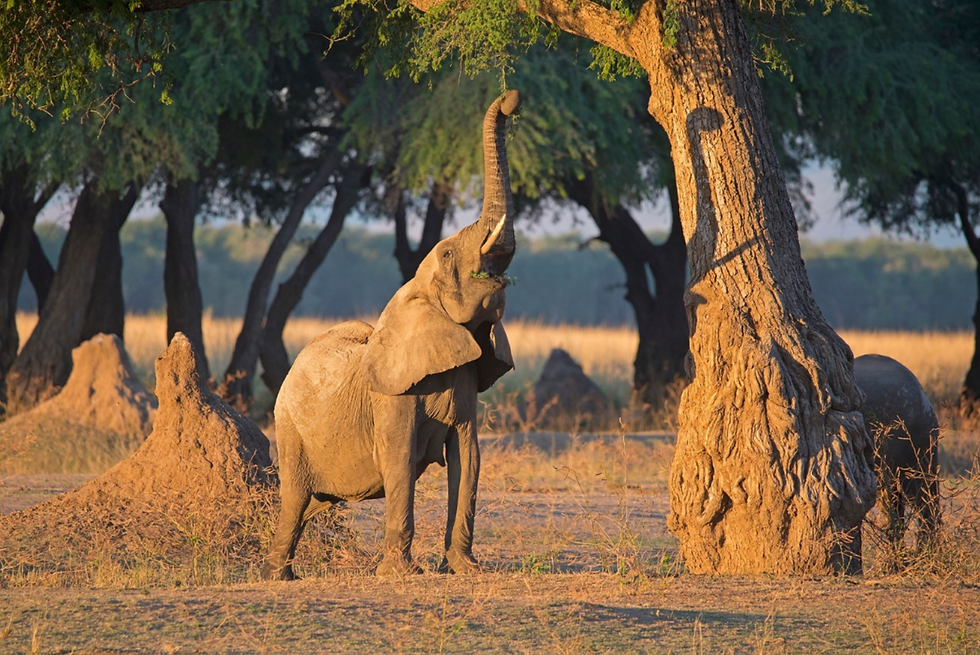
Mana Pools National Park is one of the most spectacular safari destinations in Africa and is a UNESCO World Heritage Site.
The park lies directly on the Zambezi River and is regularly flooded. This creates fertile plains with an exceptionally high density of wildlife.
Mana Pools is particularly known for walking safaris and canoe safaris.
With a bit of luck, you might encounter elephants standing on their hind legs to reach the fruit of the winterthorn trees – a behavior that can only be observed regularly in a few places worldwide.
Highlights
Walking Safaris
Canoe safaris
Elephants on the Zambezi
Wild dogs
UNESCO World Natural Heritage
Matusadona National Park
Safari between mountains and Lake Kariba

Matusadona National Park is located on the southern shore of Lake Kariba, one of the largest artificial lakes in the world.
The combination of mountains, forests and water makes the park particularly diverse in terms of landscape.
Besides classic game drives, boat safaris are among the highlights of a stay.
Elephants, hippos, crocodiles and numerous bird species can be observed here in excellent condition.
Highlights
Lake Kariba
Boat safaris
Elephants
Hippos
Birdwatching
Gonarezhou National Park
The hidden wilderness of Zimbabwe


Gonarezhou National Park is one of the most pristine national parks in Africa. Its name translates to "Place of Elephants"—and indeed, large herds of elephants live here in an impressive landscape of rivers, baobab trees, and striking red sandstone cliffs.
As part of the Great Limpopo Transfrontier Park, Gonarezhou is linked to protected areas in South Africa and Mozambique, allowing wildlife to roam freely across national borders. Those wishing to discover Zimbabwe off the beaten track will find an exceptional safari experience here.
Highlights
Great Wilderness
Elephants
Chilojo Cliffs
Few visitors
Part of the Great Limpopo Transfrontier Park
Matobo National Park
Granite rocks, rhinoceroses and cultural history

Matobo National Park differs significantly from other safari areas in Zimbabwe. Instead of open savannahs, the landscape is dominated by enormous granite boulders, known as kopjes.
The park is one of the best places in southern Africa to observe white and black rhinos on foot with experienced rangers. Furthermore, Matobo is home to millennia-old rock paintings and is also a UNESCO World Heritage Site.
Highlights
Rhino tracking
Granite landscapes
Rock paintings
UNESCO World Heritage
Hiking
Which safari region suits you best?
Zimbabwe offers several very different safari regions. While Hwange is primarily known for its large elephant herds and varied game drives, Mana Pools focuses on the intense experience of the Zambezi River. Victoria Falls, on the other hand, can be ideally combined with a safari and offers a spectacular contrast to the wilderness of the national parks.
region
Hwange National Park
Mana Pools National Park
Victoria Falls
Lake Kariba
Matobo National Park
Ideal for
Wildlife fans, safari beginners
Adventures, photographers
First-time visitors, active travelers
Those seeking peace and quiet, water lovers
Culture and nature enthusiasts
Special feature
Large herds of elephants, classic game drives
Walking safaris, canoe safaris, Zambezi
Waterfalls, Zambezi River, diverse activities
Boat safaris, sunsets, wide landscapes
Rocky landscapes, rhinos, historical sites
Which safari region suits you best?
Our recommendation
If you're visiting Zimbabwe for the first time, the combination of Hwange and Mana Pools offers a particularly diverse experience. You'll discover two completely different sides of the country: classic game drives and large herds of animals in Hwange, and walking and canoe safaris along the Zambezi River in Mana Pools.
For those unfamiliar with Victoria Falls, it's an excellent addition to any itinerary. This allows you to combine your safari with one of Africa's most breathtaking natural wonders without having to add a completely new destination to your itinerary.
Ultimately, the region that best suits you depends on how you want to experience safari: intensively from a vehicle, on foot, on the water, or with a focus on as much untouched wilderness as possible.

The Big Five in Zimbabwe
Zimbabwe is one of Africa's most wildlife-rich safari destinations. Thanks to its vast national parks and relatively few visitors, wild animals can roam here almost undisturbed.
What animals can you see in Zimbabwe?
Tanzania is one of the most wildlife-rich countries in Africa. The enormous diversity of landscapes – from the open savannas of the Serengeti to the river systems of Nyerere National Park and the dense forests of the Mahale Mountains – provides habitat for an extraordinary number of animal species.
This area is home not only to the famous Big Five, but also to some of the largest lion populations in Africa, huge herds of elephants, rare African wild dogs and over 1,100 bird species.
What's particularly impressive is the sheer number of wild animals. In many national parks, large herds of wildebeest and zebra are as much a part of the landscape as giraffes, antelopes, and predators. At the same time, wildlife sightings vary significantly from region to region, giving each safari its own unique character.
Zimbabwe is one of the few countries in Africa where you can see all of the Big Five.
This includes:
Lion
leopard
elephant
African Buffalo
rhino
While rhinos are primarily protected in Matobo National Park, Hwange and Mana Pools offer excellent opportunities to see the other members of the Big Five.

Löwe
Löwen kommen in mehreren Nationalparks Zimbabwes vor.
Vor allem der Hwange National Park verfügt über eine gesunde Population, und auch im Mana Pools National Park sowie im Gonarezhou National Park bestehen gute Chancen auf Sichtungen.
Mit etwas Glück kannst du beobachten, wie Rudel gemeinsam jagen oder sich nach einer erfolgreichen Nacht im Schatten ausruhen.

Leopard
Leoparden gehören zu den scheuesten Großkatzen Afrikas.
Dank der Erfahrung der Guides gelingen in Zimbabwe dennoch regelmäßig Sichtungen – besonders in Hwange und Mana Pools.
Da Leoparden überwiegend nachtaktiv sind, erhöhen Night Drives in privaten Konzessionen die Chancen zusätzlich.

elephant
Zimbabwe is home to one of the largest elephant populations in Africa. Tens of thousands of animals live in Hwange National Park alone, congregating at waterholes, especially during the dry season.
Elephants can also be regularly observed up close in Mana Pools National Park – often even during a walking safari or canoe trip.
Among the most famous motifs are the iconic elephants standing on their hind legs to reach the fruit of the winterthorn trees.

African Buffalo
African buffalo are among Zimbabwe's most iconic large animals and can be observed particularly well in national parks such as Hwange and Mana Pools. They often roam in large herds across open grasslands or congregate near waterholes. Large buffalo herds moving slowly through the bush are especially impressive – a classic safari experience that also offers insight into the complex social structure of these animals.
rhino
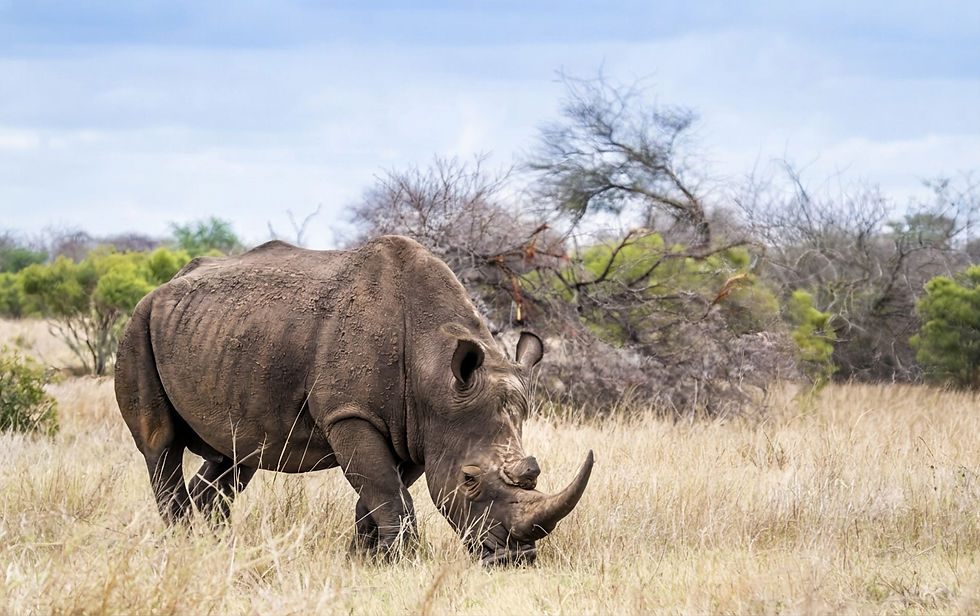
Matobo National Park is one of the best places in southern Africa to see rhinos.
Accompanied by experienced rangers, you can even track white and black rhinos on foot – an intense yet responsibly organized nature experience.
Other impressive wildlife
The Big Five are just a small part of Zimbabwe's fascinating wildlife. Depending on the region, you can expect to see numerous other species, making every game drive diverse and exciting.

African wild dogs
Zimbabwe zählt zu den besten Ländern Afrikas, um Afrikanische Wildhunde zu beobachten.
Die hochsozialen Raubtiere gelten als stark gefährdet und gehören dennoch zu den erfolgreichsten Jägern der afrikanischen Savanne.
Besonders der Hwange National Park und der Mana Pools National Park bieten hervorragende Chancen auf Begegnungen.
Für viele erfahrene Safari-Reisende zählen Wildhunde zu den absoluten Highlights einer Reise nach Zimbabwe.

Hippos and crocodiles
Die Flüsse und Seen Zimbabwes bieten ideale Lebensräume für Flusspferde und Nilkrokodile.
Vor allem im Mana Pools National Park und auf dem Lake Kariba lassen sich diese Tiere hervorragend während Boots- oder Kanusafaris beobachten.
Giraffes, zebras and antelopes
Neben den großen Raubtieren beeindruckt Zimbabwe durch eine enorme Vielfalt an Pflanzenfressern.
Dazu gehören unter anderem:
-
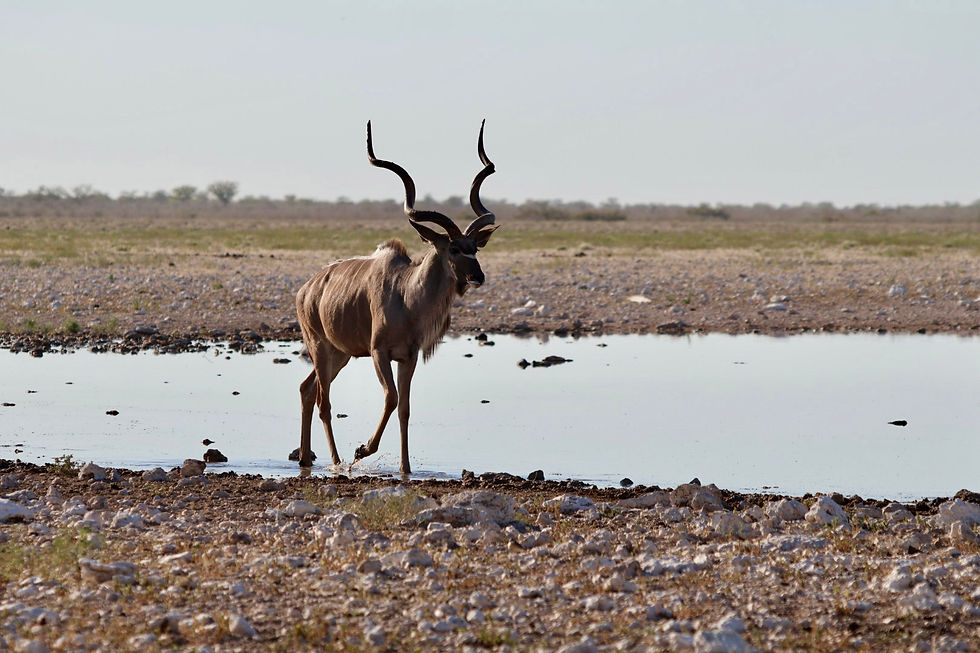
Giraffen, Zebras
-
Kudus, Impalas
-
Wasserböcke, Rappenantilopen
-
Säbelantilopen, Elands
Diese große Artenvielfalt bildet die Grundlage für die gesunden Populationen von Löwen, Leoparden und Wildhunden.

With over 650 bird species, Zimbabwe is also an exceptional travel destination for birding enthusiasts.
The diverse habitats – from river landscapes to wetlands and open savannas – offer ideal conditions for numerous bird species.
Particularly recommended are:
Hwange National Park
Mana Pools National Park
Lake Kariba
Gonarezhou National Park
Matobo National Park
Some of the best-known species include:
African fish eagle
Goliath heron
Kingfishers
Scarlet bee-eaters
Hornbills
vulture
Crowned cranes
Birdwatching in Tanzania
Victoria Falls - Zimbabwe's greatest natural wonder
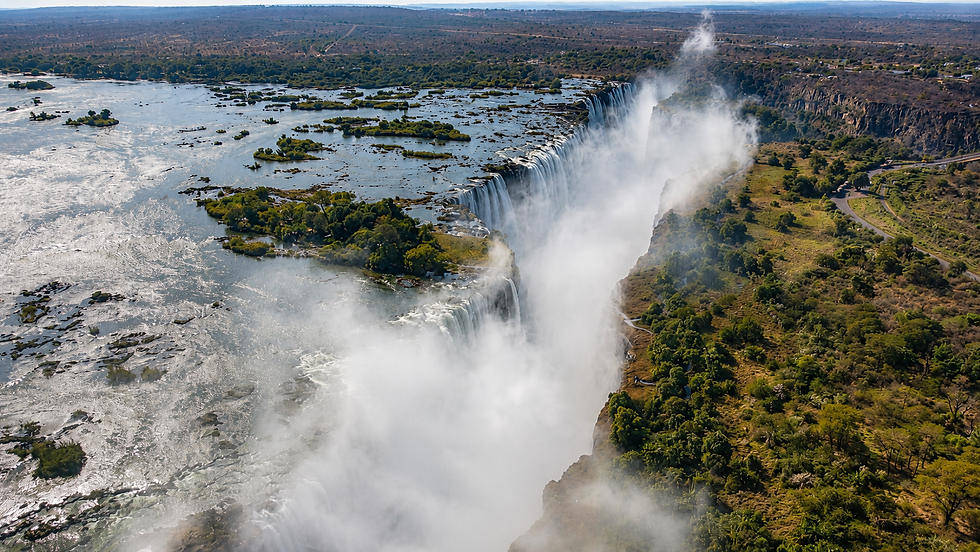
Victoria Falls is one of the most impressive natural wonders on Earth. Spanning almost two kilometers in width, the Zambezi River plunges into a deep gorge, creating a massive cloud of spray that is often visible from several kilometers away.
It's no coincidence that the falls bear the local name "Mosi-oa-Tunya" – the smoke that thunders. The Zimbabwean side offers some of the most spectacular viewpoints of the falls. Depending on the season, their appearance changes dramatically: during the rainy season, the sheer volume of water is impressive, while in the dry season, spectacular views into the gorge open up.
Experiences at Victoria Falls
The waterfalls are much more than just a viewpoint. Popular activities include:
Walks along the viewpoints
Helicopter flights (especially popular: “Flight of the Angels”)
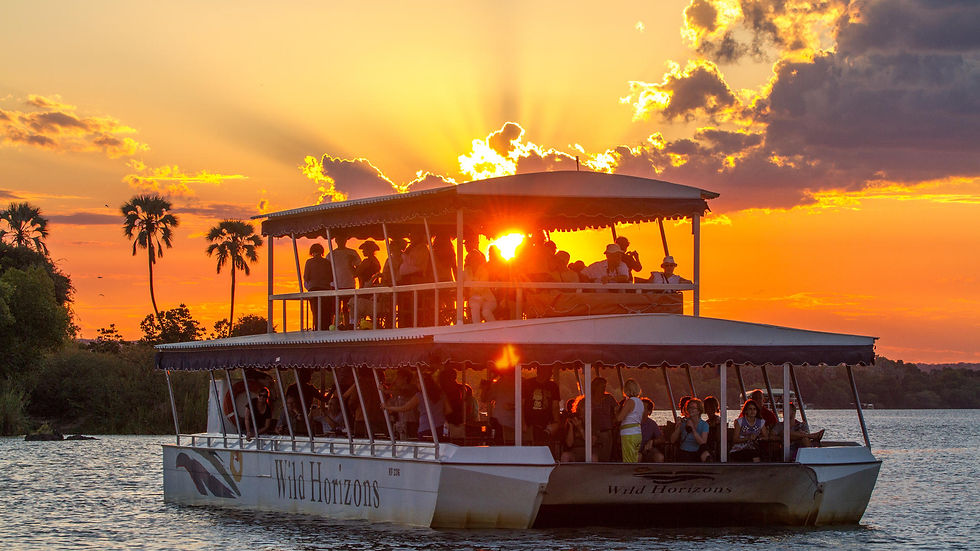
Boat trips at sunset
Rafting on the Zambezi
Bungee jumping
Visit to Victoria Falls National Park
Dinner Cruises on the Zambezi
Many travelers spend two to three nights in Victoria Falls before starting their safari or relaxing at the end of their stay.

Safari and Victoria Falls combined
One of the most popular travel routes combines a classic safari with a stay at Victoria Falls.
This combination offers the perfect mix of wildlife viewing, spectacular landscapes and diverse activities.
Many travelers spend several days in Hwange or Mana Pools and then relax at Victoria Falls to round off their trip. Alternatively, Victoria Falls is also an excellent starting point for a safari through Zimbabwe.
Why this combination is so popular
The national parks and Victoria Falls complement each other perfectly. While you immerse yourself completely in nature in the bush, Victoria Falls offers numerous activities and a comfortable end to your trip. Especially for first-time visitors, this combination is one of the best ways to experience Zimbabwe.
What types of safaris are available in Zimbabwe?
Zimbabwe offers an exceptional variety of safari experiences. Depending on the region, different activities can be combined.

Game drives
The classic safari remains the best way to observe large mammals such as lions, elephants, or leopards.
Walking Safaris
Zimbabwe, along with Zambia, is one of the best countries in Africa for walking safaris. Accompanied by experienced guides, you'll explore the wilderness on foot, learn to read animal tracks, and experience nature more intensely.
Canoe safaris
Especially in Mana Pools National Park, canoe safaris offer extraordinary encounters with hippos, elephants and crocodiles.
Moving silently on the water opens up a completely new perspective on the animal world.
Boat safaris
Boat safaris on Lake Kariba and the Zambezi River are among the most relaxing ways to observe wildlife. Particularly impressive nature experiences can be had in the early morning hours or during sunset.
Combining safari and beach
A safari in Zimbabwe can be wonderfully combined with a few days on the Indian Ocean. After intensive game drives in Hwange, walking safaris in Mana Pools, or a canoe trip on the Zambezi, the change to the sea is a welcome contrast: instead of continuing through the bush, turquoise waters, warm temperatures, and long days on the beach await.
Zanzibar is particularly well-suited if you want to combine your safari with a tropical island feel. White sandy beaches, coral reefs, and small boutique hotels or high-end resorts create a completely different setting than the wilderness of Zimbabwe. Besides relaxing days on the beach, you can snorkel or dive, take a spice tour, sail out to sea on a traditional dhow, or spend a few days in Stone Town. This adds a cultural and maritime dimension to your trip, complementing the safari experience.
Mozambique is ideal if you're looking for a more exclusive and tranquil beach holiday. Along the coast and on the offshore islands, you'll find high-quality lodges and resorts, secluded beaches, and excellent snorkeling and diving conditions. The Quirimbas and Bazaruto archipelagos are particularly well-suited for travelers who want to escape the everyday routine after a safari and value privacy and unique accommodations.
Victoria Falls can also be part of such a combination. While the waterfalls aren't a typical beach destination, they offer a spectacular transition between safari and relaxation. You can spend a few days on the Zambezi River, explore the falls, and then extend your trip with a stay on the Indian Ocean.
This combination is particularly appealing for a honeymoon. The safari offers shared adventures, intense wildlife viewing, and special moments in the bush, while a few days by the sea provide space for peace and togetherness. Depending on your travel style, we can select a private villa, a small boutique hotel, or a high-end beach resort.
How long your beach stay should be depends on how intensively you want to experience Zimbabwe. For the safari, we generally recommend about 7 to 10 days, followed by another 4 to 6 days at the beach. This allows enough time to explore different safari regions without over-scheduling the trip – and at the same time, enough time to truly unwind on the beach.
We plan the safari and beach trip as one continuous journey. The route, domestic flights, international connections, and transfers are coordinated so that you spend as little time as possible on unnecessary detours and have more time for the actual experiences.

The best time to go on a safari in Zimbabwe
Zimbabwe can generally be visited year-round. However, the landscape, wildlife viewing, and activities vary significantly depending on the season.

An overview of the seasons
Zeitraum
Mai bis August
September to October
November
Dezember bis April
Charakter
cool and dry
hot and dry
Transition period
Regenzeit
Good for
Safari, Walking Safaris, Round Trips
Best wildlife viewing
fewer visitors
Green landscapes, birdwatching, photography
May to August
After the rainy season, Zimbabwe is particularly lush and green. The landscape begins to dry out, while temperatures remain pleasant and conditions are excellent for game drives and walking safaris. As the dry season progresses, the vegetation thins and the animals increasingly concentrate on the remaining water sources.
September to October
These months are considered the peak of the safari season. As water becomes scarce, numerous animals congregate at rivers and waterholes. This leads to particularly intense wildlife viewing, especially in Hwange National Park. At the same time, temperatures rise significantly before the first thunderstorms bring the dry season to an end in November.
November
November is a true transitional month. The first rains arrive, the dry landscape slowly begins to change again, and temperatures can already be very high. With the first rainfall, waterholes fill up, the animals disperse more widely, and the bush begins to turn green again within a short time.
For travelers who want to experience Zimbabwe outside of the peak season, November can be particularly appealing. The first rains bring movement to the landscape and herald the arrival of the green season. At the same time, the weather is less predictable, and certain activities may be affected by the amount of rainfall.
December to April
During the rainy season, the landscapes transform into a lush green. This time of year is particularly appealing to photographers and birdwatchers: migratory birds return, many animals give birth, and thunderstorms create dramatic cloud formations and unique lighting conditions.
Furthermore, Victoria Falls is currently carrying the largest volume of water and is showing itself in its most impressive form. Please note, however, that the strong spray may restrict visibility down to the falls.
How many days should one plan for Zimbabwe?
Zimbabwe offers far more than just a single national park. To truly enjoy the diverse landscapes and safari experiences, we recommend allowing plenty of time.
The combination of a classic safari and a stay at Victoria Falls is particularly appealing. Those with more time can also include Mana Pools National Park or Lake Kariba.
7 bis 9 Tage
Ideal für alle, die Zimbabwe zum ersten Mal besuchen.
Beispiel:
3 Nächte Hwange National Park
3 Nächte Victoria Falls
1 bis 2 Reisetage
So erlebst du sowohl eine klassische Safari als auch eines der beeindruckendsten Naturwunder Afrikas.
10 bis 12 Tage
Unsere Empfehlung für die meisten Reisenden.
Beispiel:
Hwange National Park
Mana Pools National Park
Victoria Falls
Diese Route verbindet Pirschfahrten, Walking Safaris, Boots- oder Kanusafaris und die spektakulären Victoriafälle.
14 to 16 days
Perfect for anyone who wants to explore Zimbabwe in depth.
Additionally, the following regions, for example, can be integrated:
Lake Kariba
Matusadona National Park
Gonarezhou National Park
This way you will get to know the country's diverse landscapes and ecosystems in a particularly comprehensive way.
Accommodation in Zimbabwe

The accommodations in Zimbabwe perfectly reflect the character of the country. Instead of large hotel complexes, you can expect mostly small safari camps and lodges with personalized service and exceptional guides.
Many accommodations consist of only a few rooms or tents and are located in the heart of nature. This creates a tranquil atmosphere where you can experience the wilderness firsthand.
It is not uncommon for elephants to visit the watering hole in front of the lodge, or for hippos to graze right in front of your tent at night.
Classic safari lodges
The classic safari camps form the heart of many tours through Zimbabwe.
They combine an authentic bush feeling with high comfort and enable intense nature experiences.
Spacious tents, open lounges and campfires under the starry sky are part of everyday life in many camps.

Luxury lodges
Those seeking the highest level of comfort will also find exceptional luxury lodges in Zimbabwe.
Private suites, excellent cuisine, personal guides and exclusive safari activities ensure a first-class travel experience.
Many lodges are located in private concessions with very few guests.
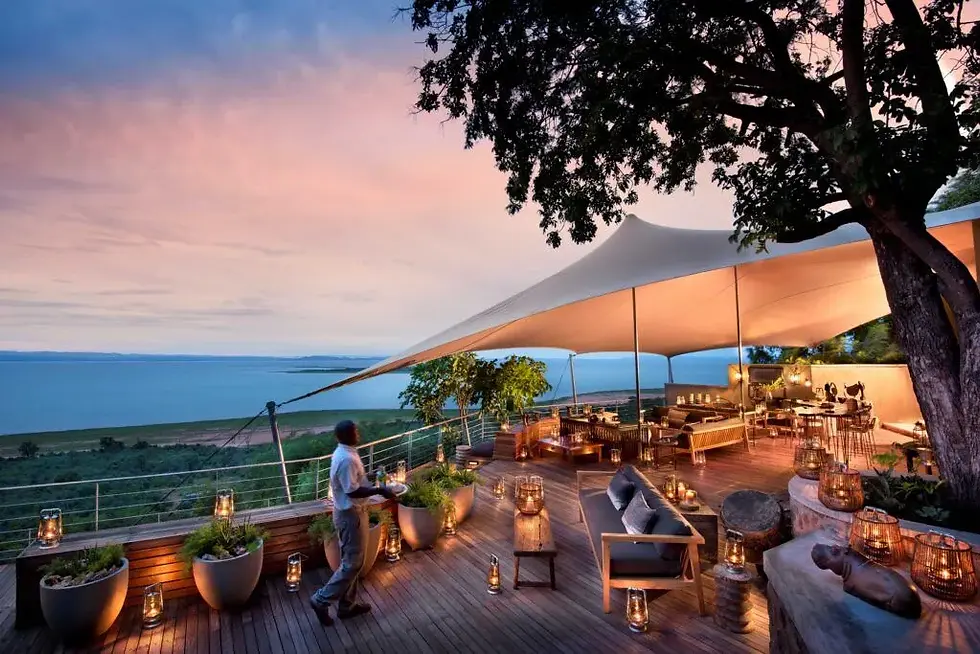
Camps on the Zambezi
Especially around Mana Pools National Park, unforgettable moments are created right by the river.
From the deck of your accommodation, you can observe elephants, hippos and numerous bird species as the Zambezi River flows gently by.
These camps are ideal for boat and canoe safaris.

Accommodation at Victoria Falls
Victoria Falls offers a wide selection of stylish boutique hotels, safari lodges and luxury resorts.
Many accommodations are located just minutes from the waterfalls and are ideal as a final stop on a safari. Besides visiting the falls, numerous activities such as sunset cruises or helicopter flights are available from here.

Nachhaltige Unterkünfte
Viele Safari-Camps in Zimbabwe engagieren sich aktiv für den Schutz der Wildtiere und arbeiten eng mit den umliegenden Gemeinden zusammen.
Solarenergie, lokale Mitarbeitende, nachhaltige Bauweisen und Naturschutzprojekte gehören heute in vielen Lodges zum Standard.
Mit deiner Reise leistest du damit einen direkten Beitrag zum Erhalt der einzigartigen Wildnis Zimbabwes.

Arrival in Tanzania
Zimbabwe lässt sich über mehrere internationale Flughäfen gut in eine Safari-Reise integrieren. Welcher Flughafen sich für dich am besten eignet, hängt vor allem davon ab, welche Regionen du bereisen und welche weiteren Ziele du mit Zimbabwe verbinden möchtest.
Die wichtigsten internationalen Flughäfen sind Victoria Falls International Airport, Robert Gabriel Mugabe International Airport in Harare und Joshua Mqabuko Nkomo International Airport in Bulawayo. Victoria Falls und Harare sind dabei besonders wichtige Einstiegspunkte für touristische Reisen.
Victoria Falls ist ideal, wenn du deine Reise mit den gleichnamigen Wasserfällen beginnen oder beenden möchtest. Von hier aus lässt sich beispielsweise der Hwange National Park hervorragend mit einer Safari kombinieren. Auch eine Weiterreise entlang des Zambezi oder in andere Regionen des Landes lässt sich entsprechend planen.
Harare eignet sich vor allem als zentraler Einstieg, wenn du verschiedene Regionen Zimbabwes miteinander verbinden möchtest. Von der Hauptstadt aus können je nach Route sowohl Straßen- als auch Flugtransfers organisiert werden. Auch für Kombinationen mit Regionen wie Mana Pools, Lake Kariba oder dem Süden des Landes kann Harare ein sinnvoller Ausgangspunkt sein.
Bulawayo ist insbesondere für Reisen im Südwesten Zimbabwes interessant. Von hier aus lassen sich beispielsweise der Matobo National Park und weitere Sehenswürdigkeiten der Region erreichen. Der Flughafen wird außerdem aus Südafrika direkt angeflogen und kann dadurch eine interessante Alternative für die An- oder Abreise sein.
Inlandsflüge und Fly-In-Safaris
Aufgrund der großen Entfernungen zwischen den einzelnen Safari-Gebieten spielen Inlands- und Charterflüge eine wichtige Rolle. Gerade Regionen wie Mana Pools oder abgelegene Safari-Camps lassen sich auf dem Luftweg deutlich komfortabler erreichen als über lange Transfers auf der Straße. Die Zimbabwe Tourism Authority weist selbst darauf hin, dass einige abgelegene Safari-Gebiete auf dem Landweg nur schwer erreichbar sind.
Viele hochwertige Safari-Camps verfügen über eigene oder nahegelegene Buschflugplätze. Von dort geht es nach der Landung meist mit einem kurzen Transfer weiter zur Lodge. So kannst du beispielsweise mehrere Safari-Regionen miteinander verbinden, ohne einen großen Teil deiner Reise im Fahrzeug zu verbringen.
Transfers auf dem Landweg
Für kürzere Distanzen und bestimmte Routen sind Transfers im 4x4-Safari-Fahrzeug eine schöne Möglichkeit, mehr von Zimbabwe zu sehen. Gerade wenn du beispielsweise Victoria Falls mit Hwange kombinierst, kann der Transfer selbst Teil der Reise werden.
Bei längeren Distanzen oder abgelegeneren Regionen empfehlen wir dagegen häufig einen Flug. So bleibt mehr Zeit für die eigentliche Safari und du erreichst auch Camps, die abseits der größeren Straßen liegen.
Wir planen die Anreise dabei nicht isoliert vom Rest der Reise, sondern stimmen internationale Flüge, Inlandsverbindungen, Straßen- und Camptransfers von Anfang an auf deine Route ab. So entsteht eine Reise, bei der du möglichst wenig Zeit mit unnötigen Transfers verlierst und stattdessen mehr Zeit im Busch hast.

Our recommendation
If this is your first time visiting Zimbabwe, we recommend not overloading your trip with too many regions. The remote safari areas, in particular, deserve time and are best explored by combining visits with two different areas of focus.
A particularly beautiful route begins in Victoria Falls and continues into Hwange National Park. This combines the spectacular waterfalls with a classic safari and the large elephant herds of Hwange. If you'd like to experience even more wilderness, you can extend your trip to include Mana Pools. Walking safaris and canoe trips on the Zambezi River offer a completely different perspective on the bush.
For us, it's better to experience two regions intensively than to cram as many stops as possible into one trip. This leaves enough time for long game drives, special wildlife sightings, and the little moments in between.
Safety on a safari in Zimbabwe
Zimbabwe is considered a very good country for safari travelers. The tourist regions are well-equipped for international guests, and the national parks are professionally managed. Safaris are conducted exclusively with experienced guides who possess excellent knowledge of the wildlife.
As with any long-distance trip, we still recommend some basic precautions:
Do not openly display valuables.
Follow the guides' instructions at all times.
Never approach wild animals on your own.
Bring enough water and sunscreen.
Treat nature and culture with respect.
With good travel planning, Zimbabwe can be visited in a relaxed and safe manner.
Safety during a safari
On a safari, you never face challenges alone. Experienced guides accompany every game drive and know the animals' behavior intimately. They know how to approach different situations and what distances to maintain.
That is precisely why encounters with elephants, lions or buffaloes are among the most impressive, but also the safest experiences of a professionally guided safari.
The following generally applies during game drives:
Follow the guide's instructions.
Never provoke or attract animals.
Only leave the vehicle at designated locations.
Always observe wild animals respectfully.
These simple rules ensure that humans and animals keep a sufficient distance from each other.
Safety in safari camps and lodges
Many safari lodges are located in the heart of nature. It is therefore perfectly normal for zebras, elephants, buffalo, lions or antelopes to wander through the camp at night and during the day.
It is precisely this closeness to nature that makes a safari so appealing. For this reason, staff members accompany many guests after nightfall between the restaurant, lounge, and accommodation. These so-called escort services are standard practice in numerous camps.
Following a few simple rules of conduct will ensure you can enjoy your stay safely:
Only move around at night accompanied if recommended.
Do not leave food lying openly on the terrace.
Never feed the animals.
Always observe wild animals from a safe distance.
Safari with children in Zimbabwe
A safari in Zimbabwe can be a truly special family experience, even with children. Large herds of elephants in Hwange, seeing lions for the first time on a game drive, or a boat trip on the Zambezi River create experiences that are distinctly different from a typical family holiday.
Many lodges and camps offer family rooms, private areas, or spacious tents. Depending on the accommodation, there are also special activities for children where they can playfully learn more about animals, tracks, plants, and life in the bush. A particularly appealing aspect is that a safari in Zimbabwe doesn't have to be the same every day. In addition to classic game drives, boat trips or other age-appropriate nature experiences can also be part of the trip, depending on the age and region.

From what age is a safari suitable?
There is no general age limit. Many accommodations welcome families, while others set a minimum age due to their location or for safety reasons. Activities such as walking safaris or canoe trips may also have their own age restrictions.
When planning, we always take your children's ages into account and select regions, camps, and activities that suit your family. Especially with younger children, we also make sure to avoid long transfers and schedule enough time for breaks.
Our recommendations for families
For a family trip through Zimbabwe, we recommend:
Combining a few regions
Shortest possible transfer distances
Private safari vehicles for greater flexibility
Family-friendly lodges and camps
Accommodations with a pool or additional activities
Safari times that are suitable for the children's ages
Sufficient time between activities
Age limits must be observed for walking and canoe safaris
This creates a safari that remains varied without overloading the trip with too many activities or long transfers. Especially for families, it's often more enjoyable to stay a little longer in one place and have enough time to relax between intense safari experiences.
How much does a safari in Zimbabwe cost?
The cost of a safari in Zimbabwe depends primarily on the time of year, the chosen accommodation, the duration of the trip, and the desired level of comfort. The type of safari also plays a role: a trip with private vehicles, fly-in transfers, and exclusive camps is correspondingly more expensive than a simpler safari with regular transfers and larger lodges.
Zimbabwe is generally considered one of the top safari destinations in southern Africa. Especially in the remote wilderness areas, many camps are deliberately small, offering only a few rooms or tents. This creates a very personal atmosphere and a more intense safari experience away from the crowds.

In return, you will receive, among other things:
Small, exclusive camps in the heart of the wilderness
Highly personalized service and individual safari experiences
Highly trained and experienced guides
Few vehicles and comparatively low visitor density
Classic game drives, walking safaris and safari experiences on the water
Remote wilderness areas that can hardly be compared to a classic tour
High-quality accommodations with a special focus on nature and privacy
Authentic safari experiences with plenty of time for observation and discovery
The time of year can also make a significant difference. The dry months are considered the most popular time for safaris in many regions, while the green season offers different attractions and can sometimes allow for more attractive prices. Which option is best therefore depends not only on your budget, but also on the type of safari you want to experience.
We tailor your trip to your individual needs, selecting accommodations, regions, activities, and transfers to perfectly match your preferences. We can combine different comfort levels – for example, an exclusive safari camp with simpler accommodations in another location, or a fly-in safari with selected transfers.
This way, you don't create a standard trip, but a safari where you decide where you want to focus your efforts and how much comfort is important to you on your journey.
Zimbabwe for photographers
Zimbabwe is an exceptionally diverse destination for nature and wildlife photography. Large, expansive protected areas, varied landscapes, and relatively few vehicles create ideal conditions for tranquil photo opportunities. Especially if you're looking for more than just classic animal portraits, but also want to capture the scenery and atmosphere of a safari in your images, Zimbabwe offers a wealth of possibilities.
Particularly exciting are:
Large elephant herds in Hwange National Park – ideal subjects for animal portraits, herd shots and behavior studies.
Lions, leopards and African wild dogs – exciting subjects for wildlife and behavioral photography
Mana Pools National Park – unique perspectives on walking and canoe safaris
The Zambezi – reflections, river landscapes and animals by the water
Sunrises and sunsets – warm light over the vast landscapes along the Zambezi River
Victoria Falls – spectacular landscape photography, including aerial views
Walking Safaris – tracks, plants, birds and smaller animals from a completely different perspective
The green season – intense colors, young animals, migratory birds and dramatic thunderstorms.

What's particularly interesting is the small number of vehicles in many safari areas. This gives you more opportunities to observe a sighting undisturbed and wait for the right light, a suitable background, or a special moment, instead of constantly having to change your position.
The diverse perspectives offered by safaris also make Zimbabwe a photographically exciting destination. From a vehicle, you can focus on classic wildlife subjects, while a canoe safari on the Zambezi River offers a significantly lower perspective and highlights reflections on the water. On a walking safari, the focus shifts from large animals to tracks, details, and the landscape itself.
For photographers who don't want to plan their trip solely around a list of animal species, Zimbabwe offers a wealth of opportunities for creative and atmospheric photography. When planning your trip, we consider not only the regions and wildlife, but also lighting conditions, length of stay, safari vehicles, and the types of activities, ensuring you have as much time as possible for excellent photographic opportunities.
Sustainable tourism in Zimbabwe
Zimbabwe is one of the African countries where sustainable tourism makes a crucial contribution to preserving nature.
Many national parks and private nature reserves are largely financed by tourism. The revenues are used for the protection of endangered species, the training of rangers, and projects to combat poaching.
At the same time, numerous communities benefit from jobs, educational projects and a long-term economic perspective.
A safari in Zimbabwe therefore means far more than a trip – it actively contributes to preserving unique habitats for future generations.

How you can travel responsibly
With a few simple decisions you can directly support nature conservation:
Stay overnight in sustainably managed safari camps.
Follow the instructions of your guides.
Keep a safe distance from wild animals.
Avoid single-use plastics.
Support local products and businesses.
Treat people and culture with respect.
Many lodges are also involved in reforestation projects, environmental education, and cooperation with the communities around the national parks.
Our philosophy
At InfiniteWild, we believe that exceptional safari experiences always come with responsibility.
Therefore, we prefer to work with carefully selected partners who are committed to nature conservation, sustainable tourism and supporting local communities in the long term.
Our goal is to create journeys that not only provide unforgettable experiences but also make a positive contribution to protecting Africa's unique nature.
Our Zimbabwe tours
Zimbabwe is not your average travel destination. The various national parks differ significantly in landscape, wildlife, and activities. While some regions are perfect for classic game drives, others offer spectacular walking safaris, boat trips, or canoe tours.
An individually planned trip makes it possible to combine exactly the experiences that match your interests.
Whether your focus is on photography, elephants, wild dogs, Victoria Falls, or a combination with Botswana or Zambia – every trip can be flexibly tailored. That's precisely the advantage of a tailor-made safari.
Our recommendation
For most travelers, we recommend a combination of:
Hwange National Park is known for classic game drives and large herds of elephants.
Mana Pools National Park offers walking safaris and canoeing experiences on the Zambezi River.
Victoria Falls as a spectacular start or a relaxing end to the trip.
This route can be easily implemented in ten to twelve days and offers an ideal insight into the diversity of Zimbabwe.
Those with more time can also include Lake Kariba, Matusadona National Park, or Gonarezhou National Park.
Zimbabwe offers you many opportunities to experience Africa in very different ways. Perhaps you'd like to observe the large elephant herds of Hwange, hike through the wilderness of Mana Pools, or experience the Zambezi River from a completely new perspective on a canoe safari. Perhaps you'd like to begin your journey with Victoria Falls and then delve deep into the Zimbabwean wilderness.
Together we plan a trip that suits your preferences – individual, personal and with carefully selected camps, experienced guides and special experiences that show you Zimbabwe from its original side.
Ready for your safari in Zimbabwe?
Whether it's your first safari, a family trip, a honeymoon or an exclusive fly-in safari – we'll help you put together the perfect route to suit your needs.
Frequently asked questions about a safari in Zimbabwe
Die Trockenzeit von Mai bis Oktober bietet die besten Bedingungen für Safaris. Besonders im September und Oktober versammeln sich viele Tiere an den Wasserstellen.
Plan for approximately 7 to 10 days for a Zimbabwe safari. This allows you to combine two different regions and experience Zimbabwe not just as a transit point. Those who also want to include Victoria Falls or explore several safari areas more thoroughly should plan for 10 to 14 days.
Yes. Zimbabwe is one of the few African countries where all of the Big Five can be found. The chances of spotting rhinos are particularly good in Matobo National Park.
Yes. Thanks to the excellent guides, the diverse national parks and the low number of visitors, Zimbabwe is suitable for both first-time visitors and experienced Africa travelers.
Zimbabwe bietet eine beeindruckende Vielfalt an Wildtieren. Besonders bekannt ist das Land für Elefanten, Löwen, Leoparden, Büffel und Afrikanische Wildhunde. Dazu kommen Nashörner, Giraffen, Zebras, Gnus, Kudus, Impalas und viele weitere Antilopenarten.
Entlang des Zambezi kannst du außerdem Flusspferde und Krokodile beobachten. Auch für Vogelbeobachter ist Zimbabwe mit seiner großen Artenvielfalt besonders spannend.
Yes. A safari in Zimbabwe can be easily combined with a beach holiday on the Indian Ocean. Mozambique and Zanzibar are particularly well-suited for this. After an intense safari experience, you can spend a few days by the sea, snorkeling, diving, or simply relaxing on the beach.
The combination is also particularly beautiful for a honeymoon trip: first wilderness and wildlife observation, then sun, sea and time to relax.
Absolutely. Botswana, Zambia and Zimbabwe complement each other perfectly.
Combinations of the following are particularly popular:
Hwange and Chobe
Victoria Falls and Okavango Delta
Mana Pools and Lower Zambezi
Yes, Zimbabwe is also suitable for a safari with children. Many lodges offer family accommodations and flexible safari activities. Depending on their age, in addition to game drives, boat trips or other nature experiences can also be part of the trip.
It's important to tailor the route and accommodations to the children's ages, as some camps and activities like walking safaris or canoe trips have age limits. With a well-planned itinerary and sufficient time between activities, Zimbabwe is a wonderful place to explore as a family.
Yes. The tourist regions are considered well-organized, and safaris are accompanied by highly trained guides.
As with any long-distance trip, we recommend handling valuables responsibly and following the instructions of your guides.
Whether you need a visa to enter Zimbabwe depends on your nationality. German citizens require a visa, which can be obtained upon arrival or applied for online in advance. A tourist visa for a stay of up to 30 days currently costs USD 30.
For some nationalities, entry is visa-free, while others must apply for a visa before traveling. Since regulations can change, we will check the current entry requirements as part of your travel planning.
Hwange National Park is particularly well-suited for your first safari in Zimbabwe. The national park boasts a wide variety of wildlife, including elephants, lions, buffalo, leopards, and African wild dogs, and offers classic game drives through vast wilderness.
Hwange can be particularly well combined with a visit to Victoria Falls. This way you can combine your safari with a visit to the impressive waterfalls and experience two very different sides of Zimbabwe.
If you already have safari experience or are looking for a particularly active trip, Mana Pools is an exciting alternative. Walking safaris and canoe trips along the Zambezi River offer a completely different perspective on the wilderness.
Yes. Zimbabwe offers high-quality safari camps that combine small, exclusive accommodations with plenty of privacy, personal service, and excellent guiding.
Hwange and Mana Pools, in particular, offer exceptional opportunities for a luxury safari. The focus is not on luxury itself, but on the unique experience in the heart of the wilderness.
Which vaccinations are advisable for your trip depends on your itinerary and personal circumstances. Up-to-date standard vaccinations are recommended, as well as, in particular, a vaccination against hepatitis A; hepatitis A and typhoid vaccinations may also be advisable depending on your travel plans. There is also a risk of malaria in Zimbabwe, so you should seek advice on appropriate malaria prophylaxis and mosquito protection well in advance.
We recommend that you seek individual advice from a tropical medicine specialist or travel medicine clinic before your trip, as recommendations and entry requirements may change.
Zimbabwe has 16 official languages. In everyday life, and especially in tourism, English, Shona, and Ndebele are the most widely spoken. English is readily available in lodges, on safaris, and when dealing with guides, so communication is generally straightforward for travelers.
Both sides offer different perspectives. From the Zimbabwean side, you have a view of most of the waterfalls and can reach most viewpoints on foot.
The Zambian side, on the other hand, offers unique experiences depending on the water level, such as the Devil's Pool. Many travelers therefore visit both sides.
Yes. Zimbabwe offers excellent opportunities for wildlife and landscape photography. Large elephant herds in Hwange, the unique landscape along the Zambezi River, and the exceptional perspectives on walking and canoe safaris in Mana Pools provide a great variety of photographic subjects. Victoria Falls is also a compelling subject for landscape photographers.
What's particularly interesting is the comparatively low visitor density in many regions. This often allows you to observe sightings undisturbed and gives you more time to react to light, perspective, and behavior.
A tailor-made trip allows you to perfectly match national parks, accommodations, and activities to your interests, travel dates, and budget. This creates a balanced itinerary with ample time for immersive nature experiences and special encounters.
Our Zimbabwe trips
Zimbabwe is one of Africa's most authentic safari destinations. Whether it's huge herds of elephants in Hwange National Park, canoe safaris in Mana Pools National Park, or the impressive Victoria Falls – the country offers extraordinary nature experiences far from the crowds.
Together we plan your individual trip and combine exactly the national parks, activities and accommodations that match your preferences.
Ready for your safari in Zimbabwe?
Let's plan your personal Zimbabwe trip together. We'll advise you individually and develop a route that perfectly suits your wishes, travel dates, and budget.
