
Safari in Botswana
Wilderness between Okavango Delta, Kalahari and Chobe.
Safari in Botswana – Where the wilderness knows no bounds
Botswana is one of those countries that you don't just travel to. You experience it.
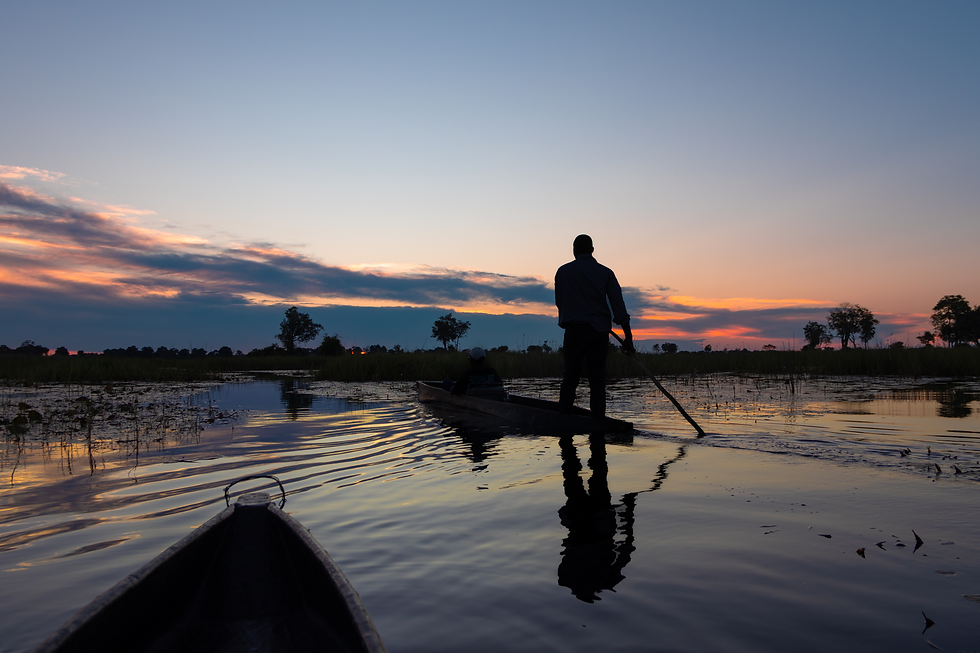
Waterways winding through the Okavango Delta. Elephants drinking at the banks of the Chobe River. Lions roaming the open plains of the Kalahari. A mokoro gliding silently through papyrus. And in the evening, a camp nestled in the heart of the wilderness, illuminated only by lanterns.
Botswana is synonymous with intense safari experiences, extraordinary landscapes, and a style of travel where nature sets the pace. However, Botswana isn't necessarily the country for travelers who want to cram in as many sights as possible in a short amount of time.
It's a country for people who want to stay. Who set off early in the morning, without knowing what the day will bring. Who can spend an hour with a herd of elephants because no one else wants to continue their journey. Who are willing to take a short bush flight to a remote lodge because that's precisely where the landscape and the safari experience are truly special.
And that is precisely where Botswana's strength lies.
Why Botswana?
Botswana is one of the most fascinating safari destinations in Africa for us. Not necessarily because you find the most animals here.
But because Botswana still offers a genuine wilderness experience. A large part of the country consists of largely untouched landscapes. Many safari areas are sparsely developed, and some camps can only be reached by small plane.
This creates something that is becoming increasingly rare on safari: space.
Space for animals.
Space for nature.
And space for you.
In particular, the private concessions around the Okavango Delta and in the Khwai region make safari experiences possible that are not available in many national parks.
These include, for example:
Night journeys
Walking Safaris
Mokoro excursions
Boat trips
private game drives
flexible off-road driving
Botswana is therefore particularly interesting for travelers who already have safari experience or who want to experience their first safari in a particularly intense way.


Botswana at a glance
Capital city
Largest city
Size
Resident
Language
currency
Time zone
entry
Safari possible
Best time to travel
Highlights
Gaborone
Gaborone
approx. 581,730 km²
approximately 2.36 million
Setswana and Enlish
Botswana Pula (BWP)
UTC +2
Visa on arrival
Year-round
May to October and November to April
Okavango Delta, Moremi Game Reserve, Khwai, Savuti, Chobe National Park, Central Kalahari Game Reserve, Makgadikgadi Salt Pans, mobile safaris, mokoro rides, boat safaris

Where is Botswana?
Botswana is located in southern Africa and lies mostly on the arid Kalahari Plateau. The Okavango Delta is in the north of the country. Chobe National Park is in the northeast. Further west are the Makgadikgadi Salt Pans. The Kalahari Desert begins in the south and southwest. Botswana borders Namibia, South Africa, Zimbabwe, and Zambia.
Geographically, Botswana appears dry at first glance, as the country has no access to the sea. And then there is the Okavango Delta.
Its most remarkable natural feature is a river that never reaches the sea. The Okavango River flows from Angola into the interior of Botswana, forming one of the world's largest inland deltas. This combination of desert and water makes the country so extraordinary.
The Okavango Delta
The Okavango Delta is the centerpiece of many Botswana trips. The Okavango River brings water from the Angolan highlands to a region where rivers are normally scarce.
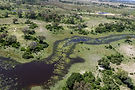
The water spreads over a vast area, forming channels, lagoons, islands, and seasonally flooded plains.
What makes it special: The annual flood reaches the delta during the dry season. When it gets particularly dry in Botswana, the water level in the Okavango rises. This means the safari experience is constantly changing throughout the year.
What sets Botswana apart from other safari destinations
In many places, Botswana feels less like a typical tourist destination and more like a journey into a completely different world. Large parts of the country are sparsely populated, many safari areas are difficult to access, and they are deliberately designed to limit the number of visitors. Instead of large lodges and numerous vehicles, you'll experience vast landscapes, small camps, and a wilderness where nature sets the pace.
What makes Botswana so special is above all the extraordinary combination of water and desert. In the Okavango Delta, the water spreads out right in the middle of an arid landscape, creating a unique mosaic of lagoons, channels, islands, and floodplains. While you glide silently through the waterways in a mokoro in the morning, you can spend the afternoon on a game drive. In other regions of Botswana, the landscape changes completely: The dry plains of the Kalahari, the open expanses of the Makgadikgadi Salt Pans, or the river landscapes of the Chobe demonstrate just how diverse the country can be within a relatively small area.
The safari format itself also sets Botswana apart from many other destinations. Besides classic game drives, mokoro trips and boat safaris are just as much a part of the experience as multi-day mobile safaris. On these safaris, your camp moves from place to place, allowing you to immerse yourself even more directly in the landscape. You sleep in the heart of the wilderness, follow animal tracks, and experience Africa with significantly less infrastructure between you and nature.
Botswana is also known for its exceptional wildlife viewing opportunities. Depending on the region and time of year, you can observe large herds of elephants, lions, leopards, wild dogs, buffalo, and numerous antelope species. The wild dogs, in particular, have made Botswana one of the most popular destinations for these rare predators.
It's not about ticking off as many animals as possible in the shortest amount of time. Botswana thrives on the moments in between: an elephant pausing at the water's edge, a pack of wild dogs suddenly emerging from the tall grass, or a silent drive through the delta, with only the sound of water and birds to be heard.
It is precisely this combination of pristine wilderness, low visitor density, extraordinary landscapes, and diverse safari styles that makes Botswana so special. A trip here is not simply a safari with a different backdrop. It can feel fundamentally different.
Why a safari in Botswana is worthwhile
Home of the Serengeti and the Ngorongoro Crater
Scene of the Great Migration
Vast national parks with impressive wilderness
Excellent chances of making the Big Five
Great diversity of landscapes and ecosystems
Safari and Zanzibar can be perfectly combined
Exclusive safari camps and luxury fly-in safaris
Year-round safari opportunities with different seasonal highlights
Exceptionally pristine wilderness
The unique Okavango Delta
Very high animal density in many regions
Little tourism and small safari camps
Mokoro and boat safaris alongside classic game drives
Mobile safaris in the heart of the wilderness
Great diversity between Delta, savannah and Kalahari
Excellent chances of seeing elephants, lions, leopards and wild dogs
The most beautiful safari regions in Botswana
Botswana comprises several completely different safari landscapes. Therefore, the choice of regions should always match your interests.
Okavango Delta
The Okavango Delta is probably the most famous region of Botswana. Here, water and wilderness meet.
Depending on the area, you can:
to ride in a mokoro
Boat safaris
Game drives
be traveling on foot
Experience night journeys
flying over the delta from the air
The landscape changes with the water level. An island that is dry one month may be partially surrounded by water a few weeks later.
Moremi Game Reserve
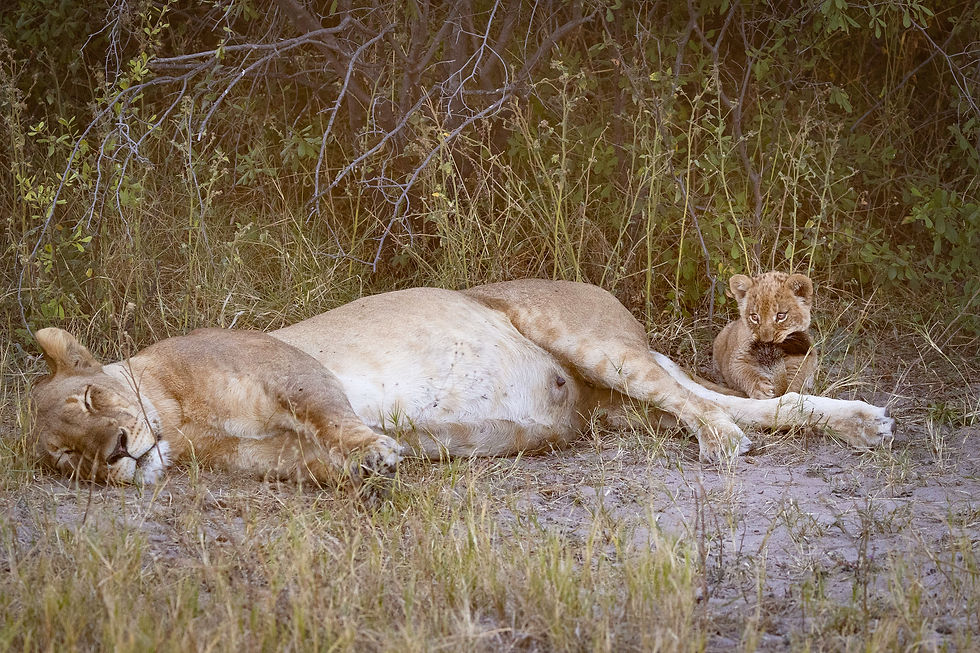
Moremi is located in the eastern part of the Okavango Delta and connects permanent bodies of water with drier savannah landscapes.
This makes the region particularly diverse. Here you can observe elephants, lions, leopards, wild dogs, buffalo and a large number of antelopes, among other animals.
Moremi is also one of the regions that can be easily combined with other areas of the Okavango Delta.
Khwai Community Concession
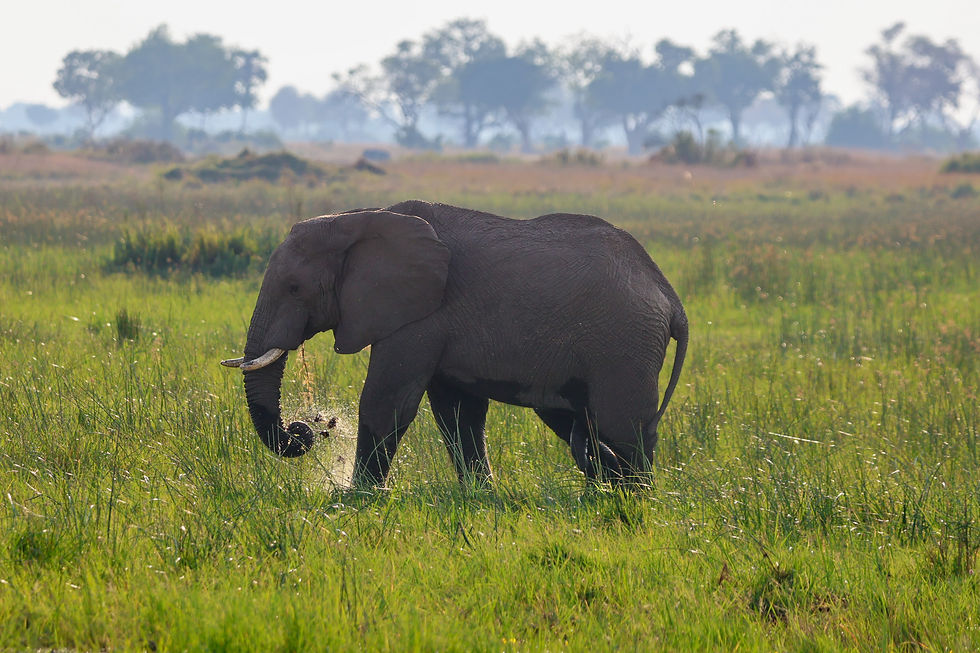
The Khwai region lies at the transition between Moremi and the private concessions to the north. The Khwai River forms a natural boundary between different habitats. The region is known for its high density of wildlife and particularly diverse safari activities.
A major advantage: In the private concessions around Khwai, night drives and off-road driving are possible, depending on the area. This significantly expands the possibilities of a classic safari.
Chobe National Park

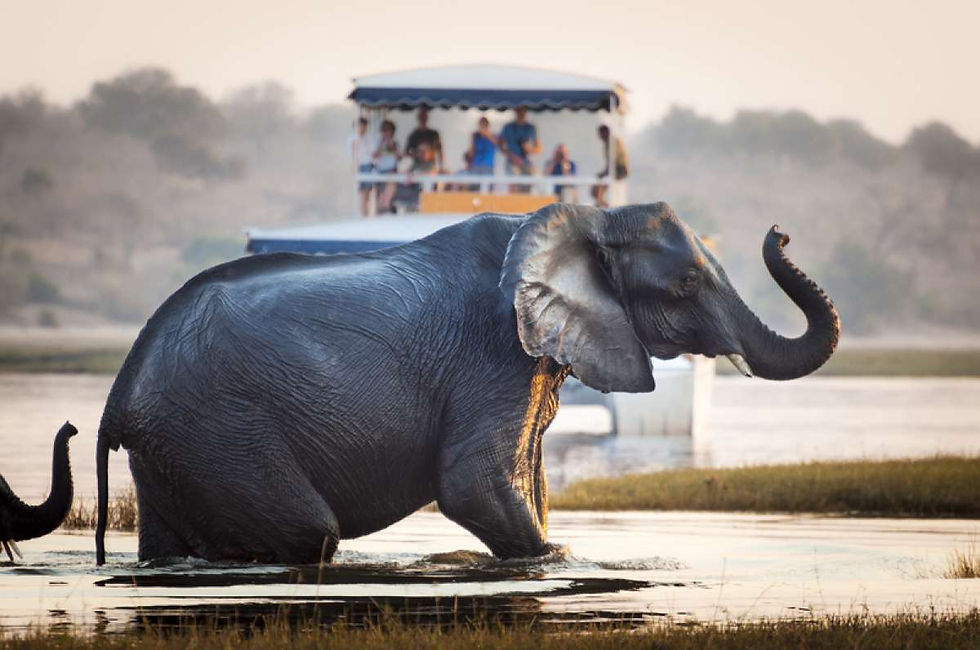
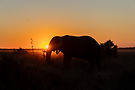
Chobe National Park is particularly famous for its large elephant population. Especially along the Chobe River, you can observe large herds during the dry season. The river landscape offers a completely different safari experience than the Okavango Delta.
Instead of traveling between islands and canals, you focus on a wide river and its banks. Boat safaris here are a particularly beautiful experience.
You can observe animals from the water, as elephants drink at the shore or enter the water.
Savuti
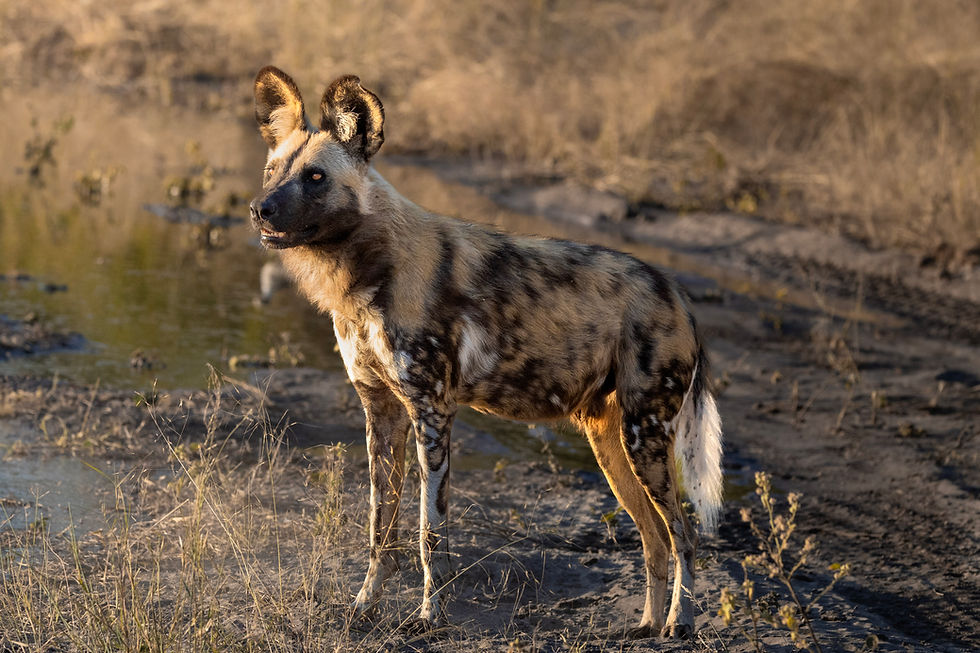
Savuti lies in the western part of the Chobe ecosystem and is known for its intense wildlife activity. The region has an interesting history, with a river that has changed its course over the decades.
Today Savuti is primarily known for:
Elephants
Lions
Hyenas
Wild dogs
large herds of wild animals
known.
The interactions between the different predators are particularly fascinating.
Central Kalahari Game Reserve
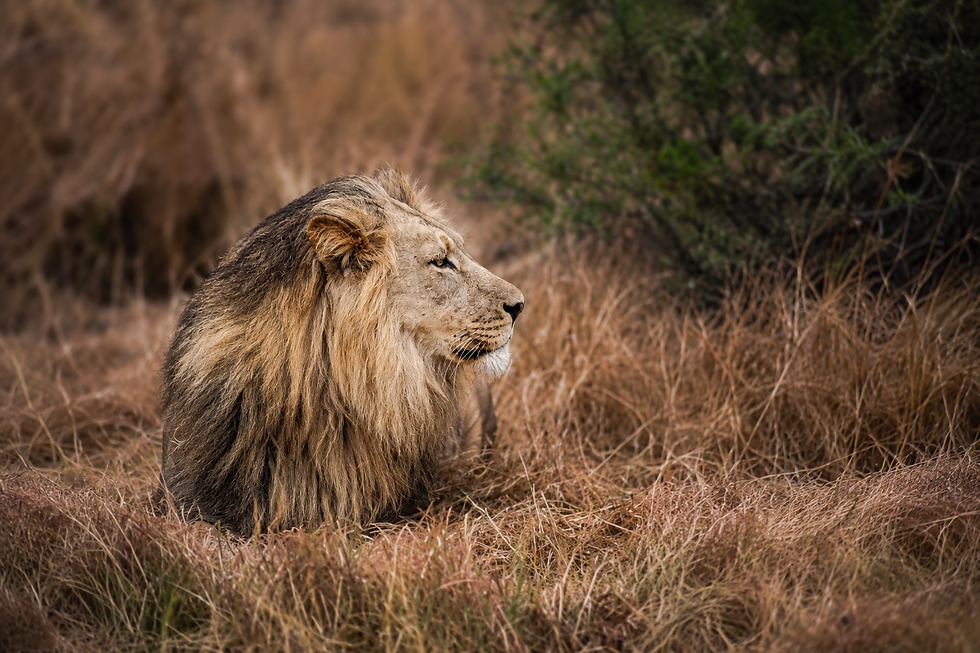
The Central Kalahari is a completely different world. There are no waterways here. Instead, you'll find vast open plains, grasslands, and the typical Kalahari landscape. The region is particularly interesting for travelers who want to experience Botswana away from the Okavango Delta.
Here you can, among other things:
Lions
Cheetahs
Leopards
Oryx
Springboks
Wildebeest
Hyenas
observe.
The landscape often appears empty. But that is precisely where its fascination lies.
Makgadikgadi Salt Pans
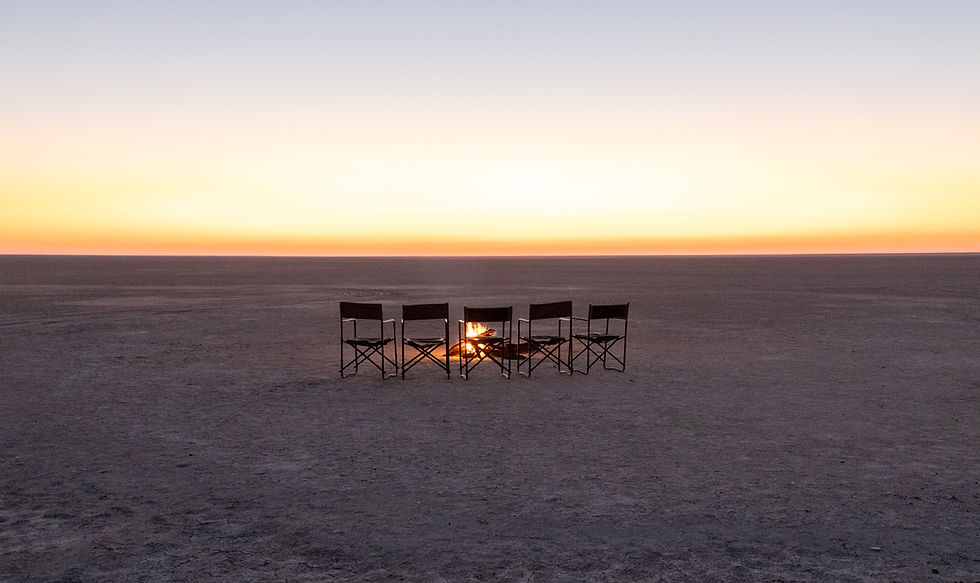
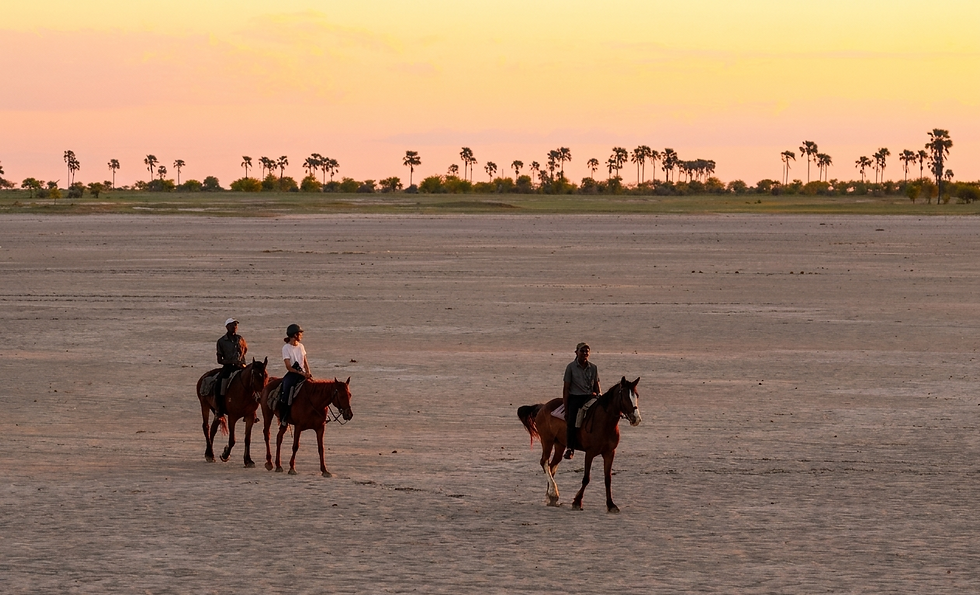
The Makgadikgadi Salt Pans are among the largest salt pans in the world. The landscape is almost surreal. Vast, bright expanses stretch to the horizon.
During the dry months, they appear almost deserted. After rainfall, however, the landscape changes dramatically. Large flocks of flamingos and migratory birds can then gather.
The seasonal migrations of zebras and wildebeest also make the region interesting.
Nxai Pan National Park
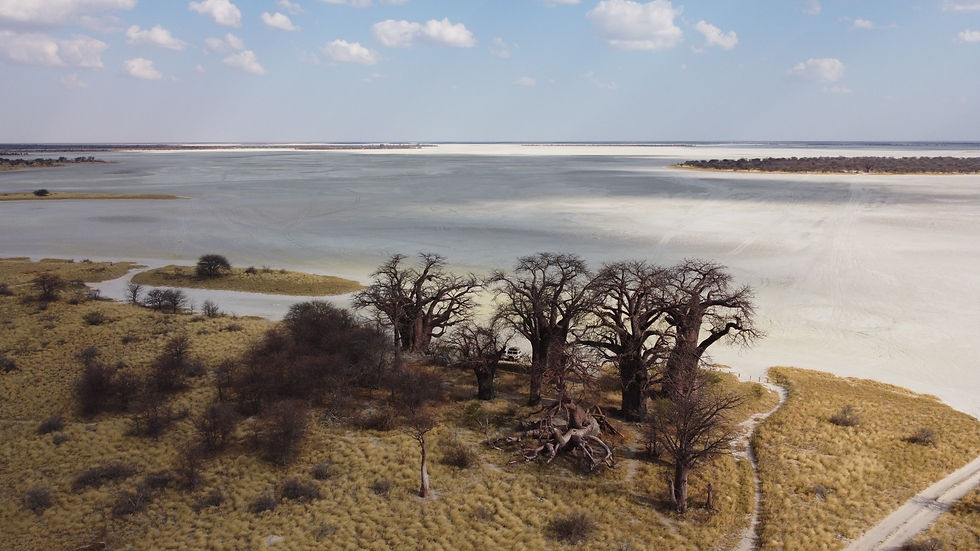
Nxai Pan lies north of the Makgadikgadi Salt Pans and is particularly known for its vast grasslands and seasonal waterholes.
The region is often combined with the Makgadikgadi.
It is suitable for travelers who want to experience Botswana beyond the classic Okavango experience.
Which safari region suits you best?
Region
Okavango Delta
Moremi
Khwai
Chobe
Savuti
Central Kalahari
Makgadikgadi
Nxai
Ideal for
Water lovers, photographers
Safari beginners, wildlife fans
Predator fans
First-time visitors, elephant fans
Photographers, intense safari experiences
Adventurers, those seeking peace
Landscape enthusiasts, photographers
Landscape enthusiasts, photographers
Special feature
Water, landscape
Wildlife, landscape
Predators, night drives
Elephants, boat safaris
Intensive predator observations
Desert, lions
Vastness, salt pans, migration
Baobabs, zebras, migration
Which safari region suits you best?
Our recommendation
For a first safari in Botswana, the north of the country is particularly suitable. The Okavango Delta, Moremi, Khwai, Savuti, and Chobe can be easily combined to showcase Botswana's full diversity. You'll experience waterways, open savannas, and dense wilderness, with a wide variety of opportunities to observe animals: on classic game drives, by mokoro (dugout canoe), or on a boat safari.
Those who want to experience Botswana more intensely and off the beaten track can extend their trip to include the Central Kalahari and the Makgadikgadi Salt Pans. Here, the landscape changes dramatically, and the safari experience becomes entirely different. Our mobile safaris, in particular, offer the opportunity to combine several regions and be even more immersed in the wilderness.
What animals can you see in Botswana?
Botswana is one of the best countries in Africa for intensive wildlife observation.
The combination of vast wilderness and comparatively low population density is particularly impressive.
Here you can observe, among other things:
Elephants, lions, leopards, African wild dogs, cheetahs, buffalo
Hippos, giraffes, zebras, wildebeest, waterbucks
Impalas, Kudus, Tsessebes
Warthogs, hyenas, jackals
And of course, an extraordinary variety of birds.
Impressive wildlife of Botswana in detail
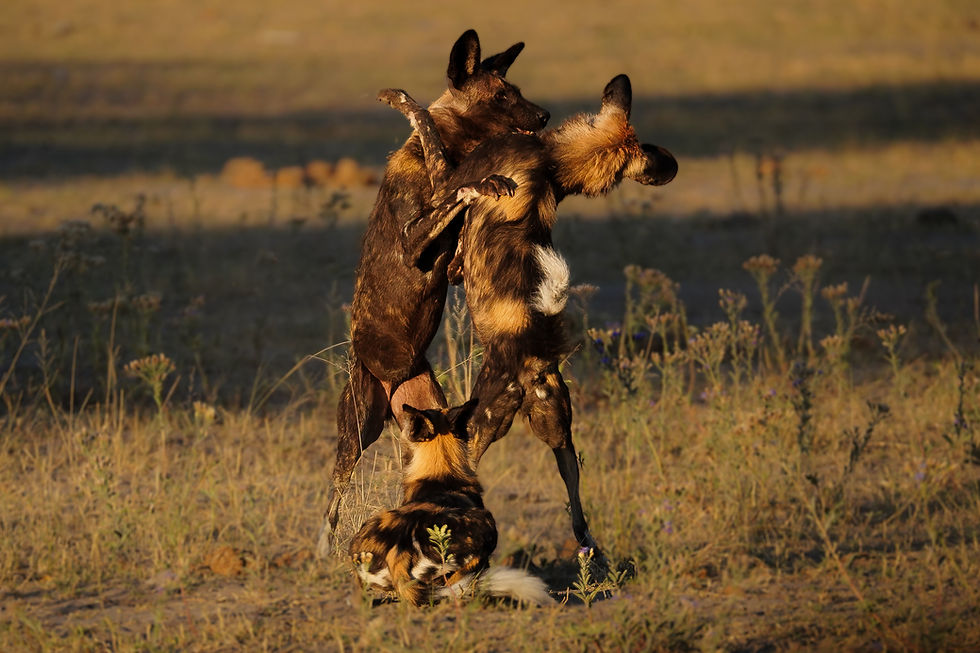
African wild dogs
Botswana is one of the best countries in Africa to observe African wild dogs. These animals live in social packs and are known for their dynamic hunting strategies.
Their populations are severely threatened, and functioning protected areas are crucial for their survival. The regions around Moremi, Khwai, and Savuti, in particular, offer excellent sighting opportunities.
An encounter with a pack of wild dogs is one of the most intense wildlife experiences you can have on a safari.
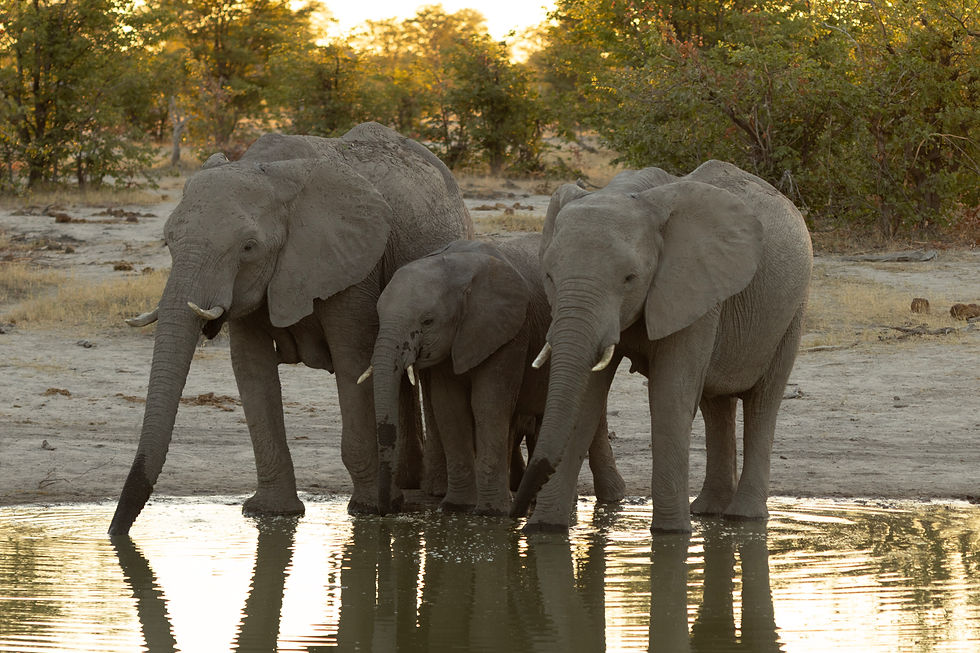
Elephants
Botswana is famous for its elephants. Especially along the Chobe River, you can observe huge herds during the dry season.
In the Okavango Delta, however, you often experience the animals in a completely different environment.
Elephants wade through water channels, swim between islands, or stand in shallow water. This is a very special kind of safari.
Lions
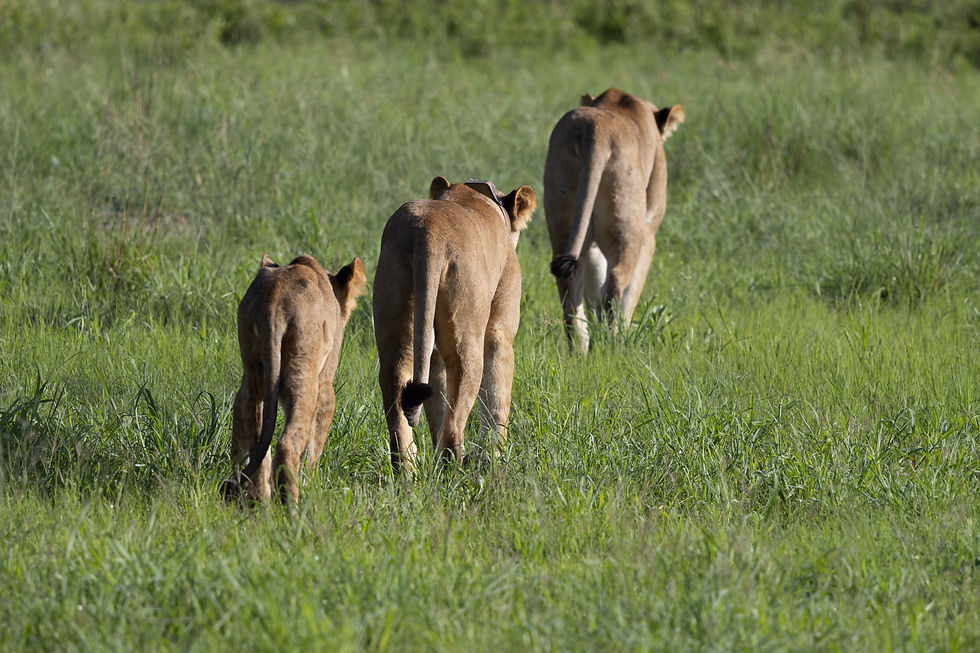
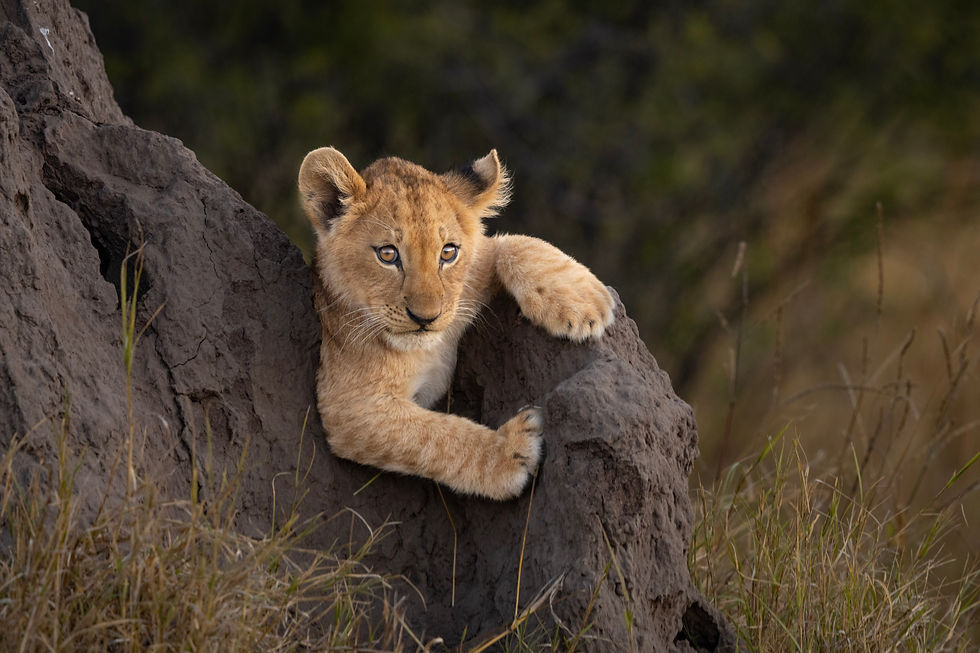
Lions are found in several safari areas of Botswana. Particularly interesting regions include: Moremi, Khwai, Savuti, Okavango Delta and Central Kalahari.
The large area of the protected areas allows packs to maintain their natural behaviors.
Especially in private concessions, observations can be particularly intensive because guides are allowed to position vehicles off the official roads, provided that local rules permit this.
Leopards
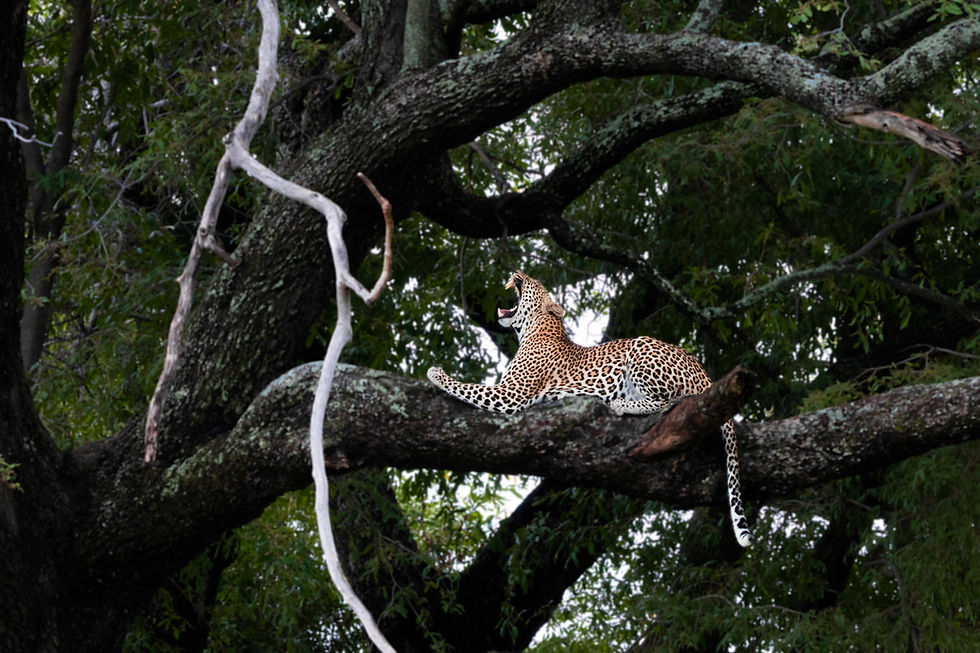
Leopards are also present in Botswana, but as everywhere in Africa, sightings are not guaranteed.
The best chances are in regions with dense vegetation and sufficient prey.
Early morning hours and late afternoon are particularly interesting.
A good guide can make a crucial difference here.
Seasonal migration in Botswana
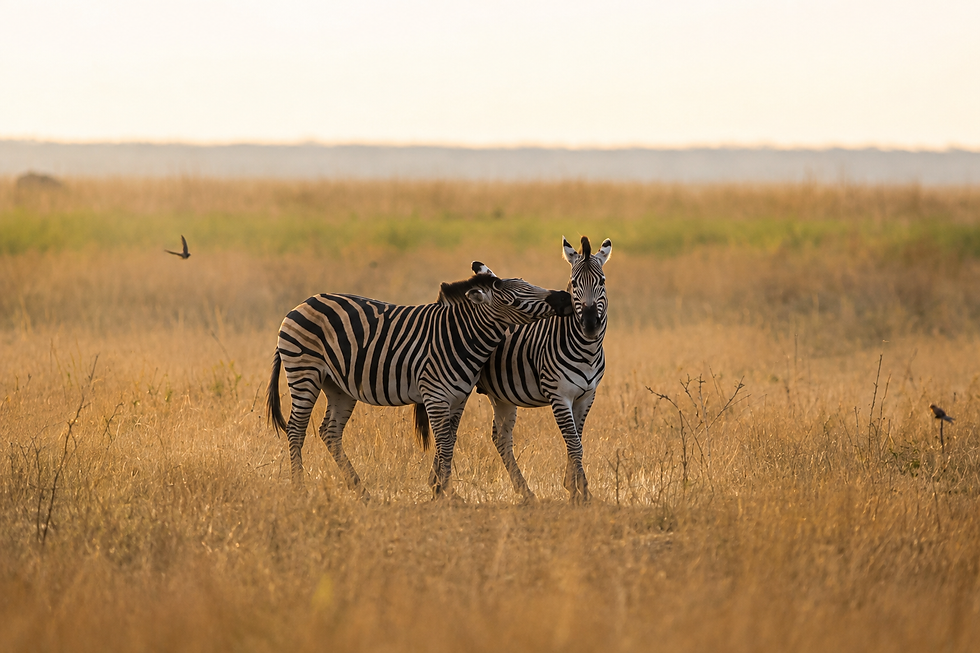
Botswana has its own seasonal animal migration, which is far less well-known outside of Africa than the Great Migration in Kenya and Tanzania. Yet the movements of the animals are no less impressive: every year, large herds react to the rainfall and migrate to where fresh grass and water are available.
Particularly remarkable is the zebra and wildebeest migration between Chobe, Nxai Pan, and the Makgadikgadi Salt Pans. After the first rains, the landscape transforms rapidly. Dry, dusty plains become fresh grazing lands, and thousands of zebras, wildebeest, and other herbivores make their way to these areas.
The migration is not a precisely predictable event with a fixed start and end date. Rainfall, water levels, and the availability of food determine the animals' rhythm. Consequently, the timing, route, and duration of their stay can vary from year to year.
This is precisely what makes the animal migration in Botswana so fascinating, but also less predictable. Anyone wishing to experience this natural phenomenon should therefore not rely solely on a specific migration date. Instead, we plan the trip so that the region, season, and current conditions align as effectively as possible.
And even if the large herds aren't in a particular location during your stay, Botswana remains an exceptional safari destination. This is because the seasonal movements of the animals are part of a much larger natural cycle that affects the entire ecosystem.
What types of safaris are available in Botswana?
Botswana offers some of the most diverse safari experiences in Africa. Find out exactly what they are here.
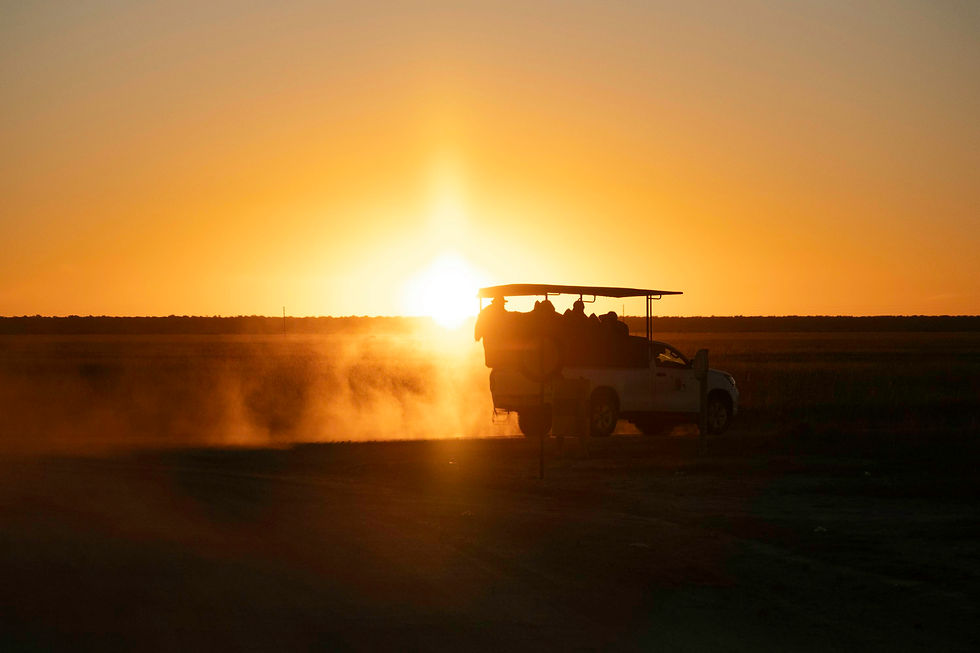
Classic game drives
The game drive safari is the most popular option. You head out in an open safari vehicle early in the morning and late in the afternoon. You search for animals, follow tracks, and observe the behavior of wild animals.
However, a game drive in Botswana can vary greatly. In the Okavango Delta, for example, you drive through seasonally dry plains and between bodies of water. In the Kalahari, the landscape is significantly drier.
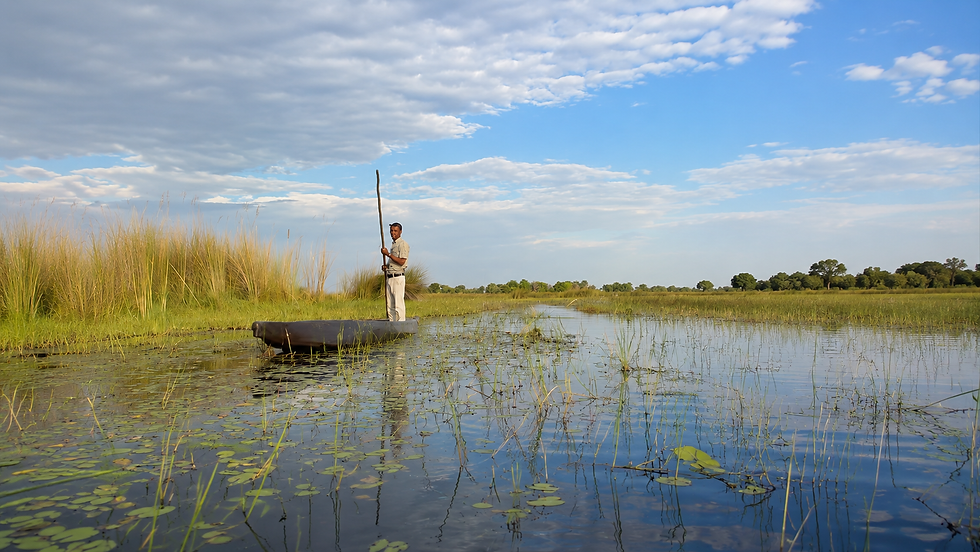
Traditional mokoro ride
The mokoro is as much a part of Botswana as almost any other safari experience. These traditional dugout canoes are now mostly made from modern materials and steered by a poler. You glide silently through narrow waterways. No engine. No traffic noise. Just water, birds, and the sound of the paddle.
A mokoro trip is less suitable for observing large predators. Its strength lies in its proximity to the landscape. You'll see aquatic plants, frogs, birds, dragonflies, and with a bit of luck, smaller animals along the shore.
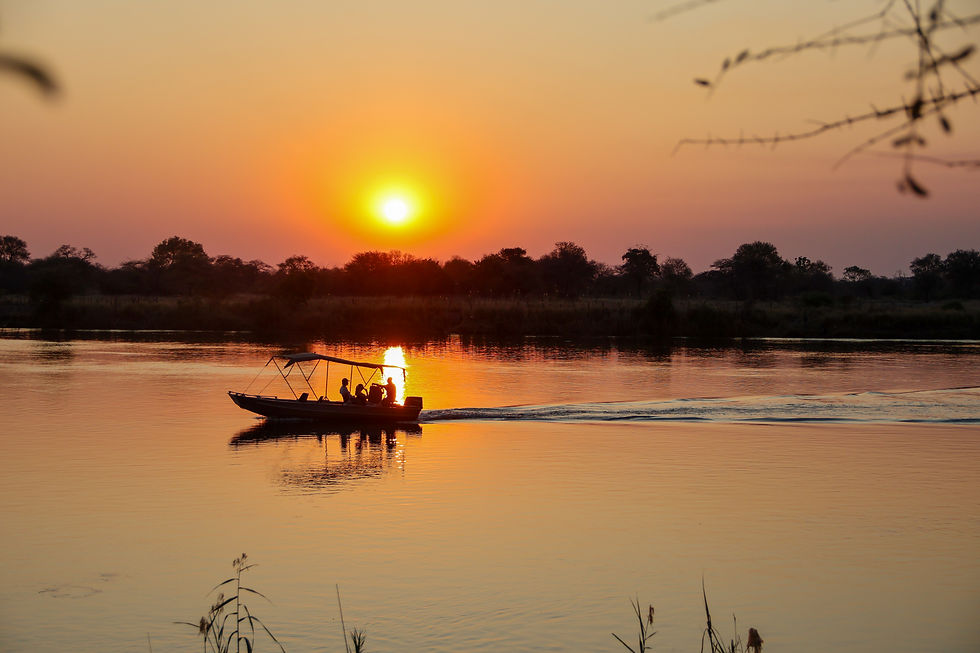
Boat safaris
Boat safaris are possible, especially on the Chobe River and in certain parts of the Okavango Delta.
They offer a perspective you can't get from the countryside.
Elephants, hippos and crocodiles can be observed particularly well from the water.
This is also interesting for photographers because you can be at eye level with the animals on the shore.
Walking Safaris
Botswana is also interesting for walking safaris. You hike through the wilderness with an armed guide.
The point is not to get as close to a lion as possible.
The focus is on:
Sense
Plant
insects
birds
small mammals
Animal behavior
reading the landscape
A walking safari changes your perspective on the wilderness. Suddenly, things become interesting that you would hardly have noticed from a vehicle.
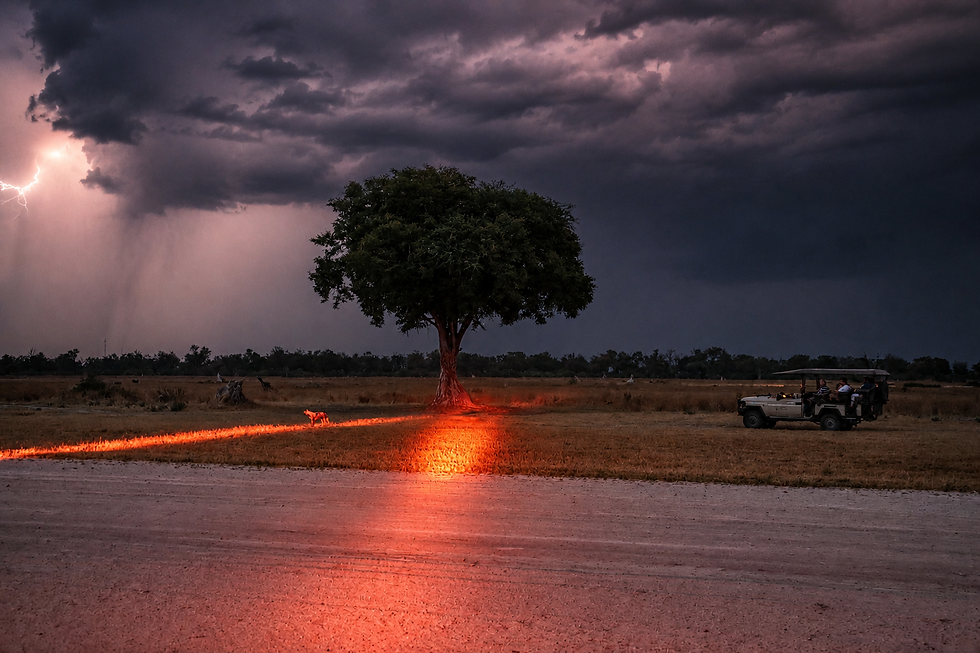
Night journeys
Night drives are one of the great strengths of private concessions in Botswana. After sunset, the wilderness changes. Leopards become more active. Hyenas go in search of food.
Bushbabies leap through the trees. Owls and other nocturnal animals become visible.
With a good guide, a night drive can be completely different from a classic game drive.
Mobile Safari in Botswana
A mobile safari is one of the most authentic ways to experience Botswana. You travel with a small group from camp to camp. The tents are set up and taken down for you as you move on.
This means: The wilderness doesn't come to the camp. The camp follows the wilderness.
This type of travel is ideal for people who want to experience Botswana in a particularly intense and close-to-nature way.
Depending on the provider and category, it can range from very classic to extremely comfortable.
Fly-in Safari
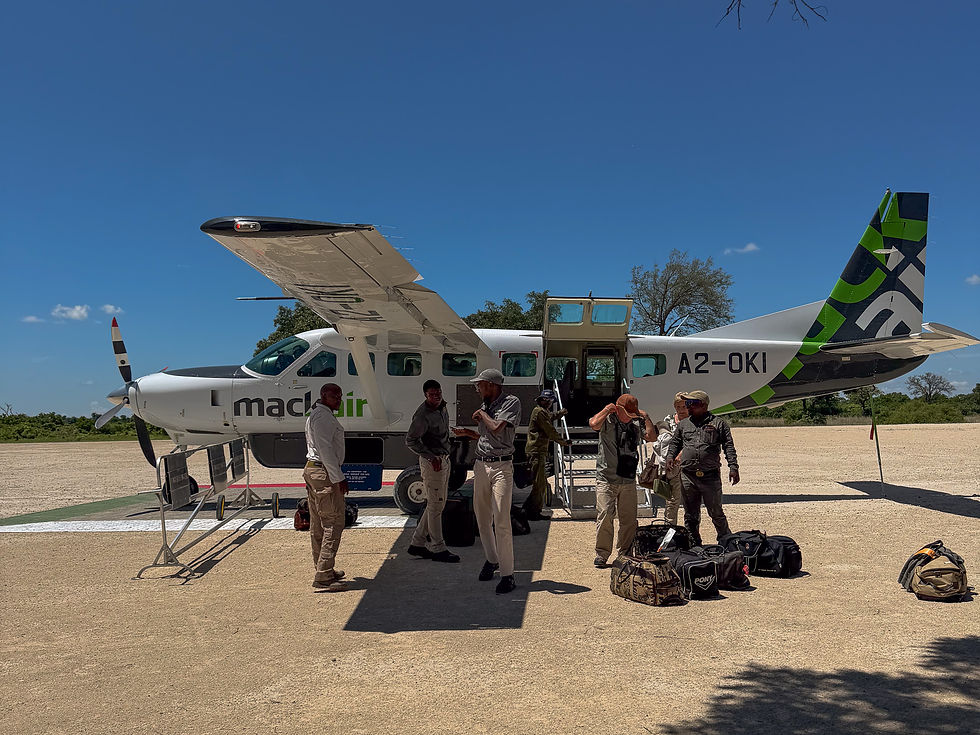
Many of Botswana's most exclusive safaris operate as fly-in tours. You fly from lodge to lodge in small charter planes, allowing you to experience several completely different regions in a short amount of time.
For example:
Okavango Delta → Khwai → Chobe
The flights are part of the experience. From above you can see elephant herds, waterways and the structure of the delta.
Combining safari and beach
Botswana itself is not a beach destination. The country is landlocked and has no coastline. However, that doesn't mean you can't combine your Botswana safari with a few days by the sea.
On the contrary, Botswana can be perfectly combined with other destinations in southern and eastern Africa. After several days in the wilderness, a stay at the beach can provide a wonderful contrast.
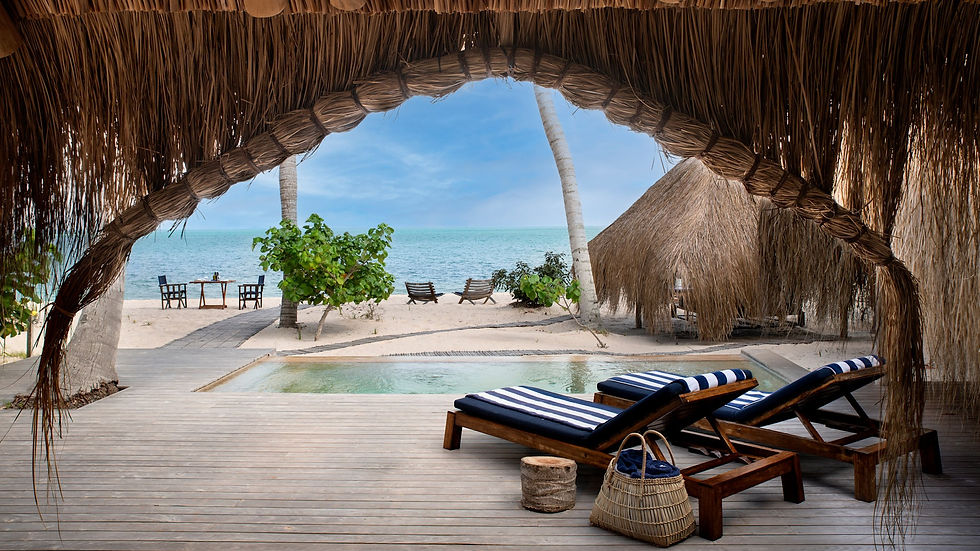
Particularly interesting are:
Mozambique
Mauritius
South Africa
Zanzibar
Seychelles
Which combination makes sense depends primarily on your available time and your flight connections.
Botswana & Mozambique
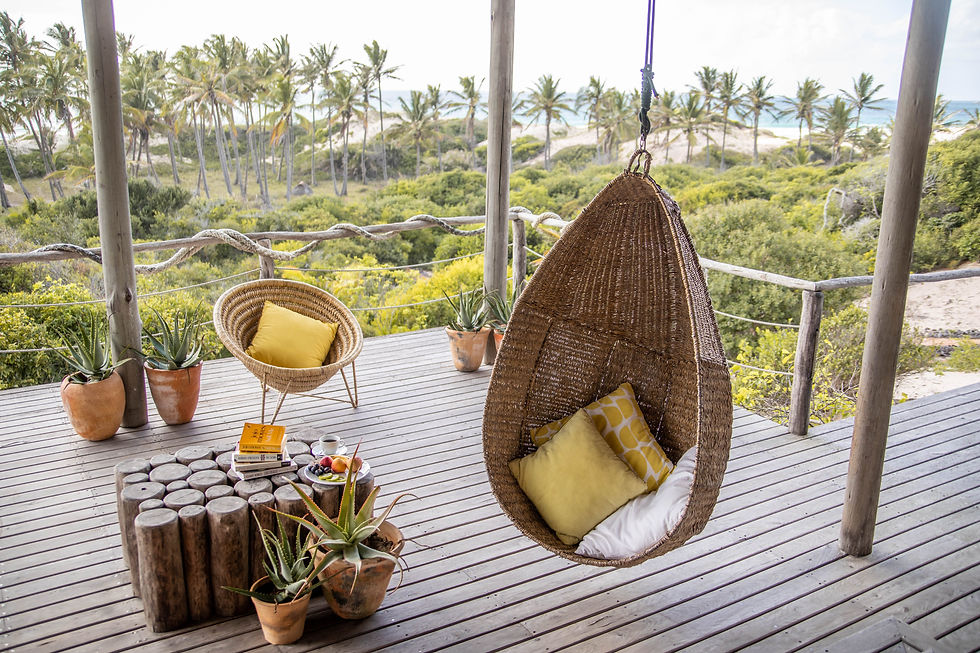
Botswana and Mozambique make a particularly beautiful combination:
On the one hand: Okavango Delta, elephants, lions and bush flights.
On the other side: warm Indian Ocean, white beaches and tropical islands.
After an intense safari, you can relax for a few days on the coast, snorkeling or diving. This combination is especially lovely for honeymoons and special trips.
Discover Mozambique now
More safari & beach combinations
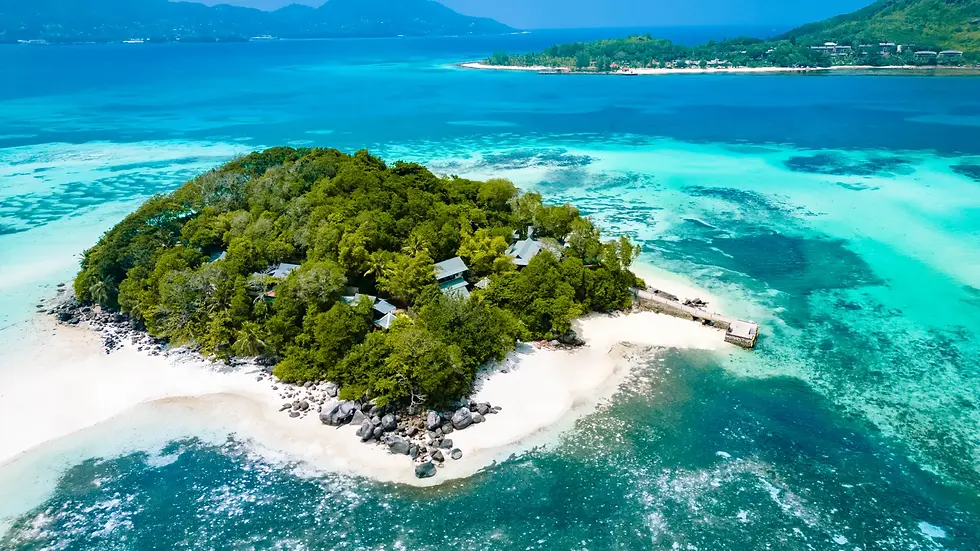
Botswana & Mauritius
Mauritius offers a very comfortable end to a safari trip.
The island is well-developed for tourism and offers high-quality resorts, excellent restaurants and numerous activities.
For example, you could structure your trip like this: First several days on safari in Botswana, then a week's island holiday in Mauritius.
This works particularly well if you consciously want to travel a little slower after the safari.
Botswana & Seychelles
If the beach stay itself is to be a highlight of the trip, the Seychelles are an excellent addition.
The combination of safari and island life offers a stark contrast: first wilderness, then tropical paradise.
This combination is particularly interesting for honeymoons and anniversary trips.
Botswana & South Africa
South Africa is the most versatile addition.
You can visit Botswana, for example, with:
Cape Town
Winelands
Garden Route
Greater Kruger
combine.
A trip could then lead from Cape Town via Botswana to a private safari lodge in the Greater Kruger.
Or you could start with a safari in Botswana and end the trip with a few days at the Cape.
Botswana & Zanzibar
Zanzibar is another option for a beach holiday.
The island can be particularly well combined with a safari in Tanzania.
A combination with Botswana is more interesting for longer trips due to the additional flight distances.
If you want to combine Botswana with Zanzibar, we would therefore carefully check whether the flight connections and the additional travel time make sense.
Discover Zanzibar now
Botswana as a travel combination
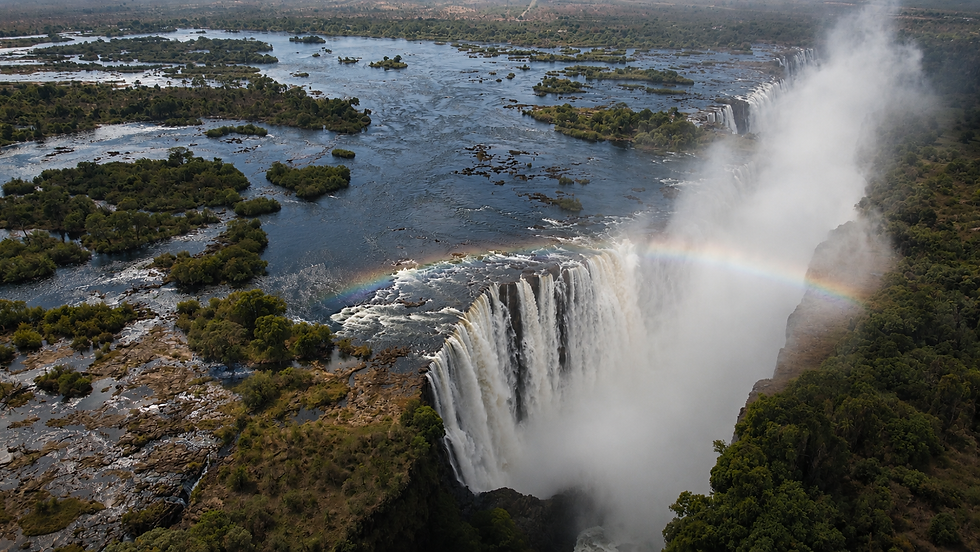
Botswana & Victoria Falls
One particularly popular combination is: Botswana and Victoria Falls - and for good reason.
Victoria Falls is located on the border between Zambia and Zimbabwe and can be easily combined with a Botswana safari.
After the safari, you could, for example, spend another two to three nights at Victoria Falls. This combination unites safari and waterscape with one of Africa's most spectacular natural wonders.
Botswana & Namibia
This combination is particularly interesting for travelers who want to experience different landscapes of southern Africa.
Namibia offers desert, dunes, Damaraland, Etosha and the Skeleton Coast.
Botswana, on the other hand, has the Okavango Delta, Moremi, Khwai, Chobe, Kalahari and the salt pans.
The two countries complement each other perfectly.
Botswana & Zambia
Zambia is an interesting addition for experienced safari travelers. While Botswana is particularly known for its waterscapes and exclusive safari camps, Zambia offers, among other things, outstanding walking safaris and very remote national parks. A combined trip could, for example, begin with Victoria Falls and then continue to Botswana.
Discover Zambia now
The best time to travel to Botswana
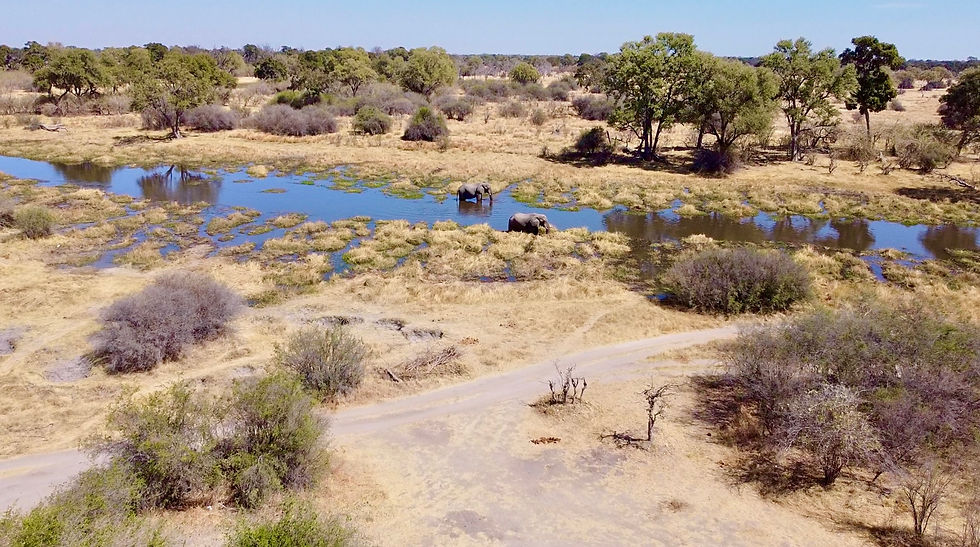
Botswana can generally be visited year-round. However, the safari experience changes considerably throughout the year. The interplay of the following is particularly important:
Rainy season, dry season, and the water level of the Okavango Delta. And that's precisely what makes Botswana so interesting.
May to June: The delta begins to awaken
After the rainy season, the water from Angola slowly begins to reach the Okavango Delta. The landscape is still relatively green, and at the same time, the rainfall in Botswana is decreasing. This is an exciting transitional period. Temperatures become more pleasant, and wildlife viewing can already be excellent.
For travelers who don't necessarily want to be there during the absolute peak season, these months can be particularly attractive.
July to September: The classic Botswana safari
These months are among the most popular times to travel. The Okavango Delta is full of water. At the same time, many regions of Botswana are dry. This means:
Water is available, but animals are finding fewer and fewer natural water sources outside of river and delta areas. They are increasingly concentrating on rivers, waterholes, and permanent bodies of water. This can create excellent safari conditions. However, nights can get very cold. Especially in July and August, you should pack warm clothing for early morning game drives.
October: Intensive Safari
October is often one of the hottest months. At the same time, the drought is particularly pronounced. This can be excellent for wildlife observation, as many animals congregate around the last remaining water sources.
Elephants are often seen at rivers and waterholes. However, the heat can be very intense. If you don't tolerate high temperatures well, the months of July to September are usually more pleasant.
November to March: Rainy season
Botswana changes with the first rains.
The landscape turns greener. Many animals have offspring. Migratory birds return. Thunderstorms build on the horizon. For photographers, this time of year can be spectacular. At the same time, wildlife observation is sometimes more difficult because wild animals are dispersed over larger areas.
The green season
The so-called Green Season is often underestimated. Those who travel to Botswana solely for maximum wildlife density will likely prefer the dry months.
Those who oppose:
Landscape
photography
Young animals
birds
dramatic weather
fewer visitors
lower prices
Those who appreciate this can experience a fantastic journey during the Green Season.

What time of year suits you best when you travel?
Period
May to June
July to September
October
November to March
April
Charakter
Transition to the dry season, green delta
Dry season, flooding in the delta
Dry season, hot, little water
Rainy season, green landscape, young animals
Transition to the dry season, first dry days
Especially suitable for
Landscape, water,
photographers
classic safari, Okavango Delta
intensive wildlife observations
Photography, young animals, birds
Landscape, photography
For a first trip to Botswana, we often recommend June to October, although the exact region is crucial.
How many days should one plan for Botswana?
Botswana is not a country you can truly get to know in five days. Of course, a short safari is possible. But Botswana's strength lies in combining several regions.
7 to 8 days
One week is enough to get a first impression.
For example:
Okavango Delta & Moremi
or Okavango Delta & Khwai.
This allows you to focus on one region and avoid unnecessary transfers.
For a short trip, this is often better than including four separate camps.
10 to 12 days
About ten days is a very pleasant amount of time for a classic safari.
One possible combination:
Okavango Delta, Moremi and Khwai or Okavango Delta, Khwai and Chobe.
This allows you to experience different landscapes and safari activities.
14 to 16 days
Two weeks allow for a much more varied trip.
For example, you could:
Okavango Delta, Moremi, Khwai, Savuti and Chobe
Combine them. Or also include the Kalahari.
It is important not to overdo the number of camps.
The same applies in Botswana:
More places don't automatically mean more experiences.
21 days
With three weeks you can plan a particularly intensive trip. For example:
Central Kalahari, Makgadikgadi, Okavango Delta, Moremi, Khwai, Savuti and Chobe.
That is, however, a very extensive route.
Alternatively, it may be more sensible to select only four or five regions and stay longer in the respective camps.
Accommodation in Botswana
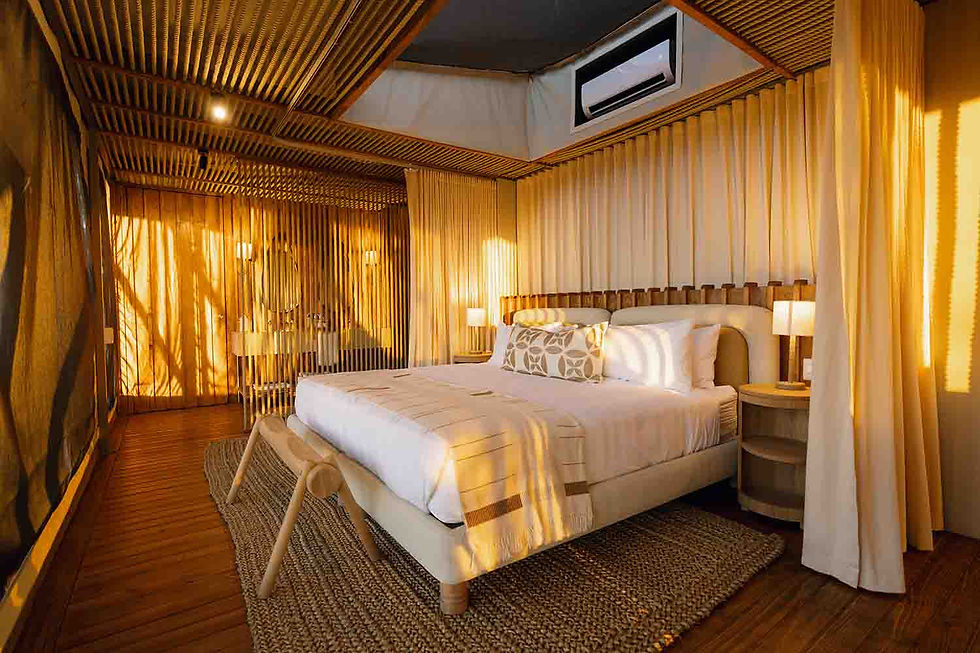
In Botswana, accommodation is an essential part of the safari experience. Many camps are located in remote concessions and are only accessible by small plane. The camps are often deliberately kept small.
Instead of a large resort, you will find:
six to twelve tents
private decks
open lounges
Fire pits
personal support
small safari vehicles
a very individual atmosphere
Safari camps in the Okavango Delta
The camps in the Delta are often particularly geared towards water activities.
Depending on the location and water level, you can: go mokoro boating, take boat safaris, go fishing, go on foot and take game drives.
Some camps are located on islands and are almost entirely surrounded by water. Others are situated on the border between the delta and the dry savanna.

Camps in private concessions
An important distinction in Botswana lies between national parks and private concessions.
Different rules sometimes apply to private concessions.
Depending on the area, activities include, for example: off-road driving and
Night journeys are possible.
This can make a significant difference to the quality of a safari. For example, if you spot a leopard, your guide may, under certain conditions, position the vehicle off the official roads.
This doesn't automatically mean that private concessions are always better. But they do offer different safari experiences.

Luxury camps
Although Botswana boasts many top-class camps, luxury here doesn't necessarily mean marble bathrooms and huge resorts. The real luxury is seclusion.
You're sitting on your private terrace. Before you stretches an endless floodplain. Not another vehicle is in sight. In the evening, you might hear the calls of hyenas. And it's precisely this combination of comfort and wilderness that makes Botswana so special.

Mobile Camps
Botswana is one of the best countries in Africa for mobile safaris.
A mobile camp follows your route. This means you won't be exploring the same region every day from a fixed lodge.
Instead, you move on with the camp. This creates a very authentic travel experience.
Depending on the provider, there are different levels of comfort:
classic expedition tents
comfortable Meru tents
private mobile camps
luxury mobile safari
For travelers who want to experience Botswana in a particularly intensive way, a mobile safari is an excellent alternative to the classic lodge trip.

How we choose accommodations
At InfiniteWild, we therefore don't just look at the category of accommodation. We pay attention to:
Position
concession
Wildlife activity
Activities
Camp size
Guides
atmosphere
sustainability
Privacy
Price-performance
Because a luxury camp in the wrong location might be less interesting for your trip than a simpler camp in an exceptional location.
Arrival in Botswana
Botswana lacks direct connections to all international markets. Therefore, for a safari, arriving via a regional airport is often the most practical option. The main international airport is Sir Seretse Khama International Airport in Gaborone. However, other airports and border crossings are also relevant for classic safari itineraries. The most convenient route depends heavily on your planned itinerary. For example, a connection via Maun is often particularly practical for a fly-in safari.
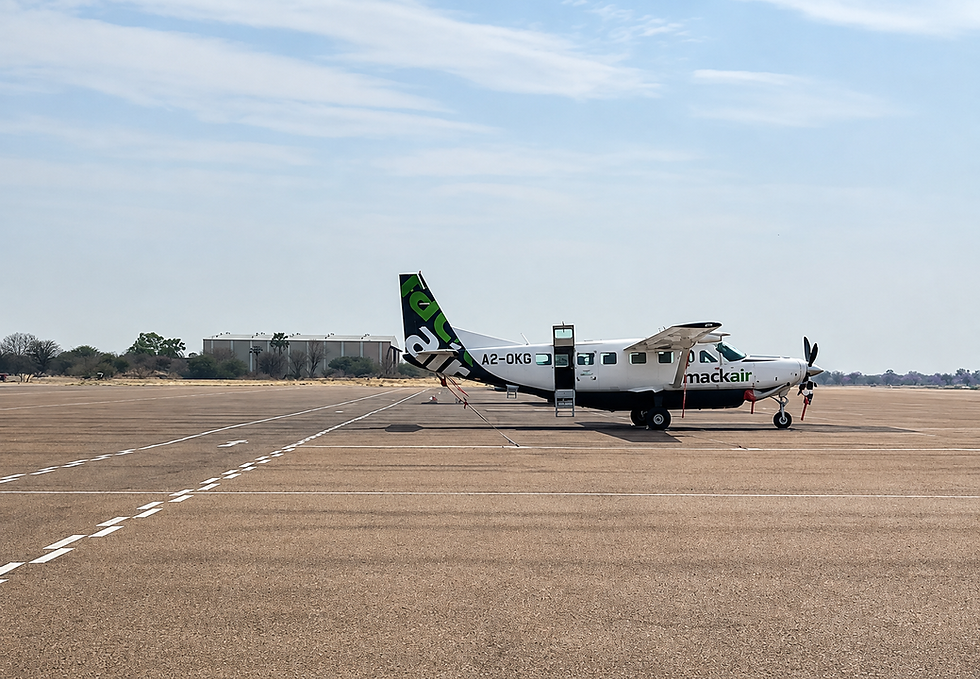
Maun: The gateway to the Okavango Delta
Maun is considered the most important hub for many Botswana safaris. Numerous small planes depart from here to the camps in the Okavango Delta, Moremi and other safari areas.
This can be an unusual moment for travelers.
You arrive at a relatively small airport, board a small charter plane a short time later and fly over a landscape that slowly transforms beneath you into a mixture of water, islands and savannah.
The transfer is therefore already part of the safari experience.
Kasane: The gateway to the Chobe
Kasane is particularly important for trips to northern Botswana. It lies directly adjacent to Chobe National Park and is also not far from Victoria Falls. This makes Kasane an important starting point for combinations such as:
Botswana and Victoria Falls or Chobe with Zimbabwe/Zambia.
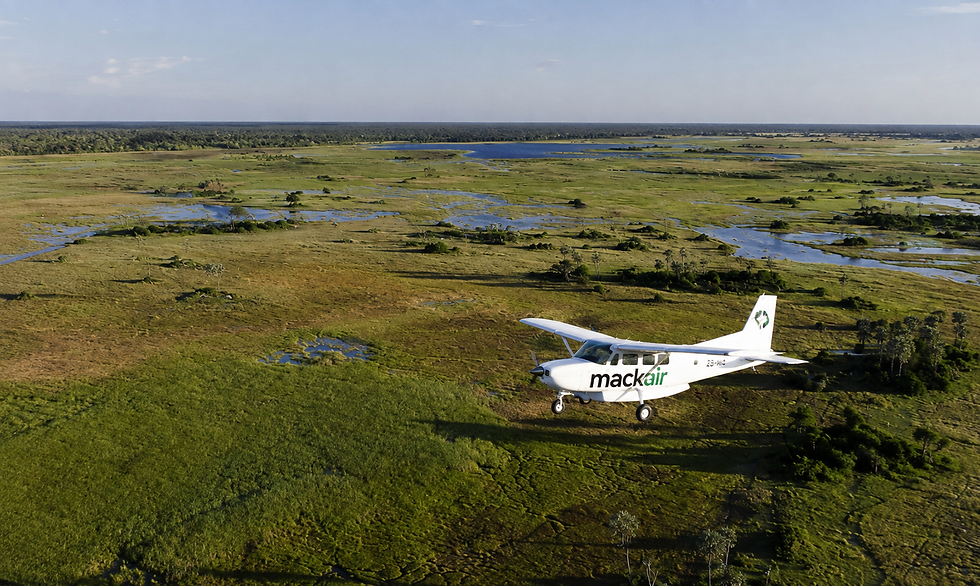
Fly-in transfers between the camps
On a classic Botswana safari, the individual camps are often connected by small planes. This has a major advantage: you hardly lose any time on long drives.
A typical day might look like this:
Early morning game drive → Breakfast → Flight to the next camp → Lunch → Afternoon safari
Flight times are usually relatively short, lasting around 15-30 minutes depending on the distance (sometimes a little longer). At the same time, you get an impressive view of the landscape from the air.
What should you keep in mind regarding luggage?
Fly-in safaris often have stricter baggage restrictions than regular scheduled flights. This is due to the smaller aircraft. Hard-shell suitcases are often unsuitable, as they tend to slide around in the cargo hold of these smaller planes.
For a fly-in safari, we therefore generally recommend soft-sided travel bags. Weight is also important. The exact requirements depend on the specific charter company and aircraft type and should be checked before departure.
Security in Botswana
Botswana is considered a stable and easily accessible travel destination. For safari trips, it's especially important to prepare yourself for the conditions of a true wilderness journey. The greatest danger is often not crime, but rather: long distances, wild animals, heat, and remote regions.
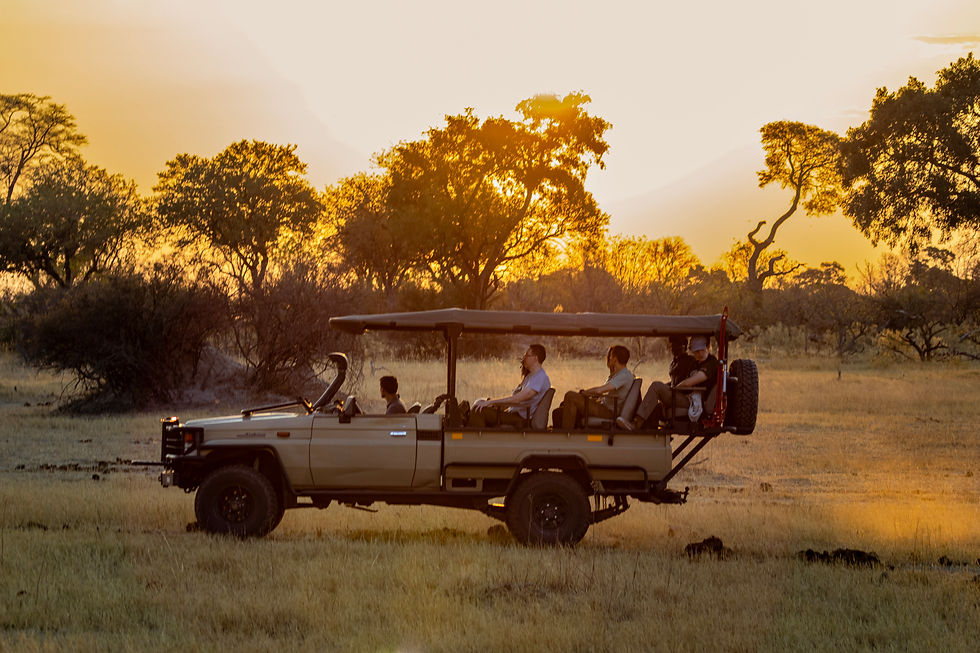
Safety during a safari
The most important rule is: always follow your guide's instructions. Never get out of the vehicle on your own unless explicitly permitted.
Even if an elephant appears peaceful, its reaction can change within seconds. The same applies to lions, buffalo, hippos, and other wild animals.
Camp safety
Botswana safari camps are located deep in the wilderness. This means that animals could theoretically wander through the camp. There's no need to worry. The camps have clear safety protocols, and the staff knows how to navigate this environment. However, you shouldn't walk around the camp alone after dark. In many camps, a staff member will escort you back to your tent. This isn't just a formality; it's part of life in the wilderness.
Safety while driving
Botswana can also be explored by self-drive. However, this type of travel is more demanding than, for example, a classic self-drive tour of Namibia.
In more remote regions there are:
deep sand passages
Water crossings
very bad roads
weak mobile network reception
long distances
hardly any infrastructure
If you plan to travel through Botswana as a self-driver, you should therefore have experience with 4x4 vehicles or receive appropriate instruction. For your first trip to Botswana, we often recommend a guided or partially guided tour.
Health and medical care
Botswana has medical facilities in its larger towns. Naturally, medical infrastructure is limited in remote safari areas. Many high-quality safari camps therefore have emergency plans in place and can organize evacuations if necessary. Especially when traveling to very remote regions, it is advisable to consider medical care and evacuation arrangements when planning your trip. We would be happy to assist you with this.
Malaria in Botswana
The risk of malaria in Botswana varies regionally and seasonally. There is a particularly high risk in the north of the country, where many of the main safari areas are located. This does not mean you should avoid traveling to Botswana.
This means you should check the latest recommendations for your specific route before your trip. Good mosquito repellent is also essential for a safari in Botswana.
These include, among others:
long clothing in the evening
Repellent
mosquito nets
closed shoes
If necessary, medical prophylaxis after individual consultation.
Botswana with children
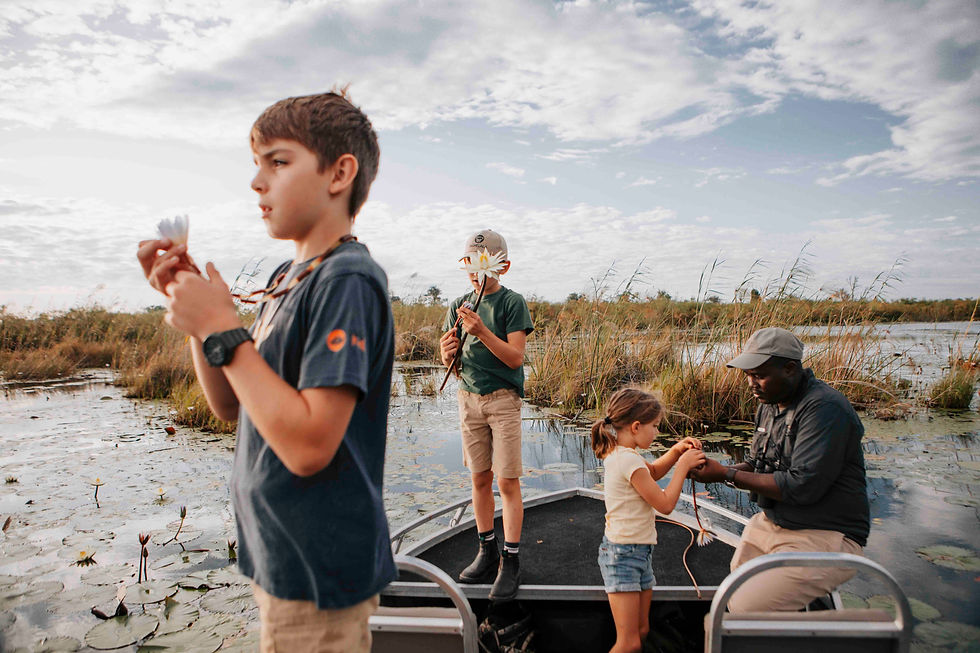
Botswana can be fantastic with children. However, the destination isn't equally suitable for every age group or travel style. The biggest challenge is often not the animals, but the remoteness. Many camps are small and have strict age restrictions for certain activities. Others, however, have special children's programs and offer great entertainment for younger children, especially between safaris.
What are the advantages of traveling to Botswana with children?
Children can experience nature very directly here. They can:
Elephant watching
to ride in a mokoro
Discover birds
Reading the tracks
Observing animals from the boat
sleeping under the African starry sky
A safari can therefore go far beyond simply observing animals.
What should you keep in mind when dealing with families?
Not every lodge is suitable for young children. Some camps only accept children above a certain age. Age limits also apply to walking safaris and certain activities. Long transfers can also be tiring for younger children. Therefore, a family trip should be planned with particular care.
Botswana with teenagers
Botswana is often particularly exciting for families with older children or teenagers. Walking safaris, mokoro trips, and longer game drives can now be experienced much more intensely. Teenagers also benefit when guides not only point out animals but also explain how the entire ecosystem works.
Which camps are suitable for families?
When traveling with family, we pay particular attention to:
spacious family tents
private activities
short transfers
flexible meal times
child-friendly guides
suitable activities
appropriate age limits
A private vehicle can also be useful for families – in fact, it's highly recommended for families with younger children. This allows you to adapt your daily routine to your family's needs, instead of having to follow a fixed group schedule.
Experience Africa with the whole family: Discover our tips for a safari with children
Botswana for photographers
Botswana is an exceptional destination for wildlife photography. Not only because of the animals, but also because of the light, the landscape, and the opportunities to photograph animals in unusual environments.
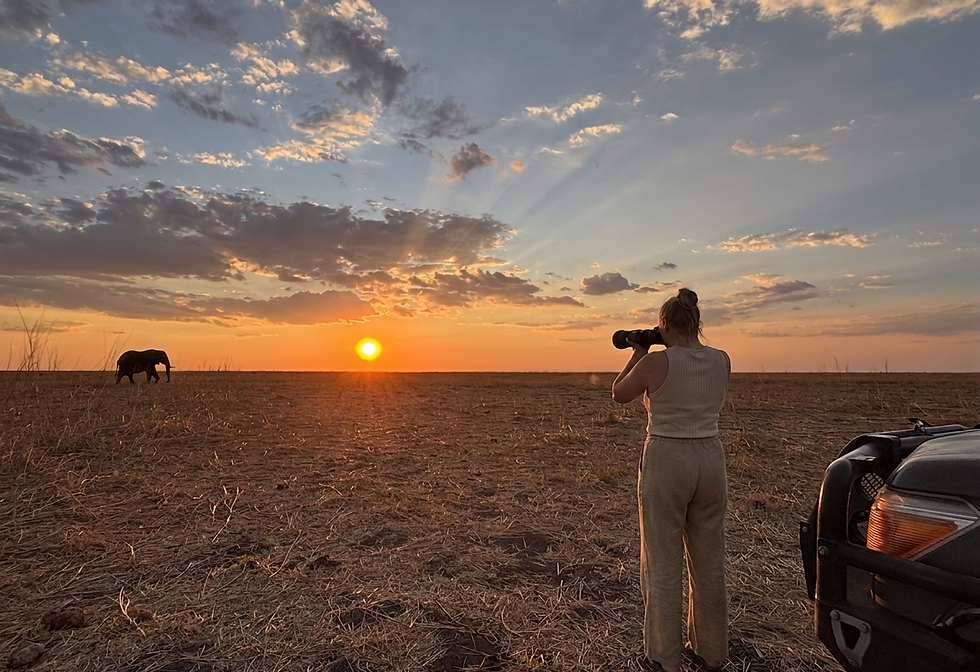
Wildlife photography
Botswana is incredibly diverse in terms of its animals and landscapes, offering subjects such as:
Elephants in the water
Lions in the Kalahari
Leopards in the morning light
Wild dogs hunting
Hippos in the water
Buffalo herds
Giraffes in the savanna
Birds in the wetlands
Particularly fascinating are situations in which animals interact with their environment. A photograph of an elephant in front of a body of water often tells a more compelling story than a portrait against a neutral background.
Photography from a mokoro
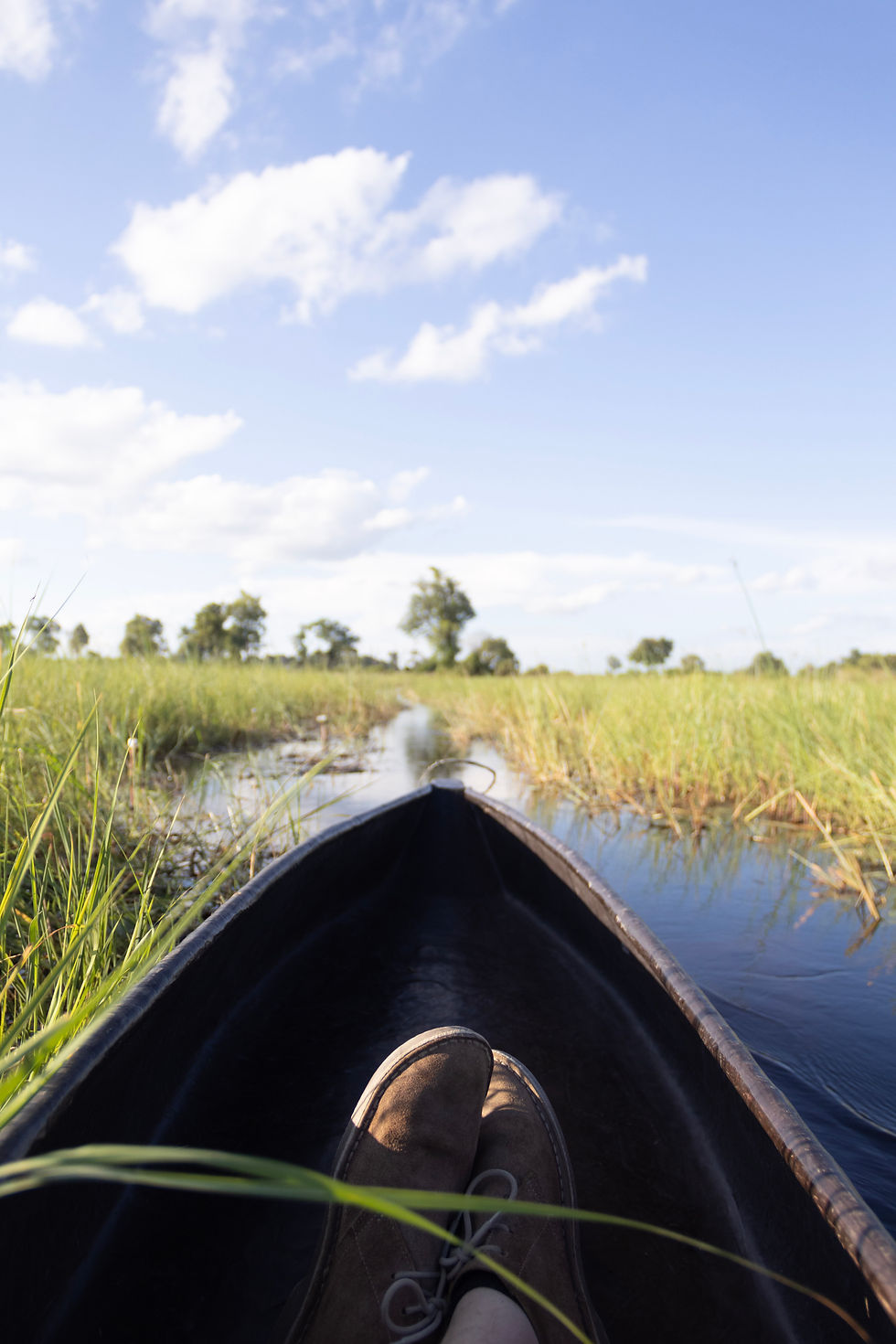
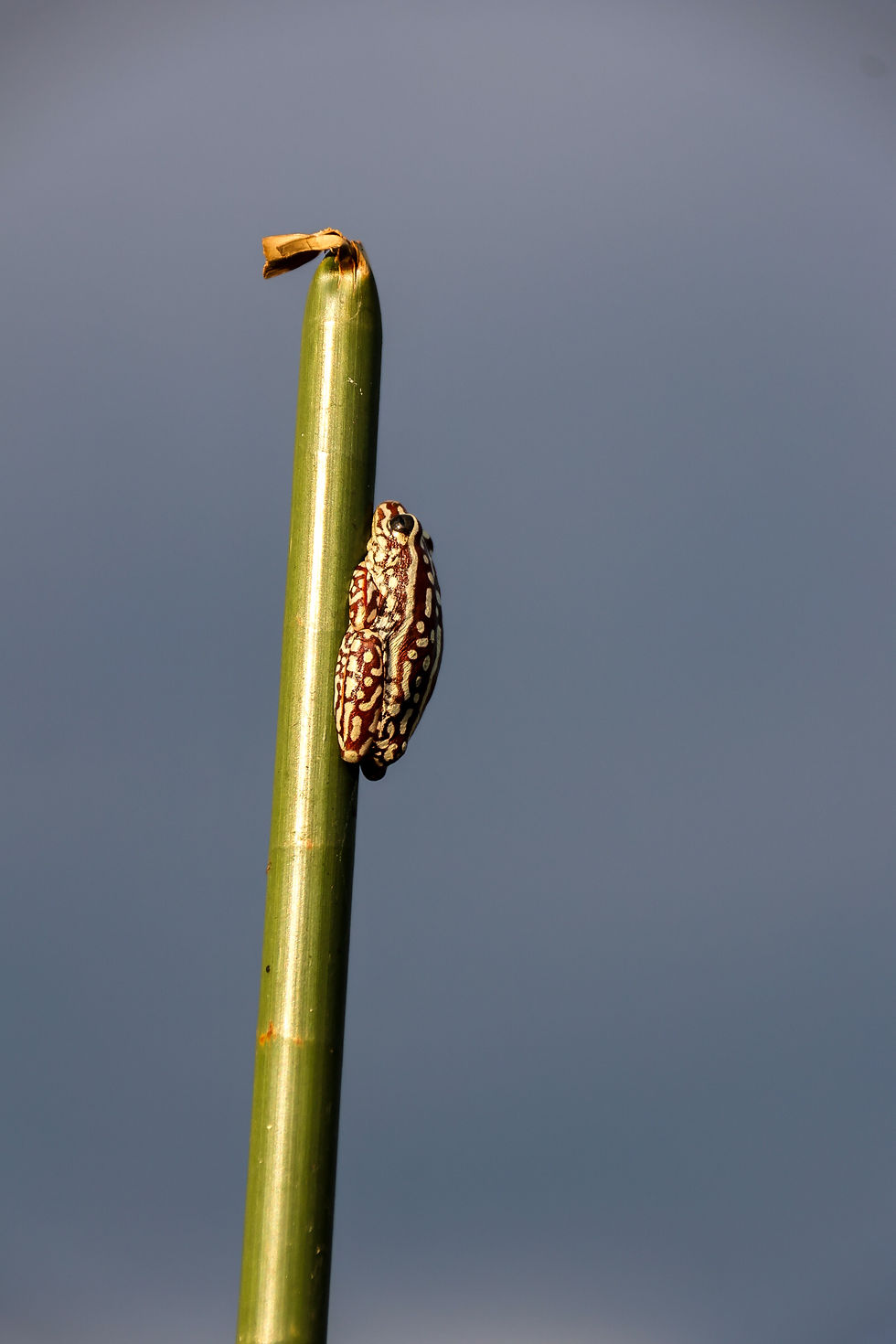
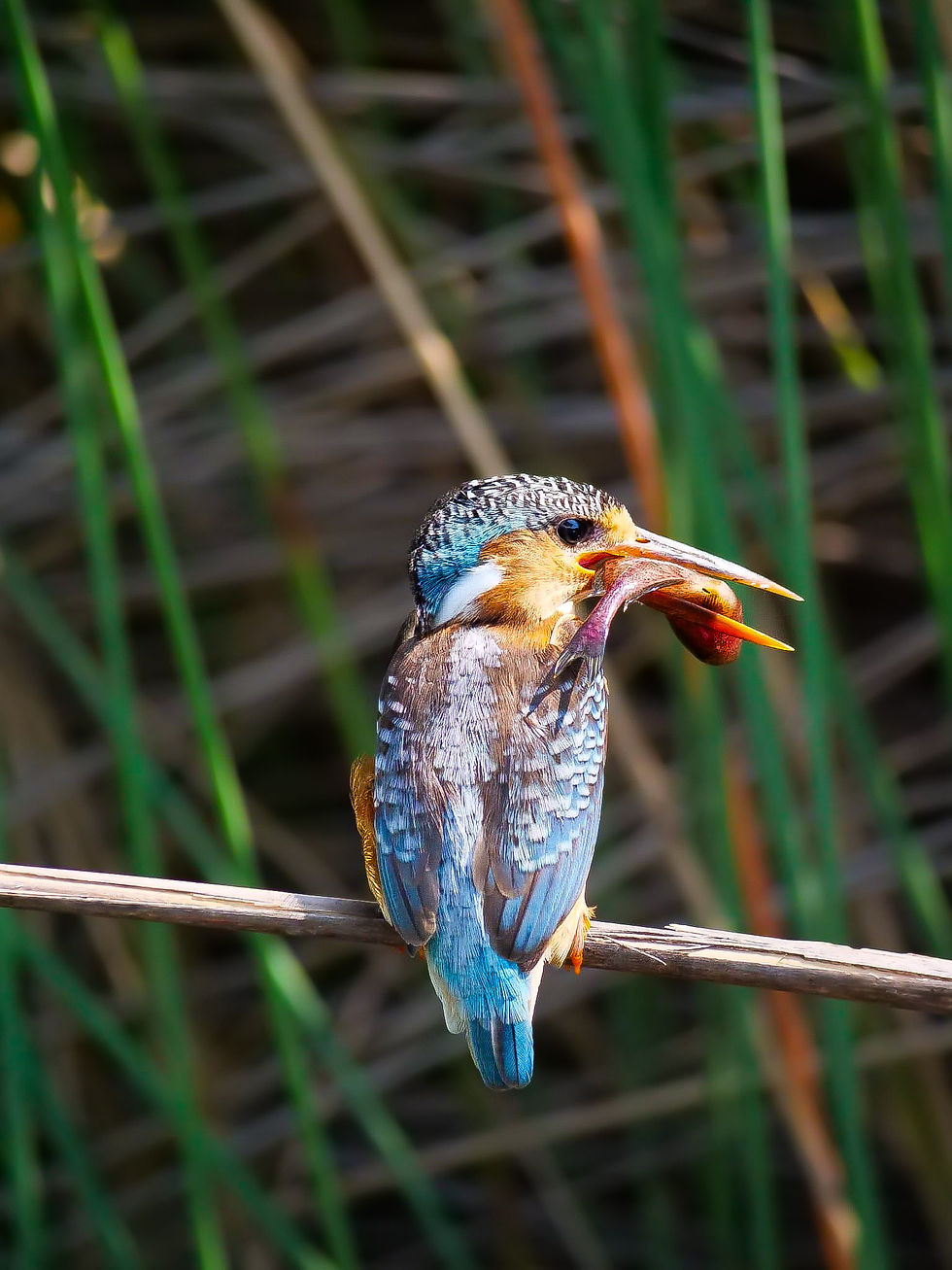
The mokoro offers an extraordinary perspective. You sit very low over the water and move almost silently. This allows you to observe water birds and other animals from a completely different angle. For larger animals, of course, the instructions of the poler and guide always apply.
Photography from the boat
A boat safari is also interesting. You can observe animals on the water and often photograph them at eye level. Especially at sunrise and in the late afternoon, the lighting is beautiful.
Photography in private concessions
Private concessions can offer a significant advantage for photographers. If off-road driving is permitted, you can, under certain conditions, get closer to interesting situations. Night driving also opens up entirely different photographic opportunities. Leopards, hyenas, and other nocturnal animals suddenly become the main subjects.
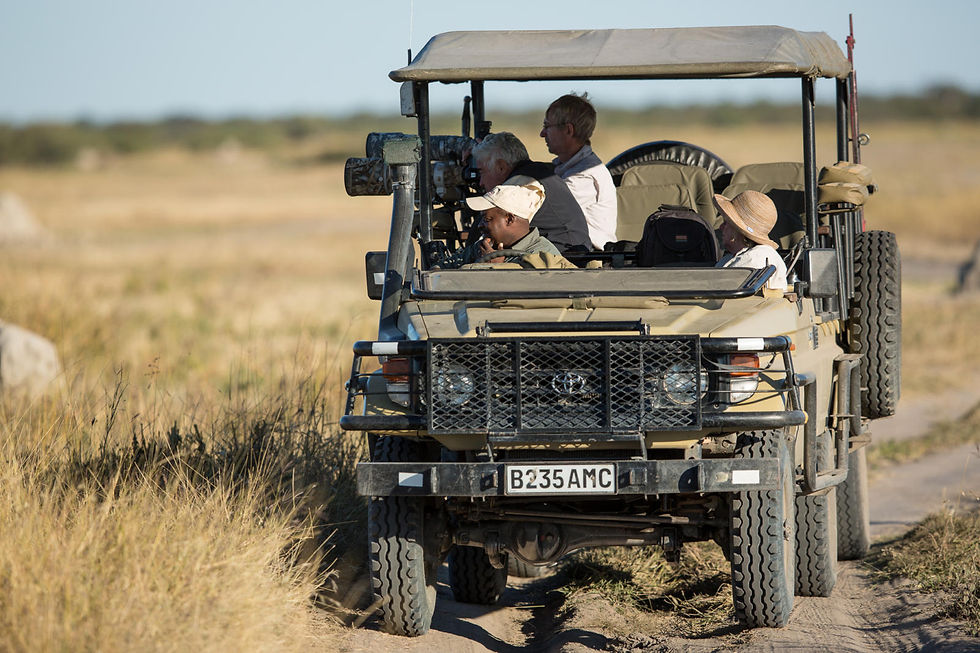
Why a private vehicle can be useful for photographers
If photography is more than just a holiday hobby for you, having a private vehicle can make a significant difference.
You can:
linger on a subject
Choose your own position
Distribute your equipment better
wait for specific lighting conditions
adjust your daily routine
For example, if a leopard becomes active shortly before sunset, you don't necessarily want to have to continue your journey after ten minutes.
Botswana from the air
For landscape photographers, the charter flights between the camps are an additional highlight.
From the air you can see the geometry of the Okavango Delta.
Water channels, islands, animal trails and herds of elephants become abstract patterns.
This is a completely different way to photograph Botswana.
Which lenses should you bring?
For a classic Botswana safari, a combination of: wide-angle + medium telephoto + long telephoto is ideal.
A wide-angle lens is suitable for:
Landscapes
Camps
People
Mokoro
Environmental portraits
A telephoto lens is essential for wildlife photography. Depending on the camera and personal style, focal lengths in the range of approximately 300 to 600 mm are particularly versatile.
Photo safari: Experience Africa through the lens and capture special moments
Botswana for birdwatchers
Although there are many top-class camps in Botswana, it means
Botswana is also excellent for birding. The Okavango Delta offers a great variety of waterbirds and birds of prey.
Possible types include:
African Fish Eagle, Saddle-billed Stork
Lilac-breasted Roller, Southern Carmine Bee-eater
African Jacana, Pelicans
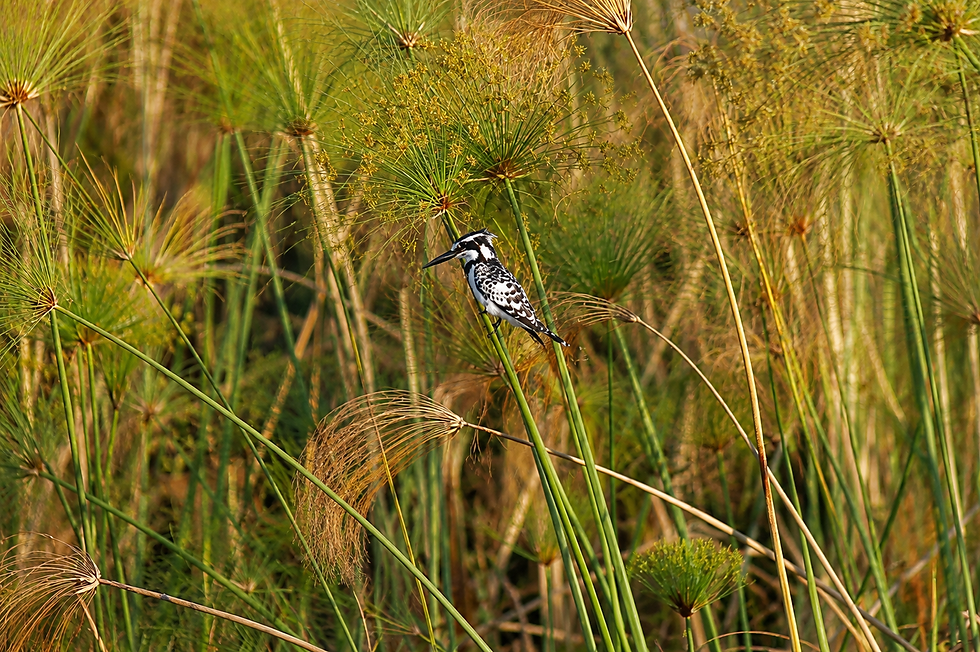
Herons, kingfishers
Botswana becomes particularly interesting for bird photographers during the Green Season.
How much does a safari in Botswana cost?
Botswana is among the more expensive safari destinations in Africa. This is no coincidence: the country pursues a so-called high-value, low-volume approach in many safari areas. Or, put simply: fewer visitors should contribute more to the local economy and nature conservation. As a result, Botswana's safari areas are not designed for large numbers of visitors. Instead, there are comparatively few camps and limited bed capacity.
Why is Botswana comparatively more expensive?
Several factors are at play here. Some of them are:
Viele Camps sind nur per Kleinflugzeug erreichbar.
Remote location
A camp with eight or ten tents has significantly fewer guests to spread the operating costs among.
Kleine Camps
Gute Safari-Camps arbeiten mit relativ vielen Mitarbeitern pro Gast.
Personalintensität
Lebensmittel, Treibstoff und Baumaterial müssen teilweise über große Entfernungen transportiert werden.
logistics
Private concessions can charge high fees, which in turn contribute to financing the area.
concession fees
What is included in the safari price?
High-quality Botswana camps often include numerous services:
Accommodation
Full board
local drinks
selected alcoholic beverages
Game drives
Walking Safaris
Mokoro excursions
Boat safaris
certain activities
partial airport transfers
With fly-in safaris, charter flights are either included in the price or charged separately, depending on the provider. This should always be taken into account when comparing offers. To ensure you don't have to worry about anything, our fly-in safari offers always include charter flights and exclude international scheduled flights (unless otherwise agreed).
Is Botswana more expensive than other safari countries?
Botswana is often more expensive than classic self-drive destinations like Namibia or South Africa. But you get a different travel experience. You're not just paying for the room, but also for things like:
Seclusion, low vehicle density, personal attention, logistics and access to exceptional wilderness areas.
A cheaper safari therefore does not automatically mean better value for money.
How much does a tailor-made safari cost? Learn more about our pricing structure.
Sustainable tourism in Botswana
Botswana is a good example of how tourism, nature conservation, and economic interests can be combined. In many of its key wilderness areas, the country pursues an approach based on high value and relatively low visitor numbers.
The idea behind it is simple:
When fewer people are in an area, nature can remain largely intact. At the same time, individual visitors must make a greater economic contribution so that the protection of these landscapes is worthwhile in the long term.
The result is large, contiguous wilderness areas with relatively few camps and vehicles.
Nature conservation as an economic model
Botswana has reserved large parts of its country for the protection of wildlife and natural habitats.
This is particularly noteworthy because these areas are both habitats for people and must be used economically. Tourism can make an important contribution in this regard.
Revenue is generated, among other things, through:
National park and entrance fees
concession fees
Lodges and camps
Safari activities
local jobs
Transport and logistics
Crafts and local services
The better the wilderness is protected, the more attractive the destination remains for travelers. This creates an economic incentive to preserve nature in the long term.
Community Tourism
In various regions of Botswana, local communities play a vital role in tourism. Community-based projects can, for example, create jobs or generate revenue from tourist activities for the surrounding communities. This is particularly important in regions where people and wildlife share the same habitat.
Because nature conservation only works in the long term if the people who live next to the protected areas also see a benefit in it.
Man and Elephant
Botswana faces a particular challenge. The country has one of the largest elephant populations in Africa. At first glance, this sounds like a success story. And from a conservation perspective, it is. At the same time, large elephant populations can lead to conflicts with humans. Elephants can destroy fields, use water sources, and damage fences. For people whose livelihoods depend on agriculture, this is not an abstract conservation issue. It's about their very existence.
Why safari tourism is important
This is precisely where responsible tourism can make a difference. When a region generates revenue through wildlife tourism, the animals acquire additional economic value. A living elephant is then not just an animal to be protected; it becomes part of an economic structure that creates jobs and supports communities. This is one of the reasons why a safari in Botswana can be more than just a holiday. It can contribute to ensuring that these landscapes are preserved for future generations.
What does a sustainable safari mean to you?
Sustainable travel doesn't mean sacrificing comfort. It means making conscious choices. For example, you can:
Small camps are preferred
Smaller camps often have less impact on the landscape while allowing for a more personal safari experience.
Support local businesses
Guides, drivers, staff and local businesses directly benefit from your stay.
Pay attention to resources
Water and energy are valuable resources even in high-quality camps.
Respecting wildlife
No feeding, no unnecessary approach, and no hunting for the perfect photo at the animal's expense.
Stay longer
A longer trip with fewer location changes can be more sensible than a quick tour through many regions.
Sustainable camps in Botswana
Many safari camps in Botswana operate with sustainable concepts.
This can include:
Solar energy
Water treatment
recycling
reduced plastic use
local food
regional employees
Nature conservation projects
Support for communities
However, not every lodge should automatically be considered sustainable.
Sustainability is not a seal of approval that arises simply from a location in the middle of the bush.
If this topic is important to you, it's worth taking a closer look at what an accommodation actually does for nature and local communities.
Learn more about our concept "Safari - experienced anew"
Our Botswana trips
Botswana is a destination where careful planning is essential. Not every region suits every traveler. A photographer has different priorities than a family. A first-time safari-goer might want to see as many classic animals as possible. An experienced safari traveler, on the other hand, might specifically seek out remote regions and unique activities. And someone visiting Africa for the first time might want to combine a safari with Victoria Falls or a beach holiday.
Therefore, Botswana should not be planned according to a standard program.
The right Region for the Right Traveller
Want to see elephants? Then Chobe and the Okavango Delta can be particularly interesting.
Want to photograph wild dogs? Then Moremi, Khwai and neighbouring private concessions can be a great choice.
Want to see as few other vehicles as possible? Then private concessions and remote camps are particularly appealing.
Want to experience the water? Then the Okavango Delta should be at the heart of your journey.
Want to experience Botswana beyond the classic safari? Then it is worth looking at the Central Kalahari, Makgadikgadi or Nxai Pan.
Not as Many Camps as Possible, but the Right Ones
A common mistake when planning a trip to Botswana is trying to see as many regions as possible in a short amount of time. At first, that may seem logical. In practice, however, it can mean constantly packing your bags and moving on. Botswana works better when you allow yourself to follow the rhythm of the wilderness. Three nights in one great place can be far more rewarding than two nights in two different locations. Because a safari is not only about the animals you actually see.
It is also about:
Light.
Landscape.
Sounds.
Weather.
Waiting.
And sometimes an hour when seemingly nothing happens. Until suddenly, something does. A Botswana Journey Shaped Around Your Interests That is why, at InfiniteWild, we don't start with the question: “Which camps are available?” We start with: “What do you want to experience?”
Perhaps you want to:
-
see wild dogs
-
photograph elephants
-
explore the waterways by mokoro
-
experience a walking safari
-
go on a night safari
-
see as few other vehicles as possible
-
stay in luxurious camps
-
experience a mobile safari
-
travel through Botswana with children
-
combine Botswana with Namibia
-
visit Victoria Falls
-
relax on the beach afterwards
Your route grows from these priorities.
For First-Time Safari Travellers
If Botswana is your first safari, we would usually avoid making the journey unnecessarily complicated. A combination of the Okavango Delta, Moremi or Khwai and Chobe can provide an excellent introduction. You experience different landscapes and safari activities without having to change camps constantly.
For Experienced Safari Travellers
If you already know several of Africa's classic safari destinations, Botswana can be experienced in a very different way. More remote areas may become particularly appealing.
For example:
-
private concessions
-
the Central Kalahari
-
mobile safaris
-
walking safaris
-
longer stays in one camp
-
specialised photographic journeys
-
combinations with Zambia or Zimbabwe
-
Here, it is less about ticking off the Big Five as quickly as possible. It is about experiencing Africa more deeply.
For Honeymoons
Botswana is an exceptional honeymoon destination. Not only because of its luxurious camps, but because of the sense of privacy they offer.
A small camp in the heart of the Delta.
A private dinner beneath the stars.
An afternoon mokoro excursion.
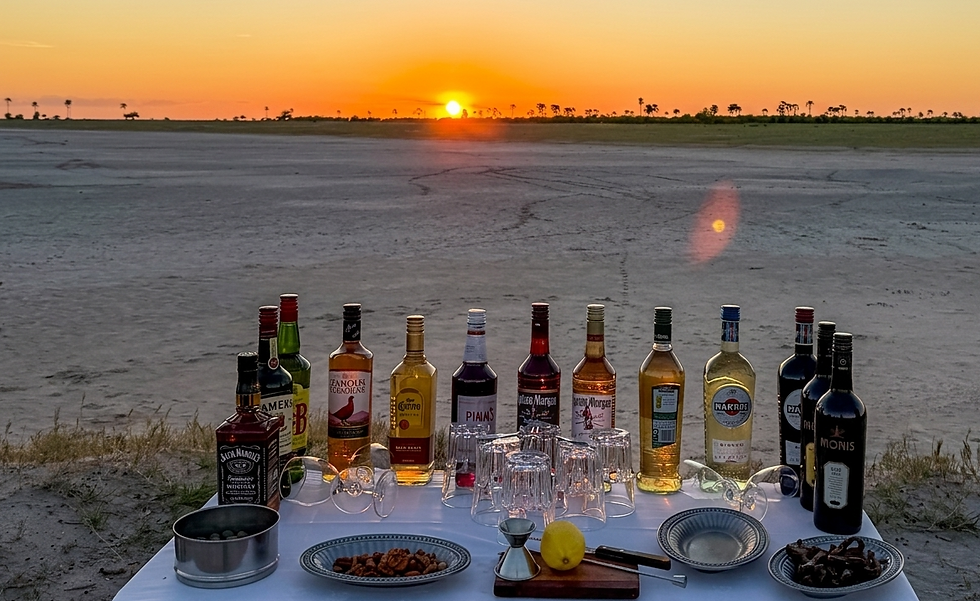
A game drive at sunset.
And then a few days beside the Indian Ocean. Combining Botswana with Mozambique or Mauritius can turn your honeymoon into an especially diverse journey.
Honeymoon in Africa: The perfect start to your adventure together
For families
A family trip should be planned differently than a classic safari. Fewer transfers. Suitable camps. Private activities. A varied daily schedule. And plenty of time to relax. Especially with younger children, a private vehicle can be beneficial because it allows for greater flexibility in planning the day.
For photographers
Photographers especially benefit when the trip is planned not only according to regions, but also according to photographic opportunities. For example:
Okavango Delta → Wild Dogs → Khwai → Elephants → Chobe
Or a trip where several nights are deliberately planned in a private concession.
The question is not: "Where are there the most animals?"
Rather:
" Where do we have the best conditions to take exactly the pictures you envision?"
Ready for your safari in Botswana?
Whether it's your first safari, a family trip, a honeymoon or an exclusive fly-in safari – we'll help you put together the perfect route to suit your needs.
Frequently asked questions about a safari in Botswana
For classic safari experiences, June to October are considered particularly popular months.
However, the months of the Green Season can also be very interesting for the landscape, birds, young animals and dramatic thunderstorms.
We recommend at least 8 to 10 days for a first trip. Ideally, around 10 to 14 days are often best, depending on which regions you want to combine.
Yes, Botswana is one of the more expensive safari destinations. The price depends heavily on accommodation, travel time, region, and the number of fly-in flights. In return, you often gain access to very remote areas with low vehicle density.
Yes. Self-drive tours are possible, especially in certain regions. However, they require good preparation and experience with 4x4 vehicles. For a classic fly-in safari, a rental car is not necessary.
It depends on your interests. The Okavango Delta is particularly strong for its waterscapes, mokoro canoes, walking safaris, and diverse safari experiences. Chobe is especially known for its elephants and offers excellent boat safaris. If time and budget allow, combining the two is worthwhile.
Generally speaking, you shouldn't just swim in the delta. Hippos, crocodiles, and other potentially dangerous animals may be in the water. Whether and where water activities take place will be decided by your camp based on local conditions.
Yes. The mokoro is one of Botswana's most popular safari experiences. However, the activity depends on the water level and the location of the camp.
Yes. Lions, leopards, elephants, buffalo, and rhinos are found in Botswana. However, rhinos are significantly more difficult to spot than the other four species. Therefore, a safari should never be solely focused on seeing the Big Five.
Yes. Botswana is one of the best countries in Africa for observing African wild dogs. Moremi, Khwai, and surrounding regions are particularly interesting.
No. There is a risk of malaria in several regions of Botswana. Which protective measures are advisable depends on your specific travel itinerary and the time of year.
Yes, but not every camp is suitable for every age group. Many camps have age restrictions for certain activities. Therefore, a family trip should be planned individually.
A classic safari includes, among other things:
light clothing
Warm clothing for early morning game drives
sun hat
sunglasses
sun protection
binoculars
camera
sufficient memory cards
Power bank
soft travel bag for fly-in safaris
Insect protection
The exact packing list depends on the time of year, route, and type of safari.
Both countries offer excellent safaris, but they differ significantly:
Botswana is more associated with seclusion, waterscapes, small camps and exclusive safari experiences.
Kenya offers vast savannah landscapes, classic safari routes, the Maasai Mara and the Great Migration.
If you are looking for maximum wilderness and low visitor density, Botswana is particularly interesting.
Tanzania is particularly strong in the Serengeti, the Great Migration and the combination of safari and Kilimanjaro.
Botswana scores points with the Okavango Delta, water safaris, private concessions and a very exclusive form of travel.
Both are excellent safari destinations.
Botswana isn't a country for a quick checklist. It's a country for slow mornings. For elephants wading through water. For lions in the Kalahari. For wild dogs suddenly emerging from the tall grass. For a mokoro gliding silently through the delta. For nights where you see more stars than anywhere else.
And for that special feeling when you're sitting in the middle of the wilderness and there's no other vehicle in sight.
This is Botswana. A safari here doesn't have to show you as much as possible. It should show you the right things.
A tailor-made trip allows you to perfectly match national parks, accommodations, and activities to your interests, travel dates, and budget. This creates a balanced itinerary with ample time for immersive nature experiences and special encounters.
Your individual Botswana trip with InfiniteWild
We don't plan Botswana trips according to a fixed itinerary. We look at how you want to travel, what you want to see, and how much time you have. From this, we develop a route that suits you perfectly. Whether it's a classic safari in the Okavango Delta, a luxury fly-in tour, a mobile safari, a family trip, a photography tour, or a combination with Namibia, South Africa, Zambia, Zimbabwe, Victoria Falls, or the Indian Ocean. Because Botswana is at its most beautiful when the trip isn't simply about the most famous names, but about the regions, camps, and experiences that are right for you.
Ready for your safari in Botswana?
Let's plan your personal Botswana trip together. We'll advise you individually and develop a route that perfectly suits your wishes, travel dates, and budget.
