

Mozambique
Dream beaches, tropical islands and the perfect complement to your safari
Mozambique – Africa's hidden paradise on the Indian Ocean
After days full of game drives, sunrises in the savannah and intensive wildlife observation, there is hardly a more beautiful place to end a trip than Mozambique.
Along the more than 2,500 kilometer long coastline, you can expect palm-fringed beaches, small fishing villages, turquoise waters and some of the most pristine island worlds in the Indian Ocean.
Unlike many well-known tropical islands, Mozambique often feels pleasantly untouched. Instead of large hotel complexes, you'll find stylish boutique resorts, exclusive island lodges, and miles of beaches where you'll often encounter hardly any other people.
But Mozambique is far more than just a beach destination.
Off the coast lie colorful coral reefs where sea turtles, dolphins, manta rays and, seasonally, even whale sharks or humpback whales can be observed.
Inland, the Gorongosa National Park is developing into one of Africa's most exciting nature conservation projects, combining classic safari experiences with impressive biodiversity.
Whether as a relaxing end to a safari or as a standalone trip to the sea – Mozambique combines nature, tranquility and exclusivity in a unique way.

Why Mozambique?
Mozambique feels different from many other destinations on the Indian Ocean. Here, it's not just about the beach, but about the unique combination of tropical coastline, protected islands, extraordinary marine life, and a culture shaped by African, Portuguese, and Arabic influences.
The islands of the Bazaruto and Quirimbas archipelagos, in particular, make Mozambique a special travel destination. Turquoise waters, expansive sandbanks, and coral reefs provide the perfect backdrop for snorkeling and diving excursions. With a bit of luck, you might spot turtles, dolphins, rays, or, seasonally, whales. The dugong is also among the unique inhabitants of the protected marine areas of the Bazaruto archipelago.
At the same time, a trip to Mozambique can be tailored to your individual needs. You can spend a few days on a remote island, focus on water sports and marine biology, or combine beach experiences with cultural and culinary discoveries along the coast. Fresh fish and seafood are as much a part of the country's cuisine as influences from Portuguese tradition.
And that's precisely why Mozambique is more than just a classic beach extension. It's a destination for everyone who wants to experience the sea not just from the beach – but to immerse themselves in its landscape, wildlife, and culture.
And that's precisely why Mozambique is more than just a classic beach extension. It's a destination for everyone who wants to experience the sea not just from the beach – but to immerse themselves in its landscape, wildlife, and culture.

Mozambique at a glance
Capital city
Largest city
Size
Resident
Language
currency
Time zone
entry
Safari possible
Best time to travel
Highlights
Maputo
Maputo
approx. 799,380 km²
approximately 35 million
Portuguese, English & many local languages
Mozambican Metical (MZN)
UTC +2
Electronic visa or visa on arrival (depending on nationality)
Yes, especially Gorongosa, Niassa & Limpopo
May–October
Bazaruto Archipelago, Quirimbas Archipelago, Gorongosa National Park, Tofo, Diving & Snorkeling, Whale Watching, Ilha de Mozambique
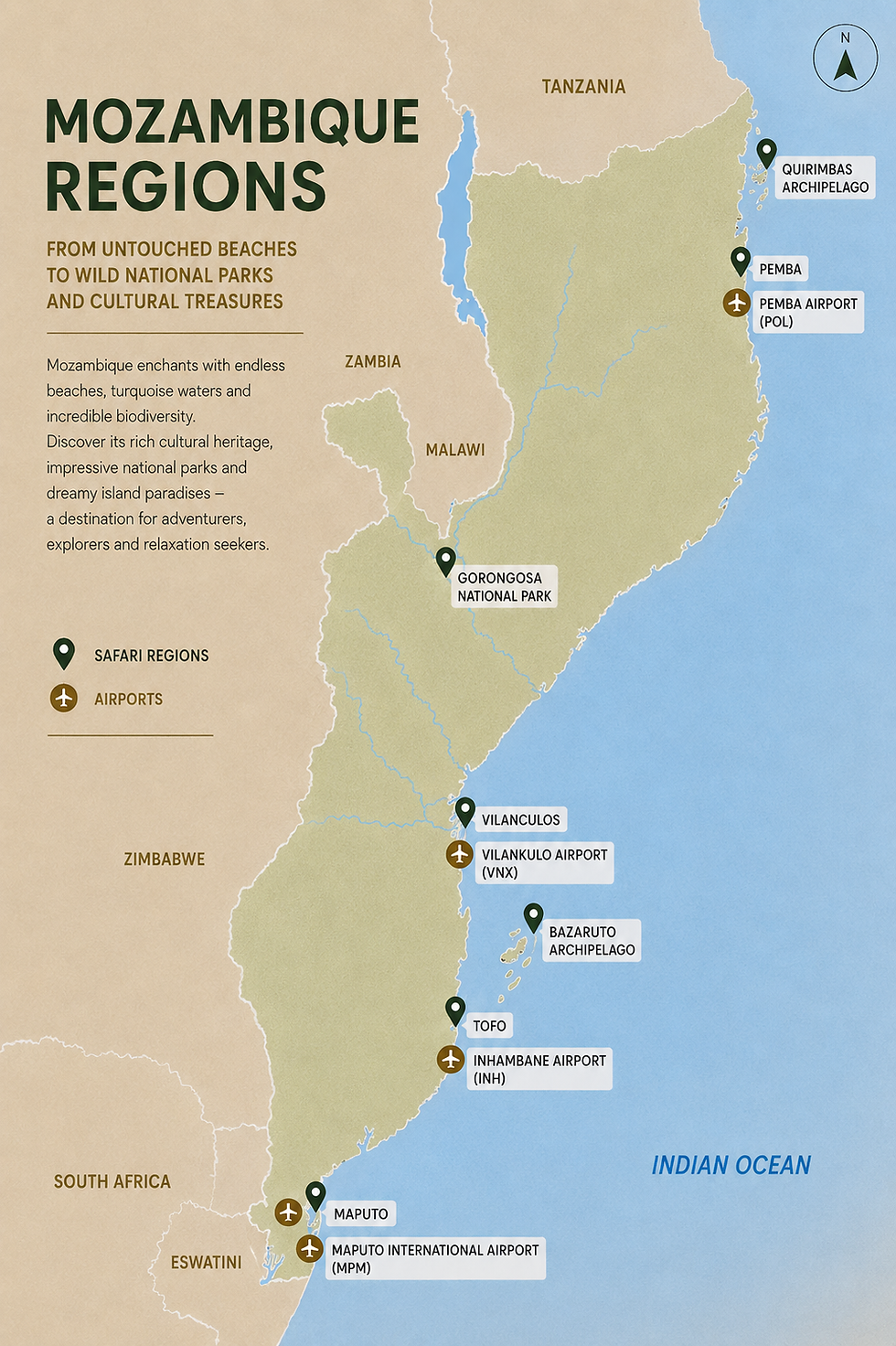
Where is Mozambique?
Mozambique lies on the southeast coast of Africa and stretches along the Indian Ocean. It borders South Africa, Eswatini, Zimbabwe, Zambia, Malawi and Tanzania, making it an excellent extension to a safari in southern or eastern Africa.
Off the coast lie numerous islands and coral reefs, while the interior is characterized by rivers, lakes and national parks.
It is precisely this combination of wilderness and sea that makes Mozambique an exceptionally diverse travel destination.
Mozambique – Where wilderness meets the Indian Ocean
Mozambique reveals a completely different side of Africa. Along its long coastline, tropical islands, expansive sandy beaches, and an exceptionally diverse underwater world meet savannas, national parks, and pristine wilderness.
The islands of the Bazaruto and Quirimbas archipelagos, in particular, make the country unique. Coral reefs, sandbanks, and crystal-clear waters provide a habitat for dolphins, sea turtles, rays, and dugongs. Around Tofo, whale sharks and, seasonally, whales are among the special marine encounters.
But Mozambique is far more than just a beach destination.
Inland, Gorongosa, Limpopo, and other protected areas offer a diverse range of safari landscapes. Gorongosa National Park is particularly fascinating: after suffering heavy losses during the civil war, the reserve was extensively rebuilt and is now considered one of the most remarkable examples of wilderness restoration in Africa. Savannas, forests, wetlands, and exceptional birdlife make the park a captivating destination for photographers.
In addition, there is a cultural aspect that clearly distinguishes Mozambique from many classic safari destinations. Portuguese, African, and Arabic influences shape the coast, the cuisine, and historical sites such as Ilha de Moçambique and Ilha do Ibo.
It is precisely this combination that makes Mozambique so diverse: You can drive through a tropical island world in the morning, explore underwater, and a few days later go on safari through a completely different landscape.
Mozambique is therefore not a travel destination that can be reduced to just safari or beach. It combines both – creating a journey that differs significantly from the classic safari routes of East and South Africa.

What sets Mozambique apart from other safari destinations
Mozambique's strength lies where classic safari destinations end: at the Indian Ocean. While countries like Botswana, Tanzania, or Kenya are primarily known for their vast savannah landscapes and intense wildlife experiences, Mozambique combines safari with exceptional marine life. You can tailor your trip between national parks, islands, and coral reefs, combining completely different habitats.
It's not just about classic beach days. In the Bazaruto Archipelago, dugongs, sea turtles, dolphins, and a diverse underwater world are among the special encounters. Snorkeling, diving, boat trips, and other activities take you directly into this habitat.
Mozambique also reveals another side on land. Gorongosa represents an extraordinary success story in nature conservation and offers an impressive combination of savannah, forest, wetlands, and diverse wildlife. Other protected areas also connect Mozambique to the vast wilderness landscapes of southern Africa.
And then there is the coast itself: small islands, historical sites, fishing villages, Portuguese influences and a cuisine where fresh fish and seafood play an important role.
Mozambique therefore feels less like a classic safari tour. It's a journey between land and sea – between wilderness, islands, wildlife viewing, and a coastal culture that gives the country its very own character.
Who is Mozambique suitable for?
Mozambique is ideal for travelers who want to combine nature, relaxation and exclusivity.
The country is particularly suitable for:
Honeymoon
Luxury travel
Beach holiday after a safari
Divers and snorkelers
Families
Island hopping
photographers
Individual travelers
Mozambique is also an exciting alternative for those who already know Mauritius or the Seychelles and are looking for a more authentic travel destination.
Why a trip to Mozambique is worthwhile
Home of the Serengeti and the Ngorongoro Crater
Scene of the Great Migration
Vast national parks with impressive wilderness
Excellent chances of making the Big Five
Great diversity of landscapes and ecosystems
Safari and Zanzibar can be perfectly combined
Exclusive safari camps and luxury fly-in safaris
Year-round safari opportunities with different seasonal highlights
Dreamlike beaches away from large resorts
Private islands & small, exclusive lodges
Dugongs, dolphins, turtles & whale sharks
World-class diving and snorkeling
Pristine island worlds in the Bazaruto archipelago
Safari in Gorongosa National Park
Authentic coastal culture & Portuguese influences
Perfect as an extension to a safari
Mozambique – Between Wilderness and the Indian Ocean
While many destinations on the Indian Ocean have long been heavily influenced by tourism, Mozambique has retained its original character in many places.
The people greet visitors with great warmth, life moves at a peaceful pace, and nature is at the heart of everything. This feeling is precisely what makes Mozambique so special.
It is a place to arrive, breathe deeply and enjoy – and the perfect end to an unforgettable trip to Africa.
The most beautiful regions and islands in Mozambique
Mozambique impresses with its extraordinary diversity of landscapes. From exclusive islands in the Indian Ocean to vibrant coastal towns and one of Africa's most exciting national parks, the country offers numerous opportunities for a customized trip.
Each region has its own unique character. While some places are perfect for relaxing and diving, others combine beach holidays with wildlife viewing or cultural experiences.
Bazaruto Archipelago
The island paradise of Mozambique
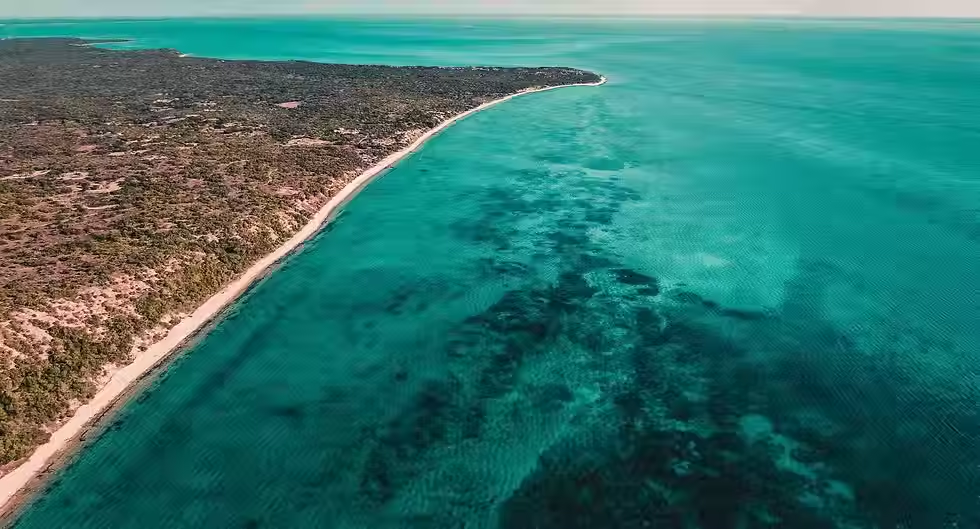
The Bazaruto Archipelago is considered the most famous island region of Mozambique and is among the most beautiful archipelagos in the Indian Ocean.
The national park encompasses several islands with white sandy beaches, turquoise waters, and protected coral reefs. Here you'll find exclusive lodges, plenty of privacy, and ideal conditions for snorkeling, diving, or boat trips.
With a bit of luck, you might spot dolphins, sea turtles, manta rays, or even the rare dugongs – an endangered marine mammal species found in only a few regions worldwide.
Highlights
Exclusive island lodges
Snorkeling and diving
Boat trips with traditional dhows
Dugongs and sea turtles
Dreamlike sandbanks
Quirimbas Archipelago
Pristine island world in the north
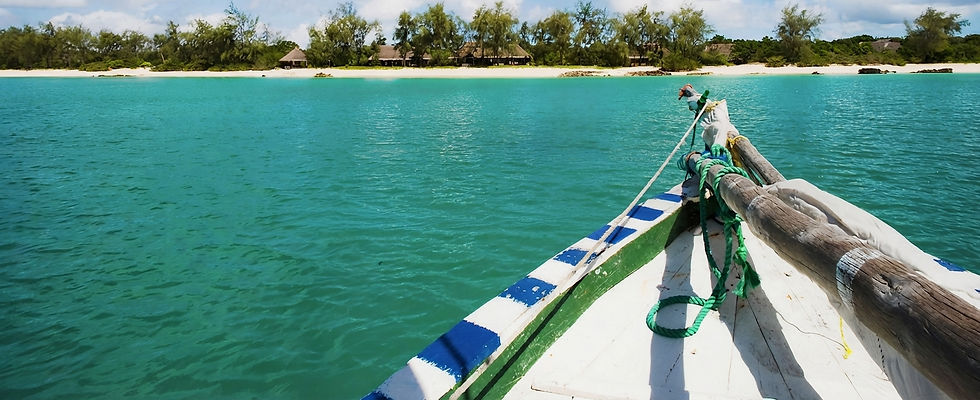
Further north lies the Quirimbas Archipelago, an island group with more than 30 tropical islands.
The region is significantly more pristine than the south of the country and is particularly suitable for travelers seeking peace and seclusion.
Many islands are only accessible by boat or small plane and offer luxurious boutique lodges amidst virtually untouched nature.
Besides dreamlike beaches, historical places like Ibo Island, known for its colonial architecture and eventful history, are fascinating.
Highlights
Exclusive private islands
Historical Ibo Island
coral reefs
Diving and snorkeling
Few visitors
Vilanculos
The gateway to the Bazaruto Archipelago

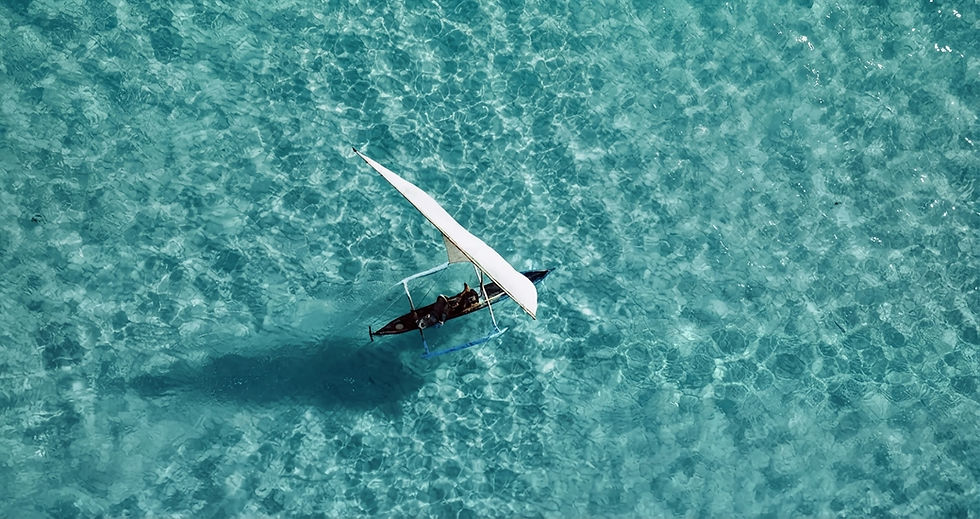
Vilanculos is the main starting point for trips to the Bazaruto Archipelago. This relaxed coastal town combines authentic Mozambican life with excellent tourist infrastructure.
Boat tours to the islands, snorkeling trips, and sunset cruises depart from here. At the same time, you'll find stylish boutique hotels and restaurants serving freshly caught seafood.
Vilanculos is ideal for travelers who want to combine a beach holiday with excursions.
Highlights
Starting point for island hopping
Water sports
Local markets
Boutique hotels
Fresh seafood cuisine
Tofo & Barra
A paradise for divers and whale shark watching.
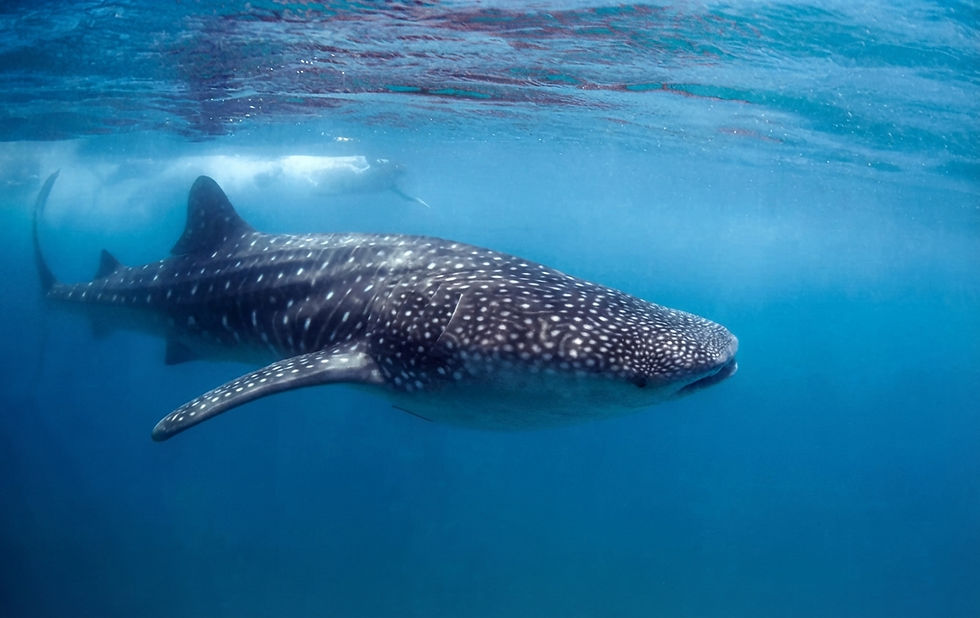
Tofo and the neighboring Barra are among the most famous diving destinations in Africa.
The waters off the coast offer exceptionally good opportunities to observe whale sharks, manta rays, dolphins and, seasonally, humpback whales.
Unlike many other seaside resorts, Tofo has retained its relaxed, authentic character. Small cafes, beach restaurants, and family-run accommodations define the landscape.
Highlights
Whale sharks
Manta rays
Humpback whales (seasonal)
Diving and snorkeling
Relaxed atmosphere
Gorongosa National Park
Mozambique's insider safari tip
Although Mozambique is primarily known for its coastline, a visit to the interior is also worthwhile. Gorongosa National Park is considered one of Africa's most important conservation projects. Following the devastation of the civil war, wildlife populations were successfully rebuilt over many years. Today, elephants, lions, hippos, antelopes, crocodiles, and numerous bird species once again roam the park.
For travelers who want to combine beach and safari within one country, Gorongosa is an exciting addition.
Highlights
Safari off the beaten track
Important nature conservation project
Great biodiversity
Birdwatching
Authentic wilderness
Which safari region suits you best?

The Big Five in Tanzania
Tanzania is one of the few countries in Africa where all members of the Big Five can be found in the wild.
The Serengeti, the Ngorongoro Crater, Ruaha and the Nyerere National Park in particular offer excellent opportunities for impressive wildlife viewing.
What animals can you see in Tanzania?
Tanzania is one of the most wildlife-rich countries in Africa. The enormous diversity of landscapes – from the open savannas of the Serengeti to the river systems of Nyerere National Park and the dense forests of the Mahale Mountains – provides habitat for an extraordinary number of animal species.
This area is home not only to the famous Big Five, but also to some of the largest lion populations in Africa, huge herds of elephants, rare African wild dogs and over 1,100 bird species.
What's particularly impressive is the sheer number of wild animals. In many national parks, large herds of wildebeest and zebra are as much a part of the landscape as giraffes, antelopes, and predators. At the same time, wildlife sightings vary significantly from region to region, giving each safari its own unique character.

Löwe
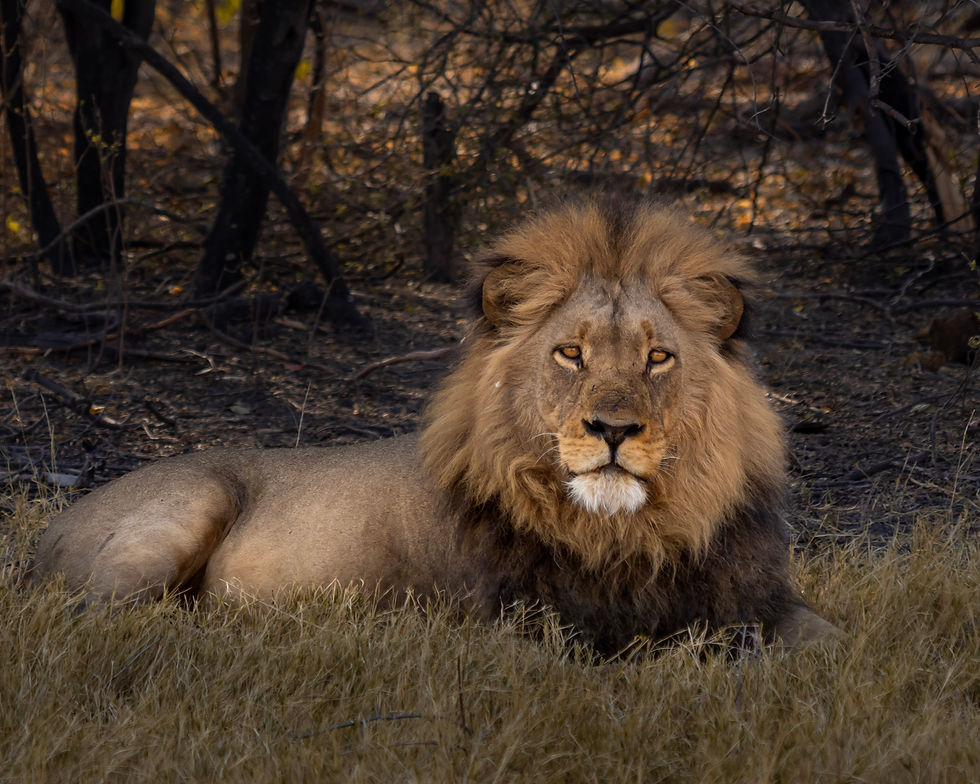
Auch Löwen gehören zur Wildnis Mosambiks. Besonders Gorongosa hat in den vergangenen Jahren eine bemerkenswerte Entwicklung der Raubtierbestände erlebt. Heute gehören Löwen wieder zu den charakteristischen Tierarten des Parks und sind regelmäßig Teil der Safari-Erlebnisse.
Gleichzeitig unterscheiden sich die Lebensräume innerhalb Mosambiks deutlich. In Gorongosa bewegen sich Löwen durch Savannen, offene Ebenen und Waldlandschaften, während sie im südlichen Mosambik in den größeren grenzüberschreitenden Wildnisgebieten des Great Limpopo vorkommen. Gerade diese unterschiedlichen Landschaften machen Löwenbeobachtungen fotografisch interessant.
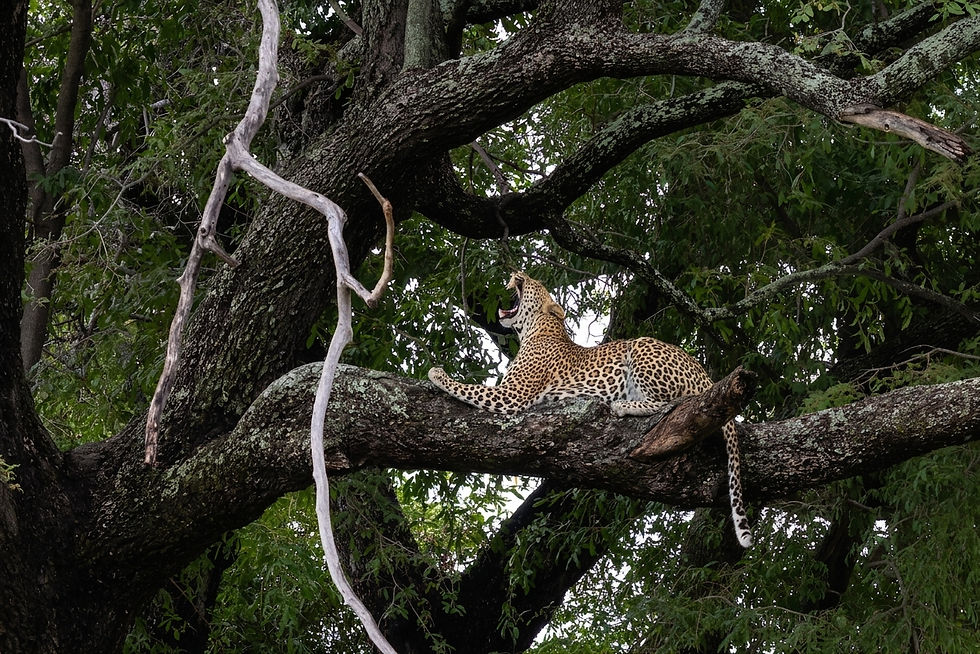
Leopard
Leopards are among the most elegant and at the same time most shy big cats in Africa.
During the day, they often rest on the branches of large acacia trees or hide along dry riverbeds.
With patience and an experienced guide, there is a good chance of sightings, especially in the Serengeti, Tarangire National Park and Ruaha.
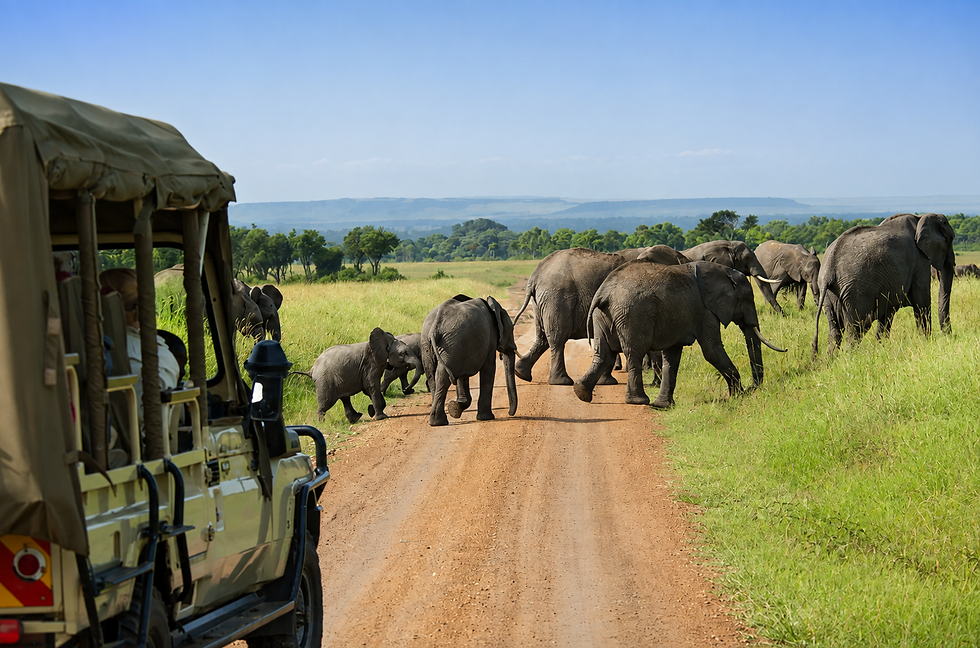
elephant
Tanzania has one of the largest elephant populations in Africa.
Tarangire is particularly known for its impressive herds. During the dry season, hundreds of animals migrate to the Tarangire River.
Ruaha and Nyerere National Park also harbor large populations and often allow for exceptionally intensive observations.

African Buffalo
African buffalo live in almost all of Tanzania's major national parks.
They often roam the savannah in huge herds or gather at watering holes.
Despite their calm appearance, buffaloes are among the most defensive wild animals in Africa and command great respect even from lions.

rhino
Nashörner gehören in Mosambik zu den besonderen Tierbeobachtungen und sind nicht in allen Safari-Gebieten anzutreffen. Besonders im südlichen Mosambik spielen Schutz- und Wiederansiedlungsprojekte eine wichtige Rolle. Die Maputo Special Reserve ist unter anderem für den Schutz von Elefanten und Nashörnern ausgewiesen, während im ZinaveNational Park sowohl Breit- als auch Spitzmaulnashörner Teil der Wiederherstellungsmaßnahmen sind.
Besides classic safaris, Tanzania offers a completely different nature experience.
Free-roaming chimpanzees live in the Mahale Mountains and Gombe National Park.
Guided hikes through the rainforest allow encounters with our closest relatives in their natural habitat.
This experience is fundamentally different from a safari in the savannah and is among the most impressive wildlife observations in Africa.
The Big Five are just a small part of Tanzania's fascinating wildlife. Depending on the region, you can expect to see numerous other species, making every game drive diverse and exciting.
Chimpanzees in Tanzania
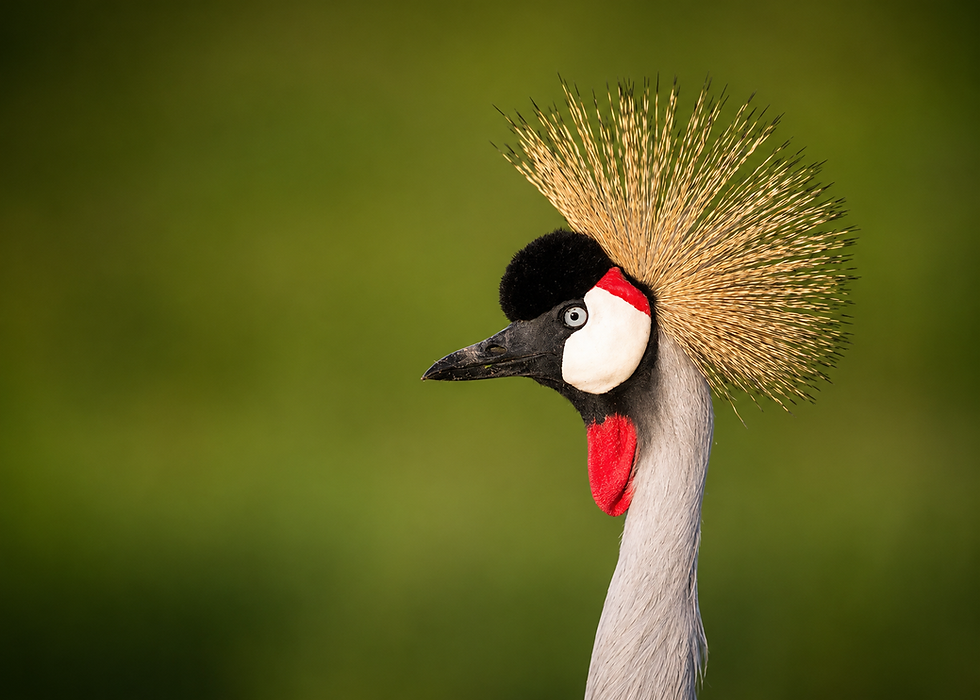
With over 1,100 bird species, Tanzania is one of the most important birdwatching destinations in Africa.
From flamingos at the soda lakes to ospreys along great rivers and colorful kingfishers, almost every region offers exceptional opportunities for birdwatchers.
The following are particularly frequently observed:
Birdwatching in Tanzania
Combining safari and beach
Tanzania and Zanzibar – One of the most beautiful travel combinations in Africa
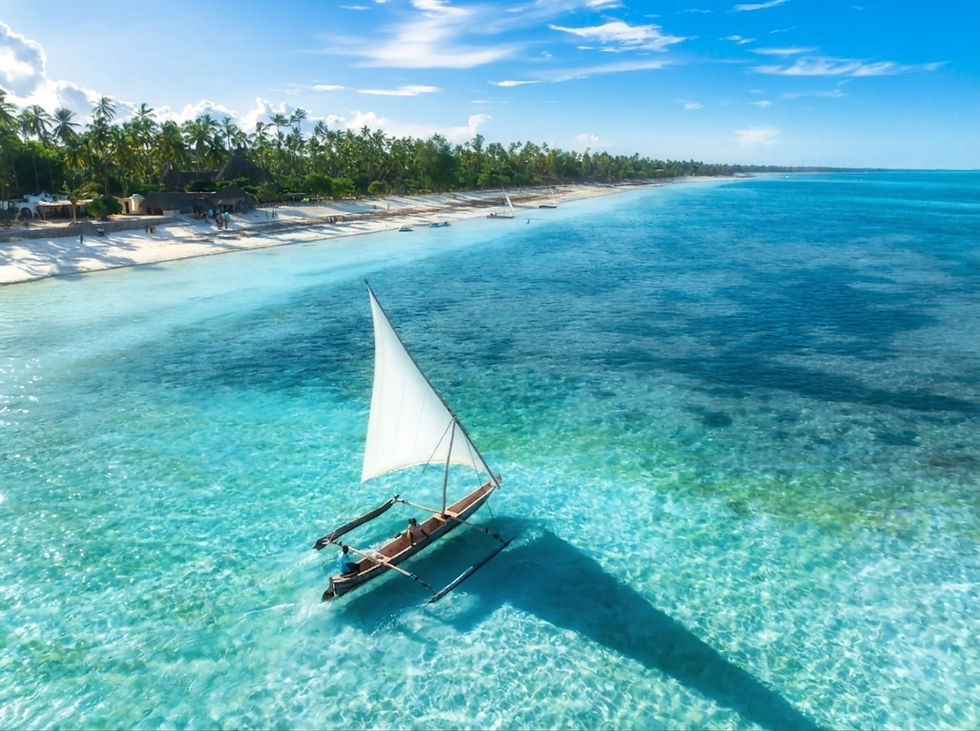
Few countries combine spectacular safari experiences and idyllic beaches as harmoniously as Tanzania. After days of game drives through the Serengeti, encounters with elephants in Tarangire National Park, or wildlife viewing in the Ngorongoro Crater, the landscape transforms completely within a short time. Instead of endless savannahs, you'll find turquoise waters, white sandy beaches, and palm trees swaying gently in the breeze.
It is precisely this combination that makes Tanzania one of the most popular travel destinations for honeymooners, families and anyone who wants to combine adventure and relaxation.
Thanks to regular domestic flights, many safari areas can be easily combined with the islands in the Indian Ocean – especially Zanzibar.
Zanzibar is far more than a classic beach destination.
The archipelago captivates visitors with a fascinating blend of culture, history, and tropical nature. Besides its miles of sandy beaches, the historic Stone Town, a UNESCO World Heritage Site, is well worth a visit.
Coral reefs, turquoise waters and relaxed boutique hotels make Zanzibar the ideal end to a safari.
The beaches on the east and north coasts of the island are particularly popular.
Ideal for
Honeymoon
Relaxation after the safari
Diving and snorkeling
Families
Luxury travel
Few countries combine spectacular safari experiences and idyllic beaches as harmoniously as Tanzania. After days of game drives through the Serengeti, encounters with elephants in Tarangire National Park, or wildlife viewing in the Ngorongoro Crater, the landscape transforms completely within a short time. Instead of endless savannahs, you'll find turquoise waters, white sandy beaches, and palm trees swaying gently in the breeze.
It is precisely this combination that makes Tanzania one of the most popular travel destinations for honeymooners, families and anyone who wants to combine adventure and relaxation.
Thanks to regular domestic flights, many safari areas can be easily combined with the islands in the Indian Ocean – especially Zanzibar.
Zanzibar is far more than a classic beach destination.
The archipelago captivates visitors with a fascinating blend of culture, history, and tropical nature. Besides its miles of sandy beaches, the historic Stone Town, a UNESCO World Heritage Site, is well worth a visit.
Coral reefs, turquoise waters and relaxed boutique hotels make Zanzibar the ideal end to a safari.
The beaches on the east and north coasts of the island are particularly popular.
Ideal for
Honeymoon
Relaxation after the safari
Diving and snorkeling
Families
Luxury travel
Mafia Island - peace, nature and an extraordinary underwater world
Mafia Island - peace, nature and an extraordinary underwater world

Mafia Island is one of Tanzania's best-kept secrets.
The island is significantly quieter than Zanzibar and boasts an impressive underwater world. Divers and snorkelers especially appreciate the pristine coral reefs and the great biodiversity.
Between October and February, there is also the opportunity to observe whale sharks – an extraordinary experience for nature lovers.
Ideal for
diver
snorkelers
Those seeking peace and quiet
nature lovers
Pemba Island - The green paradise in the Indian Ocean
Pemba lies north of Zanzibar and is often referred to as its more unspoiled sister island. Lush vegetation, small bays, and exclusive boutique resorts characterize the landscape.
The island is particularly suitable for travelers who value privacy and tranquility. Pemba also enjoys an excellent reputation among divers.

The best time to travel for a safari in Tanzania
Tanzania can generally be visited all year round.
However, climate, vegetation, and wildlife observations vary depending on the region.
While the dry season offers ideal conditions for classic safaris, the greener months impress with stunning landscapes, young animals and a particularly diverse birdlife.
The best time to travel therefore always depends on which regions you are visiting and which experiences are particularly important to you.
An overview of the seasons
Period
January to March
April to May
Juni bis Oktober
November bis Dezember
character
Warm and mostly dry
Long rainy season
Trockenzeit
Kurze Regenzeit
Good for
Young animal season, safari, photography
Green landscapes, fewer visitors
Big Five, Great Migration
Birdwatching, safari off-peak
January to March
These months are among the best times to travel on the Northern Circuit.
The calving season takes place in the southern Serengeti. Hundreds of thousands of wildebeest calves are born, attracting numerous predators.
This offers photographers extraordinary subjects.
April and May
During the long rainy season, many landscapes transform into lush green. Short, intense downpours frequently alternate with sunny spells.
Some lodges close seasonally during this time, but many high-quality accommodations offer attractive prices.
June to October
These months are considered the classic safari season.
The vegetation becomes drier, animals gather more frequently at watering holes, and the Great Migration reaches the northern Serengeti.
Ruaha and Nyerere National Park also now offer excellent conditions.
November and December
The brief rain showers transform the landscape once again. Many migratory birds reach Tanzania, and numerous plants begin to bloom.
These months are ideal for travelers who prefer a quieter atmosphere.

How many days should one plan for Tanzania?
Due to the size of the country, it's worth planning plenty of time. This allows you to experience the diverse landscapes and national parks at your leisure.
7 days
Ideal für:
-
Erste Safari
-
Northern Circuit
-
Serengeti und Ngorongoro
10 Tage
Unsere Empfehlung für viele Erstbesucher.
Beispiel:
Tarangire
Ngorongoro
Serengeti
oder
Serengeti
Ruaha
14 Tage
Ideal für alle, die Safari und Strand kombinieren möchten.
Beispiel:
Tarangire
Ngorongoro
Serengeti
Zanzibar
Accommodation in Tanzania
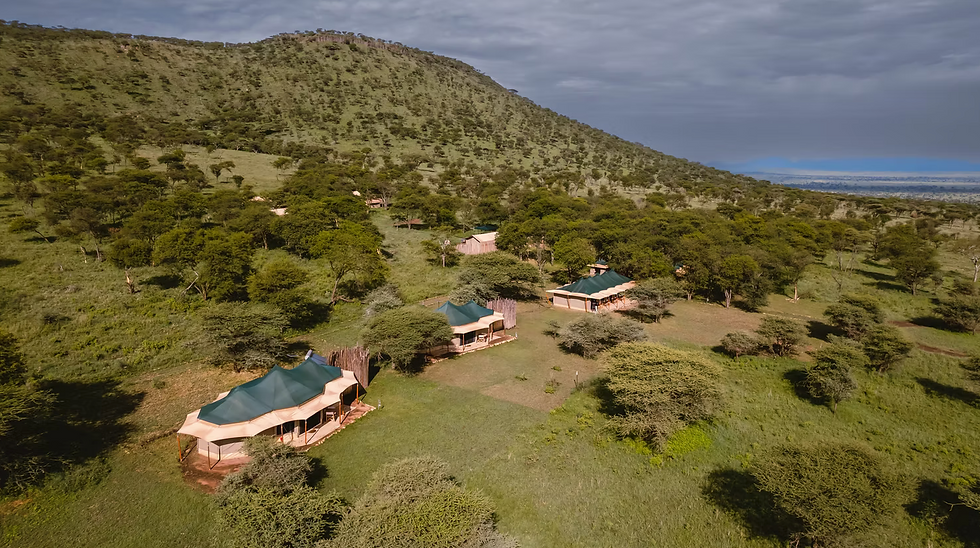
Tanzania offers an exceptional variety of safari accommodations.
From authentic tented camps in the heart of the Serengeti to exclusive luxury lodges, there is something for almost every travel style.
Classic safari lodges
Comfortable rooms, refreshing pools and spacious common areas make classic lodges particularly popular.
They are ideal for families and first-time visitors.

Tented camps
Small tent camps with only a few tents create a particularly personal atmosphere.
Many are located in extraordinary locations in the heart of nature.

Luxury camps
Tanzania is one of Africa's leading luxury destinations.
Private guides, gourmet cuisine, exclusive suites and exceptional locations ensure a safari experience of the highest standard.

Mobile Camps
Especially during the Great Migration, some seasonal camps follow the large herds of animals.
This ensures that guests are always in close proximity to the action.

Family-friendly lodges
Many accommodations in Tanzania are exceptionally well-suited for families, offering family rooms, private vehicles, special children's programs, and swimming pools. Daily routines are also often flexible, allowing them to be adapted to the age and needs of the children. This makes Tanzania particularly well-suited for a safari with the whole family.

Arrival in Tanzania
Most international travelers arrive in Tanzania via one of the country's main international airports. Depending on the travel route, different entry points are available.
Kilimanjaro International Airport (JRO) is the ideal starting point for safaris in the Northern Circuit including Serengeti, Ngorongoro, Tarangire and Lake Manyara.
Julius Nyerere International Airport (DAR) in Dar es Salaam is particularly suitable for travel to the south of the country as well as for combinations with Zanzibar.
Abeid Amani Karume International Airport (ZNZ) on Zanzibar is the main hub for beach holidays and can be perfectly combined with a safari.
Domestic flights
Due to Tanzania's size, bush planes play a vital role. Many national parks have their own airstrips, making it easy to connect regions such as the Serengeti, Ruaha, Nyerere National Park, and Zanzibar.
Fly-in safaris not only save time, but also allow for a particularly varied trip.
Land transfers
The Northern Circuit makes it easy to combine several national parks by land.
The journeys lead through diverse landscapes and offer interesting insights into rural Tanzania.

Our recommendation
Those visiting Tanzania for the first time should not focus on visiting as many national parks as possible in a short time.
Often, the most beautiful safari experiences occur where there is enough time to truly let a landscape work its magic.
A route including Tarangire, Ngorongoro, and the Serengeti offers an excellent introduction. Those with more time can extend their trip to include Zanzibar or explore the pristine wilderness in the south of the country.
Safety on safari in Tanzania
Tanzania is one of Africa's most popular and well-established safari destinations. Millions of travelers visit the country's national parks every year to experience its fascinating wildlife and diverse landscapes.
Those who plan a well-made trip and follow the advice of experienced guides can travel through Tanzania with peace of mind.
The national parks are excellently organized and have clear rules that serve both the protection of the animals and the safety of visitors.
As with any long-distance trip, good preparation and the choice of experienced partners contribute significantly to a relaxed travel experience.

Safety on safari in Tanzania
Safety during a safari
On a safari, you never face challenges alone. Experienced guides accompany every game drive and know the animals' behavior intimately. They know how to approach different situations and what distances to maintain.
That is precisely why encounters with elephants, lions or buffaloes are among the most impressive, but also the safest experiences of a professionally guided safari.
#
The following generally applies during game drives:
Follow the guide's instructions.
Never provoke or attract animals.
Only leave the vehicle at designated locations.
Always observe wild animals respectfully.
These simple rules ensure that humans and animals keep a sufficient distance from each other.
Safety in safari camps and lodges
Many safari lodges are located in the heart of nature. It is therefore perfectly normal for zebras, elephants, buffalo, lions or antelopes to wander through the camp at night and during the day.
It is precisely this closeness to nature that makes a safari so appealing. For this reason, staff members accompany many guests after nightfall between the restaurant, lounge, and accommodation. These so-called escort services are standard practice in numerous camps.
Following a few simple rules of conduct will ensure you can enjoy your stay safely:
Only move around at night accompanied if recommended.
Do not leave food lying openly on the terrace.
Never feed the animals.
Always observe wild animals from a safe distance.
Safety on safari in Tanzania
Safety during a safari
On a safari, you never face challenges alone. Experienced guides accompany every game drive and know the animals' behavior intimately. They know how to approach different situations and what distances to maintain.
That is precisely why encounters with elephants, lions or buffaloes are among the most impressive, but also the safest experiences of a professionally guided safari.
#
The following generally applies during game drives:
Follow the guide's instructions.
Never provoke or attract animals.
Only leave the vehicle at designated locations.
Always observe wild animals respectfully.
These simple rules ensure that humans and animals keep a sufficient distance from each other.
Safety in safari camps and lodges
Many safari lodges are located in the heart of nature. It is therefore perfectly normal for zebras, elephants, buffalo, lions or antelopes to wander through the camp at night and during the day.
It is precisely this closeness to nature that makes a safari so appealing. For this reason, staff members accompany many guests after nightfall between the restaurant, lounge, and accommodation. These so-called escort services are standard practice in numerous camps.
Following a few simple rules of conduct will ensure you can enjoy your stay safely:
Only move around at night accompanied if recommended.
Do not leave food lying openly on the terrace.
Never feed the animals.
Always observe wild animals from a safe distance.
Safety on safari in Tanzania
Safety during a safari
On a safari, you never face challenges alone. Experienced guides accompany every game drive and know the animals' behavior intimately. They know how to approach different situations and what distances to maintain.
That is precisely why encounters with elephants, lions or buffaloes are among the most impressive, but also the safest experiences of a professionally guided safari.
#
The following generally applies during game drives:
Follow the guide's instructions.
Never provoke or attract animals.
Only leave the vehicle at designated locations.
Always observe wild animals respectfully.
These simple rules ensure that humans and animals keep a sufficient distance from each other.
Safety in safari camps and lodges
Many safari lodges are located in the heart of nature. It is therefore perfectly normal for zebras, elephants, buffalo, lions or antelopes to wander through the camp at night and during the day.
It is precisely this closeness to nature that makes a safari so appealing. For this reason, staff members accompany many guests after nightfall between the restaurant, lounge, and accommodation. These so-called escort services are standard practice in numerous camps.
Following a few simple rules of conduct will ensure you can enjoy your stay safely:
Only move around at night accompanied if recommended.
Do not leave food lying openly on the terrace.
Never feed the animals.
Always observe wild animals from a safe distance.
Sustainable tourism in Tanzania
Protecting the unique natural environment is one of the most important foundations of every safari.
A large portion of the revenue from tourism flows directly or indirectly into the preservation of national parks, protected areas and wildlife populations.
At the same time, safaris create jobs for rangers, guides, lodge staff, and many local families.
Those who travel responsibly contribute to ensuring that these extraordinary landscapes are preserved for future generations.

What distinguishes sustainable safaris
Sustainability means far more than just being environmentally friendly.
Many high-end lodges focus on:
Solar energy
Water-saving systems
recycling
Regional food
Cooperation with local communities
Wildlife protection programs
Ethical Guiding
This creates journeys that combine nature experiences and nature conservation.
Our philosophy
At InfiniteWild, we believe that exceptional safari experiences always come with responsibility.
Therefore, we prefer to work with carefully selected partners who are committed to nature conservation, sustainable tourism and supporting local communities in the long term.
Our goal is to create journeys that not only provide unforgettable experiences but also make a positive contribution to protecting Africa's unique nature.
Our Tanzania trips
No two safaris are alike.
Some travelers want to experience the Great Migration, others dream of remote wilderness areas or want to combine their safari with relaxing days in Zanzibar.
An individually planned trip offers the opportunity to combine exactly these wishes.
Instead of a predetermined route, a safari is created that suits your interests, travel time and budget.
In doing so, we take into account, among other things:
Personal interests
Travel time
Travel time
Desired national parks
Accommodation category
Combinations with Zanzibar
Special activities such as hot air balloon safaris or walking safaris
This creates a journey that doesn't feel like a standard program, but is perfectly tailored to you.

Ready for your safari in Tanzania?
Whether it's your first safari, a family trip, a honeymoon or an exclusive fly-in safari – we'll help you put together the perfect route to suit your needs.
Frequently asked questions about a safari in Tanzania
For a first trip, we recommend at least seven days. However, ten to fourteen days are ideal to combine several national parks or to combine the safari with a stay in Zanzibar.
Yes. Tanzania is one of the few African countries where all of the Big Five can be found. Particularly good chances exist in the Serengeti, the Ngorongoro Crater, Tarangire National Park, and Ruaha.
The Great Migration is a year-round cycle. Depending on the season, the herds move through different regions of the Serengeti and on to the Masai Mara in Kenya. The river crossings at the Mara River between July and October are particularly well-known.
Yes. The Northern Circuit, in particular, with Tarangire, Ngorongoro, and the Serengeti, is ideal for first-time safari-goers. The infrastructure is excellent, and the combination of national parks offers an enormous diversity of landscapes and wildlife.
Absolutely. The Serengeti is one of the most wildlife-rich regions in Africa all year round. Lions, cheetahs, leopards, elephants and numerous other wild animals can be observed excellently regardless of the wildebeest migration.
Besides the Big Five, Tanzania is home to cheetahs, giraffes, zebras, hippos, crocodiles, hyenas, African wild dogs, numerous antelope species, and over 1,100 bird species. Wild chimpanzees can also be observed in the Mahale Mountains and Gombe National Park.
Yes. Tanzania is one of the best destinations in Africa for this combination. After a safari, you can spend relaxing days on Zanzibar, Mafia Island, or Pemba Island.
Yes. Many lodges offer family rooms, private safari vehicles, and activities for children. With a well-planned itinerary and sufficient time between national parks, Tanzania is ideal for family trips.
The national parks and private reserves are considered very safe travel destinations. During a guided safari, you will be accompanied by experienced guides who know the behavior of the wild animals intimately and ensure your safety at all times.
Most international travelers require a visa to enter the country. In many cases, this can be applied for online in advance or upon arrival. It is advisable to check the current entry requirements before traveling.
Yes. Especially in the Serengeti, hot air balloon rides are among the most impressive experiences. For many travelers, the sunrise over the endless plains from the air is a highlight of their safari.
The official languages are Swahili and English. English is spoken almost everywhere in hotels, lodges, and safari camps.
Our Tanzania trips
Tanzania is a land of contrasts. Vast savannas meet dense rainforests, mighty volcanic craters meet tropical islands, and some of the greatest wildlife migrations on Earth meet quiet moments amidst untouched nature.
Whether you want to experience the Serengeti for the first time, observe chimpanzees in the Mahale Mountains or combine your safari with relaxing days in Zanzibar – we design your trip individually and with great attention to detail.
With carefully selected accommodations, experienced guides and a route that suits your personal preferences, a safari is created that goes far beyond classic round trips.
Ready for your safari in Tanzania?
Let's plan your personal Tanzania trip together. We'll advise you individually and develop a route that perfectly suits your wishes, travel dates, and budget.
