Accessible Safari in Africa
Experience Africa without your mobility becoming a limiting factor.
Paths that suit you
A safari in Africa is a dream trip for many. However, if you're traveling with a wheelchair, walker, walking aid, or other mobility impairment, planning raises questions that are rarely answered on most safari websites:
Can I even get into a safari vehicle?
Can I bring my own wheelchair?
Is my room truly accessible or only reachable via a ramp?
How do I get from the plane to the lodge?
Can I participate in a game drive without being transferred out of my wheelchair?
What happens during a bush flight?
Can I combine a boat trip or a beach holiday with a safari?
And especially:
Can I even experience Africa the way I imagine it?
The answer is: Yes, a safari with mobility restrictions is possible.
But it needs to be planned differently than a classic safari.
Because accessibility on safari means far more than just a wheelchair-accessible bathroom. Your room might be perfectly accessible, yet the path to it could lead through deep sand. A safari vehicle might look comfortable but still not provide safe transfers. A camp might be labeled "wheelchair accessible" even though you can only get there with assistance.
Therefore, we look at the entire journey together.
From the first airport to the last game drive.

What does accessibility mean on safari?

"Accessible" can mean many things on safari. Therefore, what matters most to you is what you personally need.
Perhaps you can take a few steps, but not longer distances.
Perhaps you can transfer yourself from a wheelchair to a seat.
You may have to remain in your own wheelchair for the entire journey.
Perhaps you just need an accessible bathroom.
Or perhaps you are traveling with an electric wheelchair and need appropriate support with transfers and flights.
All of this makes a difference.
A safari on your own has a big advantage:
You don't need to coordinate with anyone.
You decide what interests you.
Perhaps you would like to spend an hour watching a leopard as it roams through the tall grass.
Perhaps you want to set off particularly early to photograph the first light.
Perhaps you'd like to take a break at lunchtime and simply enjoy the peace and quiet.
Or you prefer to be outside all day.
We can address this in detail on a custom-planned safari.
This can make a huge difference, especially for photographers. You don't have to wait for other travelers to have had enough of seeing animals.
But even if you're simply looking for peace and quiet, a solo safari can be incredibly intense.
You are traveling alone.
But you are not alone.
You don't have to miss out on safari
Perhaps you can't go on a walking safari through the bush. That doesn't mean you can't experience the bush. Perhaps you can't get into a traditional mokoro. Then we'll find another experience for you in the Okavango Delta.
Perhaps a particular camp is unsuitable due to its elevated wooden walkways. In that case, we'll choose a lodge where you can move around independently.
You may need to remain in your own wheelchair during the game drive. In that case, we will find a vehicle that is specifically equipped for that.
A restriction doesn't mean you'll experience less of Africa. It simply means your safari needs to be planned differently.

Ximuwu: An example of a barrier-free safari
If you want to see what a safari can look like where accessibility has been considered from the outset, Ximuwu Safari Lodge in the Klaserie Private Nature Reserve is a particularly interesting example.
The lodge operates with Universal Access Level 3 and was developed with the aim of enabling people with different mobility impairments to have the most independent stay possible.
These include, among others:
-
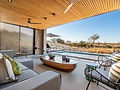
accessible suites
-
accessible bathrooms
-
automatic doors
-
Ramps
-
barrier-free paths
-
Pool lift
-
adapted safari vehicles
-
accessible photo hides
-
Accessible airport transfers
-
various mobility aids
The specially adapted safari vehicles are particularly exciting. They make it easier for people with mobility impairments to get into the vehicle and participate safely in game drives.
The photo hides are also accessible. This is particularly interesting if you're interested in wildlife photography. It allows you to spend extended periods of time in one location observing animals without having to traverse uneven terrain.
But Ximuwu also clearly demonstrates that accessibility doesn't automatically mean every activity is possible. A classic walking safari through uneven bushland, for example, isn't suitable for everyone. And this honesty is crucial.

South Africa: A particularly good starting point
If you're planning your first safari with a mobility impairment, South Africa is one of the destinations we would recommend first. The infrastructure is relatively good, there are many high-quality lodges, and you can combine a safari with Cape Town, the Winelands, or the coast. Most importantly, you have a wider selection of different safari regions to choose from.
Klaserie Private Nature Reserve
Ximuwu Safari Lodge
Ximuwu is one of the most interesting options for a truly accessible safari in South Africa. The lodge was designed to allow guests with varying mobility needs to experience the safari as independently and comfortably as possible. Accessible rooms, thoughtfully designed entrances, and amenities tailored to individual needs create the necessary conditions for this. Accessibility is also a priority in the safari activities, ensuring that wildlife experiences aren't limited to the lodge. This combination of comfort, nature experiences, and thoughtful accessibility makes Ximuwu a particularly appealing option for travelers who want to enjoy a safari without unnecessary limitations.

Sabi Sabi Private Game Reserve
Sabi Sabi Earth Lodge & Sabi Sabi Bush Lodge
There are several accessible rooms and barrier-free areas within the lodge. It is also possible to get into the safari vehicles with the assistance of the staff.
Ngala Private Game Reserve, Timbavati Region
&Beyond Ngala Safari Lodge
The lodge offers wheelchair access with assistance. This is different from a fully accessible lodge and should therefore be tailored to your individual needs.
Eastern Cape
Shamwari Sarili Lodge
An interesting option if you're looking for a safari in a region with relatively good infrastructure. The lodge also features a wheelchair-accessible room.

Kenya - Classic Safari with Wheelchair Access
Kenya can also work very well. This is mainly because you observe most of the wildlife during classic game drives.
So you don't have to hike to see lions, elephants, giraffes or cheetahs.
In Kenya, there are providers with specially adapted safari vehicles and selected lodges with accessible rooms.
One example is Basecamp Maasai Mara. Several tents there are explicitly designated as wheelchair accessible. Certain communal areas are also accessible.
For you, this means:
A classic safari in the Masai Mara is also realistically possible for wheelchair users. The safari vehicle is one of the most important points we would clarify beforehand.
Tanzania - Safari is possible
Tanzania can also be visited by people with mobility impairments. However, you need to pay particular attention to the safari vehicle.
In traditional safari vehicles, the wheelchair is often folded up and stowed away. You transfer to the vehicle's seat with assistance.
If you cannot or do not wish to be relocated, we will need a suitably adapted vehicle.
There are also differences among the lodges. Some accommodations in the Northern Circuit have accessible rooms and facilities, while others are less suitable due to steps, paths, or their construction.
Botswana - Particularly interesting for experienced travelers
Botswana is one of the wildest safari destinations in our portfolio. This is precisely what makes the trip more challenging.
Many camps are located deep in the bush.
You can reach some of them using small charter planes.
The paths may be sandy.
Many camps are built on elevated platforms.
And activities like mokoro or walking safaris are not automatically possible.
This does not mean:
"Botswana is out of the question."
It means:
"Botswana needs very careful planning."
One example is Machaba Camp in the Khwai area. The camp is designated as wheelchair accessible, but at the same time the paths lead through natural bushland and some activities may not be suitable for people with mobility impairments.
If you want to travel to Botswana, we will therefore discuss your mobility in detail beforehand and what kind of safari you would like.
Namibia - Combining safari and road trip
Namibia can be an interesting alternative if you prefer independent travel. You can explore large parts of the country with a rental car and don't have to rely solely on safari vehicles.
At the same time, you shouldn't underestimate the long distances. A day with several hours of driving can be tiring even if the vehicle itself is well-equipped for accessibility.
Therefore, when planning a self-drive trip to Namibia, we must pay particular attention to the following:
-
Vehicle type
-
Entry
-
Seating position
-
wheelchair transport
-
trunk
-
Route lengths
-
Accommodation
-
bathroom
-
Subsoil
Zambia and Zimbabwe
Zambia and Zimbabwe are generally accessible for people with mobility impairments, but the selection of clearly documented accessible safari lodges is smaller.
In Zambia, for example, Sungani Lodge in South Luangwa is of interest. The lodge offers facilities for people with disabilities.
In Zimbabwe, for example, The Hide Safari Camp has a tent explicitly designated as wheelchair accessible. At the same time, the camp is situated in natural terrain and on elevated platforms.
Therefore, the specific room and pathway situation is crucial.
Uganda and Rwanda: Safari yes, trekking with restrictions
Uganda and Rwanda are particularly famous for their mountain gorillas and chimpanzees. Here you need to distinguish between a classic safari and a trekking tour.
A game drive safari is certainly possible. However, gorilla trekking is something completely different. You'll be moving through dense forest, over uneven terrain, sometimes steep slopes, and muddy paths. If you rely on a wheelchair, classic gorilla trekking is therefore not realistic for many people.
However, this doesn't mean that Uganda or Rwanda are uninteresting to you. Boat safaris, game drives, and other nature experiences may still be possible.
Zanzibar: Combine safari with beach
If you would like to spend a few days by the sea after your safari, Zanzibar can be a very nice addition.
Here you'll find resorts that focus much more on accessibility than many traditional safari camps.
A good example is Zanzibar White Sand Luxury Villas & Spa.
The resort has its own accessibility factsheet and mentions, among other things:
step-free paths
Ramps
accessible rooms
walk-in showers
Shower seats
Grab handles
Pool lift
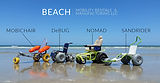
beach wheelchair
This makes Zanzibar a particularly interesting addition to a safari in Tanzania.

Mauritius and Mozambique
Mauritius and Mozambique might also be of interest to you, especially if you want to combine safari and beach time.
Mauritius has a major advantage in its tourist infrastructure. In Mozambique, however, we need to examine beach access particularly carefully.
Sand is more difficult for many wheelchairs to navigate than any ramp. A hotel can be completely step-free, yet the path to the sea can still be practically impossible.
Therefore, we are examining, among other things:
paved paths
beach wheelchair
Pool access
Boat boarding
Room
bathroom
transfer
Things that can be difficult or impossible on safari
We don't want to sugarcoat anything here. Some safari activities are difficult due to the terrain or the vehicles used.
Walking Safaris
Not possible for many people in wheelchairs.
Mokoro rides
Getting started with a traditional mokoro can be very challenging.
Small charter planes
Getting started can be difficult, and electric wheelchairs can pose special challenges due to their weight and dimensions.
Deep sand
Especially in Botswana and on many beaches, sand can make movement very difficult.
Elevated camps
Steps and wooden walkways may restrict access.
But:
Not every safari needs to include all these activities.
Just because you can't walk doesn't mean you can't observe animals.
If a mokoro isn't working, it doesn't mean you can't experience the Okavango Delta.
We will then work together to find an alternative.
Do you need a special safari vehicle?
That depends on your mobility.
You can switch.
Then a classic safari vehicle might work.
Your wheelchair will be folded and stowed away during the journey.
You need help changing trains.
Then your guide must be properly prepared and the vehicle must offer sufficient space.
You can't change trains alone.
Then we need a specially adapted vehicle.
Ximuwu is a particularly good example here because the vehicles were specifically designed for people with mobility impairments.
Why a private safari vehicle can be a good idea
For you, a private vehicle is often more than a luxury. It gives you freedom.
You can decide for yourself:
When do you want to leave? How long do you want to stay outside?
When do you need a break?
How much time would you like to spend spotting an animal?
If the transfer from the wheelchair takes more time, you don't have to adjust to other guests.
And if, for example, you want to return to the lodge earlier after a longer game drive, that's no problem at all.
What you should tell us before the trip
You don't need to know any medical terminology. The most important thing is that you describe what you can do in everyday life and what kind of support you need.
For example:
Can you take a few steps?
Can you climb stairs?
Can you transfer from your wheelchair to a seat?
Can you partially bear your own weight?
Do you have to stay in your wheelchair during the game drive?
Are you traveling with a manual or electric wheelchair?
How wide and heavy is your wheelchair?
Do you need a shower chair or grab bars?
The more precisely we know this, the better we can tailor the trip to you.
Your safari doesn't have to be perfectly accessible.
That might sound surprising at first.
But sometimes a trip is better if we don't try to make every single activity accessible, but rather choose the right experiences.
Perhaps a particular lodge is not suitable.
You'll find another one where you can move around completely freely.
Maybe you can't go on a walking safari.
For this, you sit in the photo hide and observe a leopard up close.
Maybe you can't get into a mokoro.
You can experience the delta on a boat trip.
Accessibility does not mean that everything has to be possible.
It means that what is important to you will be made possible.

The best destinations for an accessible safari

Do you want to go to Africa?
Don't let a standard trip that's "not accessible" put you off. Perhaps that particular trip simply isn't the right one for you.
We're not looking for a pre-packaged safari that you somehow have to fit into.
We plan them around your needs from the very beginning.
Which lodge is suitable?
Which room?
Which vehicle?
Which transfer?
What activities?
What alternatives are available if something doesn't work?
And especially:
How can we give you the African experience you desire?
Because you don't have to be able to walk to experience an elephant at sunset.
You don't need to be able to hike to see lions in the wild.
And you don't need to be able to get into a classic safari vehicle to be in the middle of the wilderness.
Your safari begins where we don't adapt the journey to your limitations, but rather adapt Africa to your possibilities.